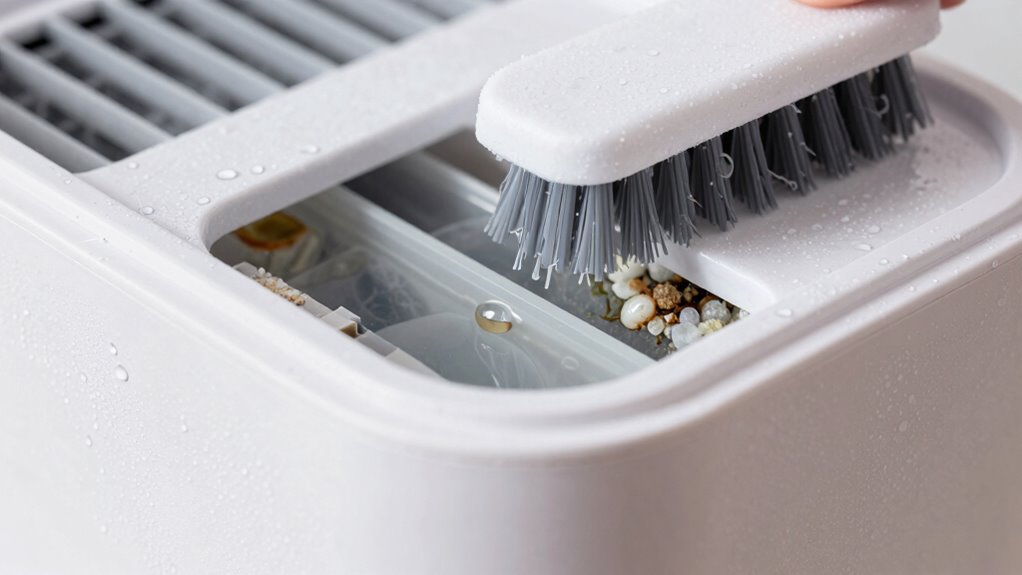

The most critical cleaning detail that makes or breaks your humidifier use is regular, thorough cleaning of all internal parts, especially the water tank and filters. If you neglect to scrub away mineral deposits, mold, and bacteria, you’re risking airborne germs and decreased device efficiency. Using vinegar, diluted bleach, and proper drying techniques helps prevent microbial growth and keeps your air safe. Want to discover the best cleaning routines? Continue on for expert tips to keep your humidifier working perfectly.

Get home appliances delivered free with Prime
- Fast, free delivery on millions of items
- Prime Video, Amazon Music and more included
- Member-only deals all year
Key Takeaways
- Regularly empty, clean, and dry the humidifier to prevent mold, bacteria, and mineral buildup.
- Use vinegar or appropriate disinfectants to thoroughly remove mold and microbial contaminants.
- Rinse all parts completely after cleaning to eliminate residue that can promote microbial growth.
- Avoid neglecting detailed scrubbing of corners, filters, and internal surfaces for effective sanitation.
- Use distilled or filtered water to minimize mineral deposits and prevent bacteria growth.
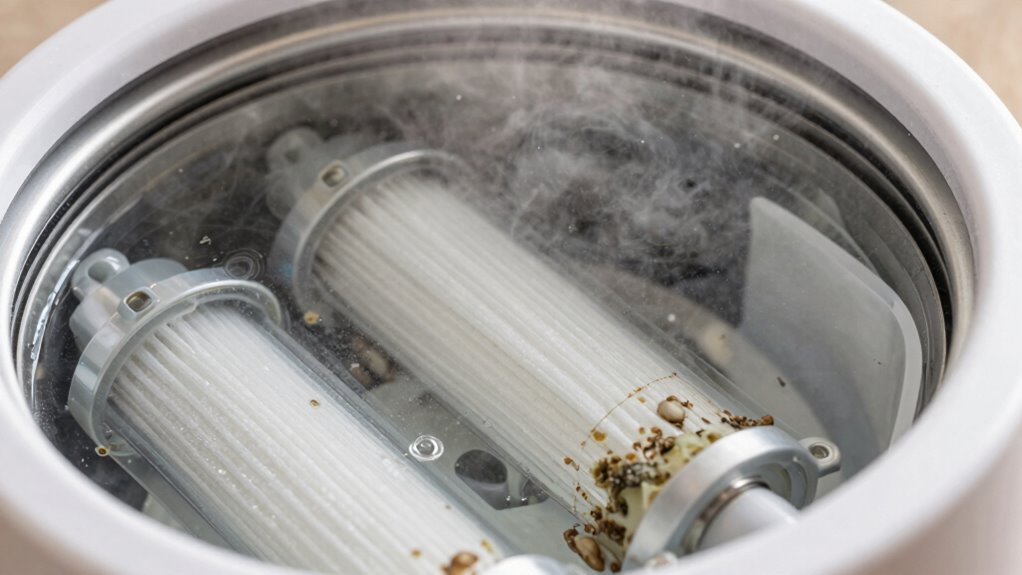
Regularly cleaning your humidifier is essential to keep it functioning properly and to guarantee the air you breathe stays safe. If you neglect this step, you risk introducing airborne bacteria and mold into your environment, which can cause health issues, especially if you or your family members have allergies or respiratory conditions. Bacteria and mold thrive in the moist environment inside your humidifier, making regular cleaning the best way to prevent their growth and keep your indoor air quality high.
When you don’t clean your humidifier frequently, mineral deposits from water can build up, creating a breeding ground for bacteria. These deposits, along with leftover moisture, can harbor airborne bacteria that get released into the air when you turn on your device. Over time, this can lead to respiratory irritation, coughing, or even infections. Mold can also develop on the surfaces inside your humidifier if moisture is left stagnant, further polluting the air you breathe and potentially worsening allergies or asthma symptoms. Proper cleaning techniques are crucial to ensure the device remains safe and effective. Regular cleaning also helps to prevent the development of microbial growth, which can significantly impact indoor air quality.
To prevent these issues, you should develop a routine of cleaning your humidifier at least once a week. Start by unplugging the unit and emptying any remaining water. Use a mixture of white vinegar and water to soak the tank and remove mineral buildup and mold spores. Vinegar is a natural disinfectant that kills bacteria and prevents mold growth. Make sure to scrub all surfaces thoroughly with a soft brush or cloth, paying close attention to corners and filters, which are common spots for mold and bacteria to hide. Additionally, choosing the right cleaning method can enhance its effectiveness, such as using proper cleaning techniques.
After scrubbing, rinse everything thoroughly with clean water to eliminate any vinegar residue. Some parts may require additional disinfecting with a diluted bleach solution, but be sure to rinse well afterward to avoid inhaling bleach fumes. Dry all parts completely before reassembling. This not only prevents mold growth but also reduces the risk of airborne bacteria being released into the air during operation. Using appropriate disinfectants can further enhance the cleanliness of your humidifier and reduce microbial growth. Ensuring thorough drying helps to maintain a safe environment and prolongs the lifespan of your device.
In addition to weekly cleaning, using distilled or filtered water can significantly reduce mineral deposits and mold development inside your humidifier. Regular maintenance, including replacing filters as recommended by the manufacturer, also plays a vital role in mold prevention and keeping airborne bacteria at bay. Consistent cleaning and proper water choices are your best defenses against the buildup of harmful microorganisms, ensuring you breathe clean, healthy air every day.
As an affiliate, we earn on qualifying purchases.
Frequently Asked Questions
How Often Should I Replace the Humidifier’s Filter?
You should replace your humidifier’s filter every 1 to 3 months, depending on its filter lifespan and usage. Check the manufacturer’s recommendations, as replacement frequency varies with water quality and usage patterns. Regularly inspect the filter for signs of mold, mineral buildup, or discoloration. Replacing the filter promptly guarantees your humidifier works efficiently, maintains healthy air quality, and prevents potential mold and bacteria growth.
Can I Use Vinegar to Clean All Parts of My Humidifier?
Yes, you can use vinegar to clean all parts of your humidifier because of its effectiveness at removing mineral deposits and bacteria. Vinegar is a safe, natural alternative cleaning solution that works well for most humidifier components. Just fill the tank with vinegar, let it sit for 30 minutes, then scrub and rinse thoroughly. This helps keep your humidifier clean, functioning efficiently, and safe to use.
What Are the Signs of Mold Growth in a Humidifier?
Think of mold growth as dark, fuzzy clouds forming inside your humidifier. You’ll notice a musty smell, slimy residue, or black spots on the surfaces. During mold inspection and humidifier testing, look for discoloration and unusual buildup. If you see these signs, don’t delay—clean thoroughly and consider replacing parts. Prompt action prevents mold from spreading and keeps your humidifier safe and effective for your home environment.
Is It Safe to Run a Humidifier Without Regular Cleaning?
Running a humidifier without regular cleaning isn’t safe, as it can compromise air quality and reduce humidifier safety. Bacteria, mold, and mineral buildup can grow inside, releasing harmful particles into the air you breathe. This risks respiratory issues and worsens allergies. To keep your air clean and guarantee safe humidifier use, clean it thoroughly at least once a week, following manufacturer instructions. Proper maintenance protects your health and maintains ideal humidity levels.
How Do I Prevent Mineral Buildup Inside the Humidifier?
To prevent mineral buildup inside your humidifier, you should regularly clean it and use distilled or filtered water. Mineral deposits form from minerals in tap water, so switching to water with fewer minerals reduces buildup. After each use, empty and dry the tank completely. Additionally, periodically soak parts in a vinegar solution to dissolve any mineral deposits, keeping your humidifier running efficiently and extending its lifespan.
As an affiliate, we earn on qualifying purchases.
Conclusion
Regularly cleaning your humidifier is essential—you’ll prevent mold growth and guarantee the air you breathe stays healthy. Did you know that neglecting proper maintenance can lead to bacteria levels 100 times higher than what’s safe? By paying attention to cleaning details, you’re not just prolonging your device’s life, but also protecting your health. Keep up with your cleaning routine, and you’ll enjoy the benefits of clean, humidified air every day.
As an affiliate, we earn on qualifying purchases.
As an affiliate, we earn on qualifying purchases.
Fall Picks
fall essentials
As an affiliate, we earn on qualifying purchases.