
TL;DR

Get home appliances delivered free with Prime
- Fast, free delivery on millions of items
- Prime Video, Amazon Music and more included
- Member-only deals all year
An Ideal Home report recommends six habits for drying laundry indoors: use an extra spin, leave space between clothes, consider a heated airer and dehumidifier, position the rack for airflow, and ventilate the room. The advice addresses moisture released by wet laundry, but the source does not provide comparative tests or evidence that following the steps will prevent damp or mould in every home.
Ideal Home has published six recommendations for drying laundry indoors in colder, wetter weather, including removing more water in the washing machine, spacing clothes on the rack and ventilating the room. The advice matters because wet clothes release moisture into indoor air, which may contribute to condensation if it is not removed or dispersed; the report presents these measures as ways to reduce that risk, not as a guarantee against damp or mould.
The report recommends running an extra spin cycle before hanging clothes, provided the selected speed is suitable for the garments. It says this can reduce the water retained in laundry and may help items dry faster. Heavier pieces such as towels, jeans and bedding are singled out as garments that can hold substantial water.
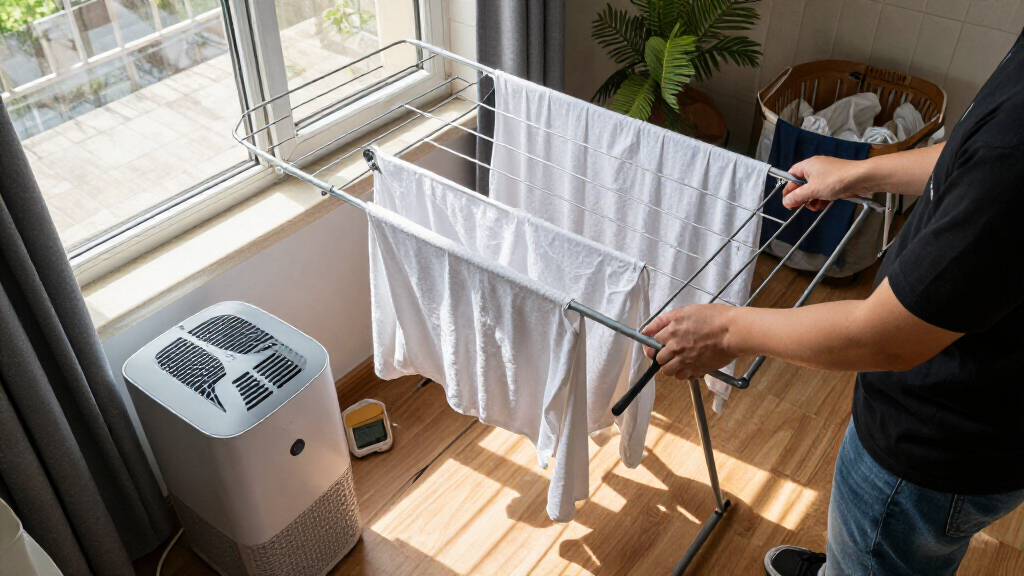
It also advises leaving space between garments so air can circulate around them. Sleeves should be spread out, shirts opened and trouser legs kept from overlapping. Lauren Roelofs, a laundry expert at Brabantia, says avoiding an overcrowded rack is a simple way to help clothes dry more evenly. For heavier items, she recommends turning them partway through drying to reduce the chance of damp patches.
The remaining recommendations concern equipment and placement: use a heated clothes airer if indoor drying is frequent, consider running a dehumidifier alongside it, and position the rack away from walls where possible. The report notes that a heated airer warms laundry but does not itself remove moisture from the room. It also recommends ventilating the room, although the supplied article text ends before explaining the specific ventilation advice or conditions.
Keeping Laundry Moisture Under Control
Indoor drying moves water from clothes into the home unless it is captured or carried away. The article’s advice focuses on two ways to manage that moisture: help clothes dry efficiently and improve the movement or removal of damp air. This is relevant to households that cannot dry clothes outside or do not use a tumble dryer, particularly during wet or cold weather.
The distinction between drying and dehumidifying is important. A heated rack may warm garments, but according to the report it does not remove moisture from the room. A dehumidifier is intended to extract moisture from the air, while ventilation can help disperse humid air. Which approach is practical may depend on the room, the weather, the equipment and how much laundry is being dried. The report does not quantify the moisture produced by a typical load or establish how much any one measure reduces condensation.
Products Worth Considering

Shark HydroVac MessMaster Cordless Wet Dry Vacuum and Mop Combo, AW261
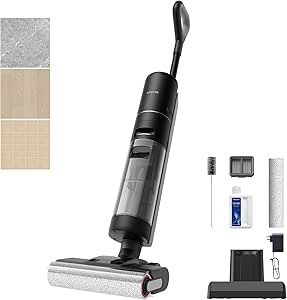
Dreame G10 Pro Wet and Dry Vacuum Mop

Dyson W1 PencilWash Cordless Wet and Dry Floor Cleaner with Dock
As an affiliate, we earn on qualifying purchases.
Six Habits for Indoor Drying
The Ideal Home report frames its recommendations around the colder, wetter season, when outdoor drying may be less practical. It notes that not every household has a tumble dryer or can afford to run one, leaving a clothes airer as a common alternative. Its six tips cover the washing machine, how laundry is arranged, optional appliances, rack placement and room ventilation.
The article includes comments from two named industry representatives. Lauren Roelofs, identified as a laundry expert at Brabantia, discusses spacing clothes and choosing a rack that uses vertical space. Catrin Parry, identified as a buying lead at Lakeland, discusses heated airers and pairing an airer with a dehumidifier. These comments provide practical product and usage advice; the source does not cite independent testing of the six steps as a complete damp- or mould-prevention method.
“One of the simplest ways to speed things up is to avoid overcrowding your drying rack. Leaving space between garments allows air to circulate, helping clothes dry more evenly.”
— Lauren Roelofs, laundry expert at Brabantia
Limits of the Damp Prevention Advice
The article presents practical recommendations, but the supplied source does not give measured results showing how much each step shortens drying time or reduces indoor humidity. It also does not establish that the advice will prevent damp or mould in all homes. Outcomes can depend on factors such as ventilation, room size, outdoor conditions, the amount of laundry and whether moisture-removal equipment is used.
The source text cuts off during its final ventilation tip, so its full instructions on how or when to ventilate are unavailable here. It also does not provide a publication date, detailed safety guidance for heated appliances, or a cost comparison for running a heated airer and dehumidifier. Readers should follow the operating instructions for any appliance they use.
Practical Steps for the Next Load
For the next indoor load, the report’s sequence is straightforward: use a suitable extra spin, arrange clothes with gaps between them, and place the rack where air can circulate. Households that dry laundry indoors often can consider whether a heated airer or dehumidifier suits their space and budget, while following the manufacturer’s instructions. Ventilation should be adapted to the room and conditions; the supplied report does not set out a specific window-opening schedule.
The article offers household guidance rather than a formal assessment of mould risk. It gives no follow-up data or announced next milestone, so the practical effect of these measures in any particular home remains to be judged by conditions there.
Key Questions
What are the six recommended habits for drying laundry indoors?
Use an extra spin if suitable for the garments, leave space between clothes, consider a heated airer, pair an airer with a dehumidifier, position the rack away from walls, and ventilate the room.
Does a heated clothes airer remove moisture from the room?
The report says a heated airer helps dry clothes but does not remove moisture from the air. It recommends considering a dehumidifier to extract excess indoor moisture.
Why should clothes be spaced out on a drying rack?
Spacing garments allows air to circulate, which the report says can help clothes dry more evenly. It also advises spreading sleeves and avoiding folded-over trouser legs.
Will these steps guarantee that a home stays free of damp and mould?
No such guarantee is established in the source. The recommendations are intended to help manage moisture, but the report provides no comparative test results and says nothing that proves the steps prevent damp or mould in every home.
Source: idealhome.co.uk