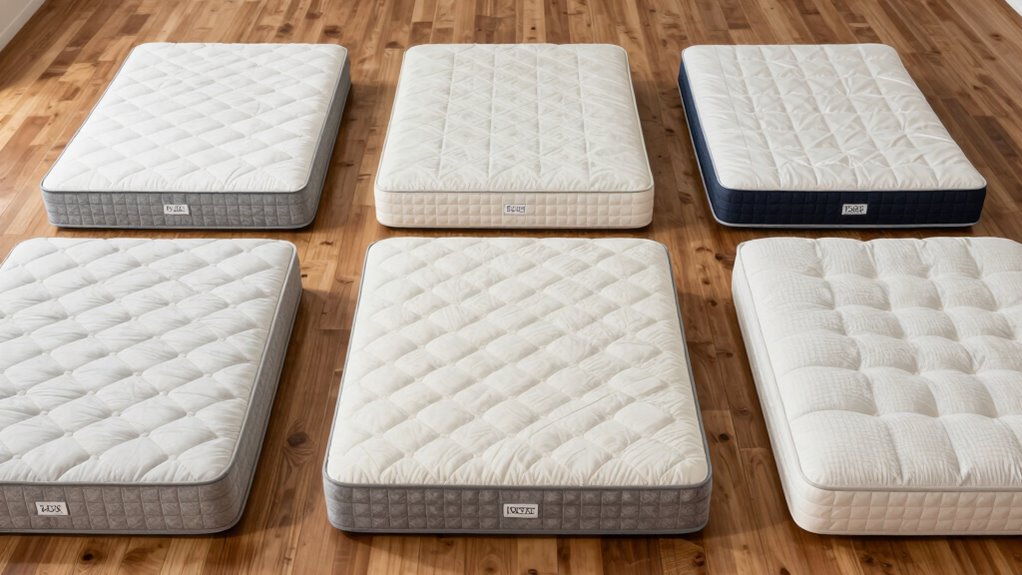

Many people rely on standard mattress size charts, but these often mislead because actual sizes vary across brands and regions. For example, a Queen mattress can range from 60” to 66” wide, and even similar sizes like King and California King have different dimensions. To make the best choice, you need to verify exact measurements and consider your room space. Keep exploring to discover how to choose the perfect fit for your bedroom.
What Are the Myths About Mattress Size Charts?
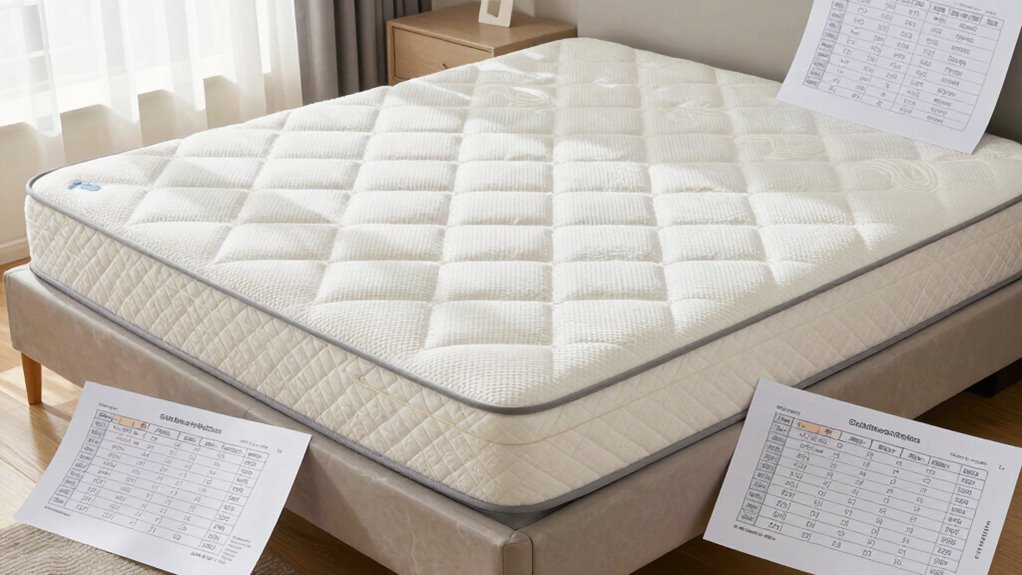
Have you ever wondered if mattress size charts are completely accurate? Many people believe they’re foolproof, but bed size myths often lead to confusion. These chart inaccuracies can make you think a Queen bed is the perfect fit when a Full might suffice, or vice versa. Sometimes, manufacturers label sizes differently, adding to the myth that all charts are wrong. These misconceptions can cause you to buy a mattress that doesn’t quite match your needs or space. It’s easy to assume standard sizes are universal, but in reality, some brands alter dimensions or use outdated charts. Recognizing these bed size myths helps you approach mattress shopping more critically. Don’t rely solely on charts—measure your space and consider your comfort first. Additionally, understanding standardized mattress dimensions can help you navigate the variations among different brands more effectively. Being aware of brand-specific sizing differences can further prevent mismatched expectations and ensure you select the right mattress for your needs. Awareness of bed size variability is essential for making informed decisions and avoiding common misconceptions. Being aware of these size discrepancies can also help you avoid the frustration of returning or exchanging a mattress that doesn’t fit as expected.
What Are the Actual Dimensions of Standard Mattress Sizes?
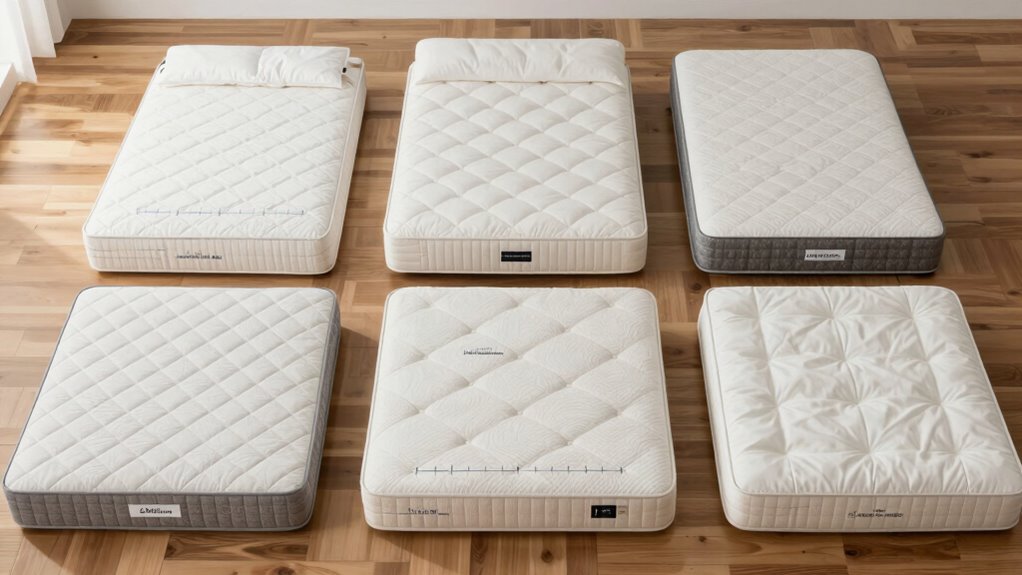
Understanding the actual dimensions of standard mattress sizes can clear up many misconceptions caused by inconsistent charts. A twin typically measures 38 inches wide by 75 inches long, fitting most bed frames and perfect for single sleepers. A full, or double, is usually 54 inches wide by 75 inches long—great for growing teens or guest rooms. Queen sizes are 60 inches wide by 80 inches long, offering ample space for couples. King mattresses come in at 76 inches wide by 80 inches long, ideal for shared comfort. California King measures 72 inches wide by 84 inches long, suited for taller sleepers. Visualize:
- Cozy twin beds in small rooms
- Spacious queen for couples
- King beds for shared luxury
- Varied mattress material options like memory foam or innerspring
- Compatibility considerations for bed frames
A common misconception is that mattress sizes are standardized globally, but size variations can exist depending on the manufacturer or region. Additionally, knowing the standard dimensions can help you select the perfect fit for your space and sleeping needs. Being aware of regional differences ensures you purchase the right mattress for your specific location and preferences, especially since regional standards may influence mattress dimensions and availability. Recognizing these regional differences can also prevent purchasing mismatched bedding or accessories that don’t fit your mattress properly.
Why Do Mattress Sizes Vary by Manufacturer?
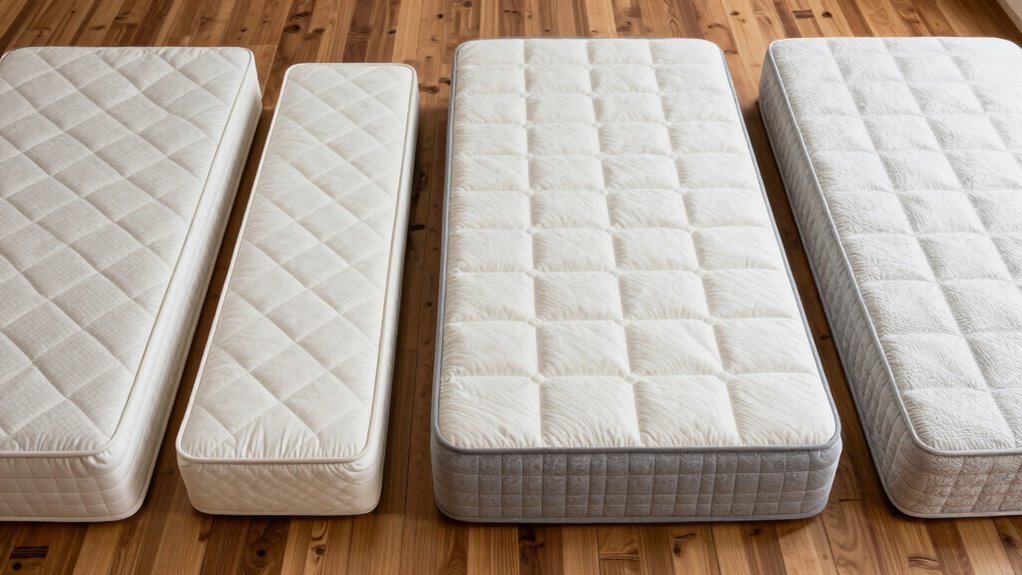
Mattress sizes vary by manufacturer primarily because there are no strict industry standards defining exact dimensions for each size. This lack of standardization means that different brands may produce mattresses slightly larger or smaller than the standard measurements, affecting bed frame compatibility. If your bed frame is designed for a specific size, a mattress from a different manufacturer might not fit perfectly. Additionally, mattress material differences—such as foam, latex, or hybrid constructions—can influence overall thickness and dimensions. Some manufacturers may add extra padding or choose materials that alter the size slightly. As a result, it’s vital to verify each manufacturer’s specifications and measurements before purchasing to ensure compatibility with your bed frame and to account for potential size variations. Recognizing industry variability can help consumers make informed choices when shopping for mattresses.
How Are Queen and Olympic Queen Different?

Wondering how a standard queen size differs from an Olympic queen? The main difference is size: an Olympic queen measures about 66 inches wide by 80 inches long, wider than the standard queen’s 60 by 80 inches. This extra width offers more space for couples or those who like to spread out. When considering bed frame compatibility, check if your frame supports the wider dimensions of the Olympic queen. Mattress material options remain similar, including memory foam, latex, or hybrid builds, but ensure your mattress fits snugly within the frame’s dimensions. Visualize lying across the width, feeling the extra room for movement. Think about the:
- Broader sleeping surface
- Fit on larger or adjustable frames
- Enhanced comfort for couples
- Room for pets or kids
- Compatibility with various mattress types
Additionally, understanding modern bed technology can help you choose features like adjustable bases or smart mattress sensors to improve sleep quality. Being aware of standard sizing conventions can also assist in selecting the right bedding accessories and sheets for your mattress. Moreover, considering sleeping habits and preferences can guide you in choosing the optimal mattress size for your needs, especially as market trends continue to evolve with new sizes and innovations. Recognizing the importance of reconditioning batteries might seem unrelated, but staying informed about product maintenance can also impact the longevity of your sleep accessories and tech devices.
How Do Room Size and Layout Influence Your Mattress Choice?
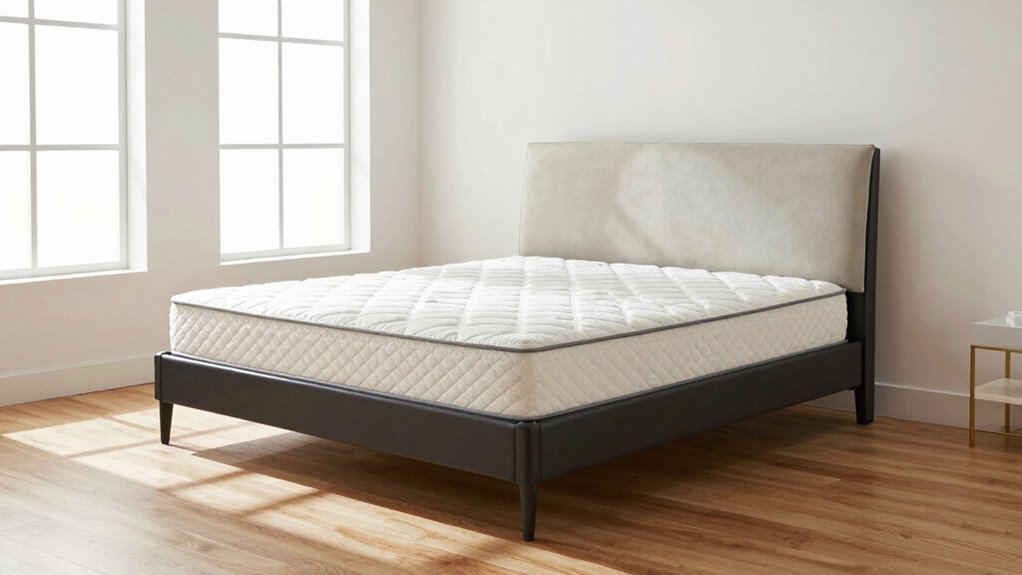
Your room size and layout play a key role in choosing the right mattress. Consider the overall dimensions, how much space you need for movement, and where furniture will go. Making these decisions guarantees your bedroom feels comfortable and functional. Additionally, room dimensions influence not only mattress size but also the overall flow and usability of your space. Being mindful of space planning ensures your room remains both inviting and practical. Incorporating design principles can further optimize your room’s comfort and efficiency. Understanding net worth and other personal factors can also help tailor your choices to your unique needs. Moreover, understanding auditory processing can be useful when designing a space that minimizes sensory overload and enhances relaxation.
Room Dimensions and Size
How your room’s size and layout impact your mattress choice is essential to creating a comfortable sleeping space. If your room is small, a twin or full size might fit best, ensuring enough space for movement and other furniture. Larger rooms can easily accommodate queen or king mattresses, giving you more comfort. Consider bed frame compatibility to ensure your chosen mattress fits your frame and room layout. Also, think about mattress material considerations—some materials are heavier or bulkier, affecting setup and placement. Visualize your space with:
- Adequate clearance for easy movement
- Space for nightstands and storage
- Proper ventilation and airflow
- Room for other furniture pieces
- Ease of access to outlets and lighting
Balancing size and layout helps you pick a mattress that fits perfectly and enhances your sleep quality.
Layout and Traffic Flow
The layout and traffic flow of your room play a crucial role in selecting the right mattress size and placement. A well-organized space promotes bedroom feng shui and enhances sleep ergonomics. If your room has limited space or narrow pathways, a smaller mattress like a twin or full may be best to avoid congestion. Conversely, larger rooms can comfortably accommodate queen or king sizes, allowing for better movement and balance. Consider how much space you’ll need to move around comfortably and if certain areas need clear pathways. Use the table below to visualize how room layout impacts your mattress choice:
| Room Size & Layout | Recommended Mattress Size | Traffic Flow Tips |
|---|---|---|
| Small, tight space | Twin, Full | Keep pathways clear |
| Moderate space | Queen | Maximize open areas |
| Spacious room | King | Allow easy access |
Additionally, assessing your room’s traffic flow can help prevent clutter and ensure a restful environment. Understanding room size and layout is fundamental in creating a comfortable and functional bedroom space.
Furniture Placement Considerations
Room size and layout directly influence how you should place your furniture, including the mattress. Smaller rooms require careful planning to maximize space, so consider bed frame compatibility with your room dimensions. Larger spaces give you flexibility but still demand thoughtful arrangement. When choosing a mattress, think about bedding accessory considerations like fitted sheets and comforters that fit your bed size. Visualize your space with these ideas:
- Clear pathways around the bed for easy movement
- Sufficient space for bedside tables and lamps
- Wall clearance for headboards and footboards
- Room for wardrobe access and storage
- Adequate space for other furniture pieces
Why Relying Only on Mattress Size Charts Can Mislead You

Relying solely on mattress size charts can be misleading because standards vary between manufacturers and regions. You might find a “full” mattress differs in dimensions depending on the brand, causing confusion. Inconsistent size labels can lead to choosing a mattress that doesn’t fit your space or preferences. Additionally, understanding brewing methods can help in making more informed decisions about product features and specifications. Recognizing industry standards can provide clarity when comparing different mattress options.
Variations in Mattress Standards
Because mattress standards vary widely across manufacturers and regions, relying solely on size charts can be misleading. For instance, a “queen” mattress from one brand might be narrower or shorter than another. This inconsistency impacts your choice, especially when shopping for luxury mattresses or eco-friendly materials, where precise dimensions matter. Visualize:
- A mattress that feels like a cloud but measures slightly different from the label
- An eco-friendly mattress with a unique, custom-fit design
- A luxury mattress with proprietary sizing to enhance comfort
- A regional standard that differs from international norms
- A mattress that perfectly fits your bed frame, but isn’t labeled correctly
Understanding these variations helps you avoid surprises and ensures your sleep setup matches your expectations, regardless of the size chart.
Inconsistent Size Labels
While size charts provide a helpful starting point, they can be misleading because different brands and regions often label mattresses inconsistently. A queen in one brand might be slightly smaller or larger in another, making it tricky to select the right bed linen or guarantee ideal sleep comfort. Relying solely on these labels can lead to mismatched sheets or uncomfortable fits, especially if you’re unfamiliar with regional standards. It’s essential to verify actual dimensions rather than just trusting the label, as this prevents surprises and ensures your mattress fits your bed frame perfectly. Inconsistent size labels highlight the importance of measuring your mattress before buying new bed linen or accessories, so you can prioritize sleep comfort without guesswork.
What Are the True Sizes of California King and Other Variants?

Ever wonder how the true sizes of California King and other bed variants compare to their names? The California King actually measures 72 inches wide by 84 inches long, making it longer than a standard King but narrower. Other variants include:
- Standard King: 76” x 80”, perfect for spacious comfort
- Eastern King: same as Standard King, wider than California King
- Wyoming King: 84” x 84”, offering extra width and length
- Alaska King: an enormous 108” x 108”, ideal for luxury
- Texas King: 80” x 98”, combining width and length for larger rooms
Knowing these dimensions helps guarantee bed frame compatibility and suits your mattress material options, whether memory foam, latex, or hybrid. This clarity guarantees a perfect fit for your space and sleep style.
How Can You Measure Your Space Before Buying a Mattress?
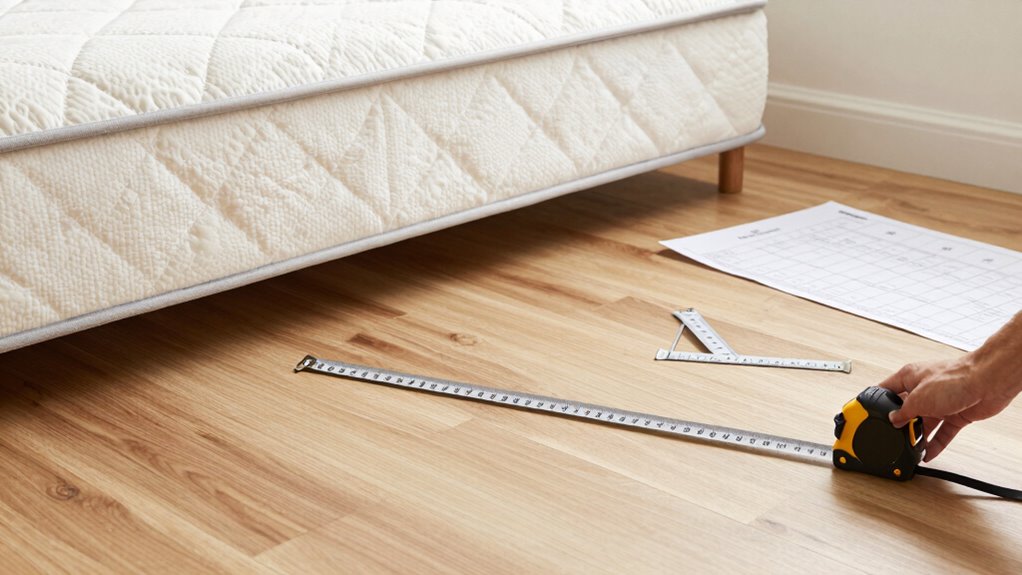
Before selecting the right mattress size, it’s important to measure your space accurately. Start by measuring the length and width of your bedroom, paying close attention to clearance around the bed for easy movement. Consider bed frame compatibility—ensure your frame can accommodate the mattress dimensions you choose. Don’t forget to account for any additional space needed for bedside tables or walking areas. When measuring, use a tape measure for precision, and note down the measurements to compare with available mattress sizes. Remember, mattress material options like memory foam or innerspring may influence your choice, especially if you prefer a thicker mattress. Accurate measurements help you avoid buying a mattress that’s too big or too small, ensuring a comfortable fit in your space.
Why Should You Consider Mattress Thickness and Pad Size?
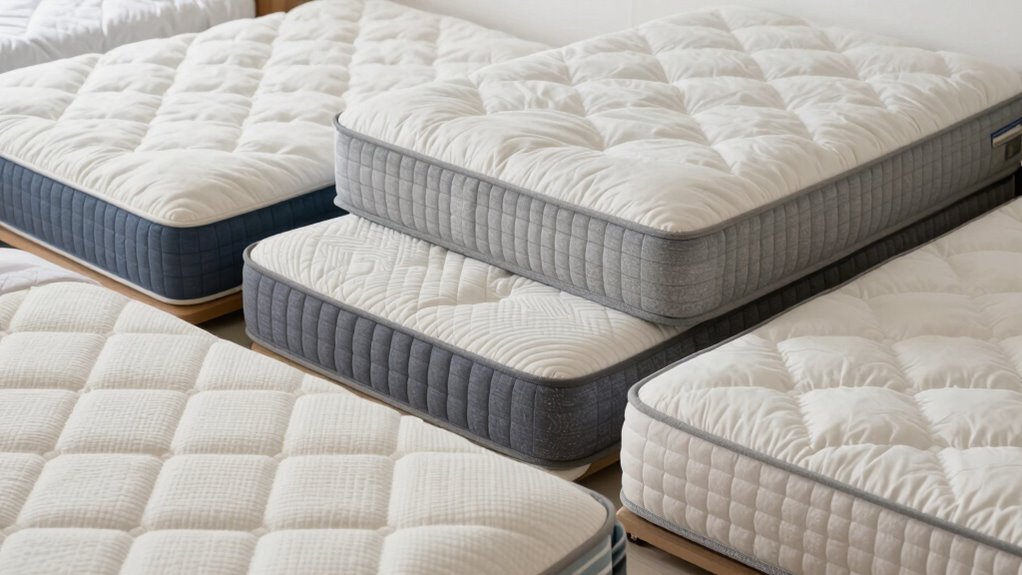
Considering mattress thickness and pad size is essential because they directly affect your comfort, safety, and the overall fit within your bedroom. Mattress thickness importance goes beyond comfort—it influences bed frame compatibility and ease of getting in and out of bed. If your mattress is too thick or too thin, it can cause alignment issues or make using your existing bed frame impossible. Visualize a mattress that:
- Fits snugly within your bed frame, avoiding gaps or overhang
- Allows sheets and covers to stay securely in place
- Provides proper support for your body
- Prevents accidental falls or discomfort when sitting on the edge
- Ensures the mattress aligns with your preferred sleeping position
Choosing the right thickness and pad size guarantees safety, comfort, and a seamless fit with your bed setup.
Frequently Asked Questions
How Do Mattress Sizes Differ Internationally?
You’ll notice that international mattress sizes differ due to regional size variations and a lack of global mattress standards. In some countries, a Queen might be smaller or larger than in others, which can be confusing. Always double-check measurements before buying. Knowing these regional differences helps you choose the right size, avoiding surprises and ensuring a perfect fit, whether you’re shopping locally or online worldwide.
Are Custom Mattress Sizes Common or Necessary?
Custom mattress sizes are relatively common and often necessary if you have unique space requirements or preferences. They offer mattress flexibility, allowing you to tailor dimensions to fit unusual room layouts or specific needs. By opting for custom sizing, you guarantee a perfect fit and enhanced comfort. While standard sizes work for most, custom options give you the freedom to create a personalized sleep environment that suits your exact needs.
What Impact Does Mattress Thickness Have on Size?
While it’s a subtle nuance, mattress thickness influences your bed’s overall height, affecting ease of getting in and out. Thicker mattresses tend to add to bed height, which can enhance or hinder comfort based on your mattress firmness preference. If you prefer a lower profile, a thinner mattress keeps your bed closer to the ground, while a plush, thicker mattress creates a more luxurious feel and cozy sleep experience.
Can Mattress Size Influence Sleep Quality?
Yes, mattress size can influence sleep quality because larger sizes offer more space for your sleep position, reducing discomfort and tossing. Your choice of mattress material also plays a role, as memory foam or latex can improve comfort and support. If your mattress is too small for your sleep position, you might toss and turn more, leading to restless nights and lower sleep quality.
How Do Bedding and Accessories Fit Different Mattress Sizes?
You need to choose bedding and accessories that fit your mattress size perfectly. For bed sheet compatibility, pick sheets designed for your bed’s dimensions to avoid slipping or bunching. Pillow sizing standards ensure your pillows fit your pillowcases comfortably. Always check the size labels before buying, and consider elasticized edges for a snug fit. Properly fitting bedding enhances comfort and sleep quality, making your bed more inviting and functional.
Conclusion
Think of your mattress as the foundation of your personal universe—its size shaping your daily peace and dreams. Don’t let misleading charts or assumptions be the stars guiding you. Instead, measure your space and trust your instincts. When you choose the right size, you’re planting a sturdy flag on your territory, creating a sanctuary that reflects your true needs. Your perfect mattress isn’t just a piece of furniture—it’s the anchor for your restful voyage.