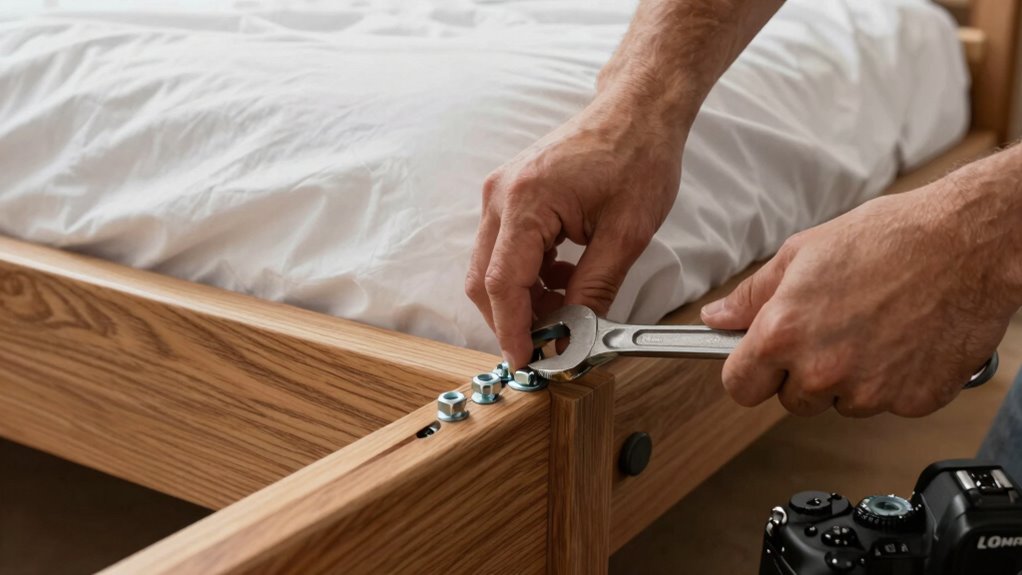

To fix a wobbly bed frame, start by inspecting all joints and hardware for loose or damaged bolts, screws, and brackets. Gather your tools and tighten everything securely, paying special attention to corners and support beams. If needed, reinforce weak joints with extra brackets or hardware. Make sure the frame and slats are level, and check the mattress and foundation for issues. Follow these steps to restore stability—there’s more to guarantee lasting comfort and safety.
Key Takeaways
- Inspect all joints, bolts, and screws for looseness or damage, and tighten them securely with appropriate tools.
- Check support beams and slats for levelness, re-position or tighten hardware to ensure even support.
- Reinforce weak joints with additional brackets or metal plates to improve stability.
- Ensure mattress and foundation sit flush and are securely attached to prevent wobbling.
- Regularly inspect and tighten hardware to maintain long-term bed frame stability.

Bed MadeEZ Mattress Lifter & Bed Maker Tool for Changing Bed| Patented & Made in USA | Lifts & Holds The Mattress, Tucks Sheets, Removes Sheets, Bed Skirts and More
THE ORIGINAL, AUTHENTIC MATTRESS LIFTER MADE IN THE USA- Many try to replicate our design but none can…
As an affiliate, we earn on qualifying purchases.
As an affiliate, we earn on qualifying purchases.
Inspect Your Bed Frame for Loose or Damaged Parts
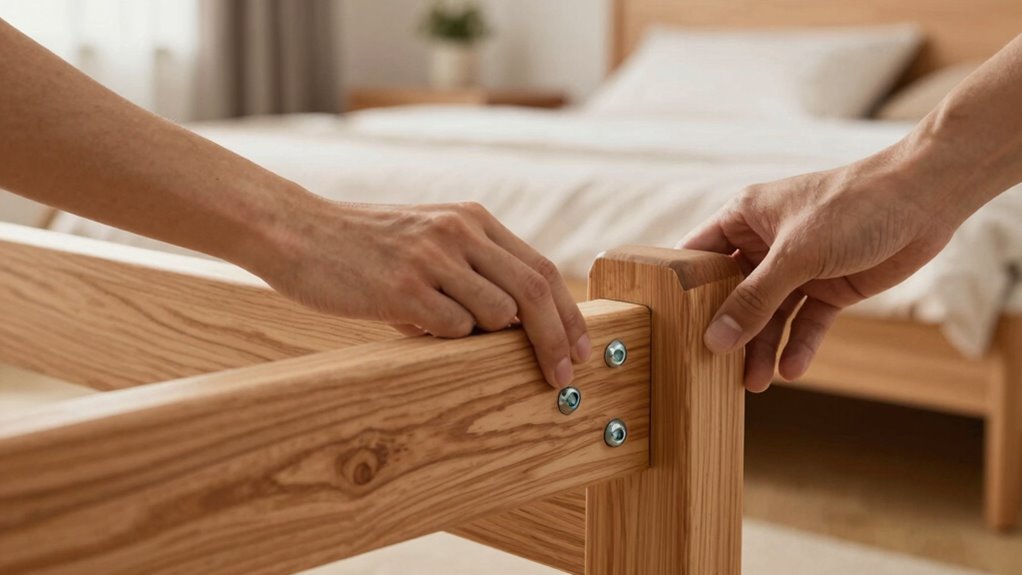
Before trying any fixes, you should carefully inspect your bed frame for loose or damaged parts. Start by examining the bed frame material, whether it’s wood, metal, or a combination. Look for cracks, splinters, or bent areas that could compromise stability. Check the aesthetic design, paying attention to decorative elements or joints that might be loose or misaligned. Tighten any visible bolts, screws, or dowels, and replace damaged components if necessary. Sometimes, a worn or warped material can cause wobbliness, so identify these issues early. Taking a close look at how the parts fit together will help you understand where the instability originates. Proper welding or joinery can significantly improve the overall sturdiness of the frame. This thorough inspection guarantees the foundation for effective repairs and ensures your bed remains sturdy and safe.

Coshar 4Pcs Heavy Duty Bed Rail Fittings Black Bed Frame Brackets Adapter U-Shape Bed Supporters Hardware for Bunk Bed Headboard, 3.62"x1.9"(L*W)
Fits all fixtures within 35mm / 1.4". Overall size: 92 x 46 x 30 mm / 3.62" x…
As an affiliate, we earn on qualifying purchases.
As an affiliate, we earn on qualifying purchases.
Gather Tools and Supplies Needed for Tightening
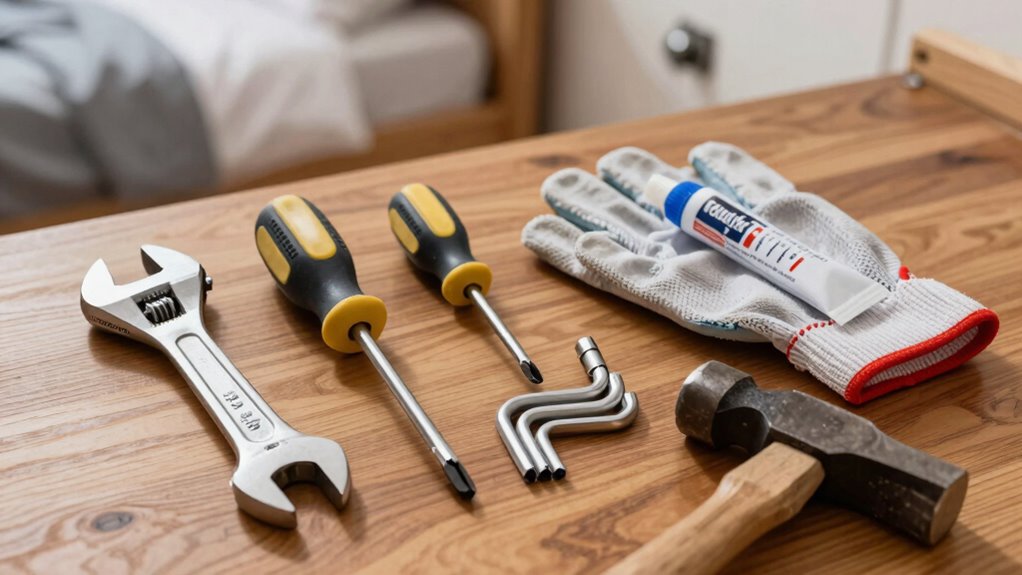
To effectively tighten your bed frame, you’ll need to gather the right tools and supplies. Start by choosing the right tools, such as a wrench or socket set, to tighten bolts and screws securely. Having a screwdriver on hand is essential for any screws that might need adjusting. It’s also wise to gather replacement hardware, like nuts, bolts, or washers, in case any are stripped or missing. Check your bed frame’s parts and assemble everything you might need before beginning. Using the appropriate tools ensures you won’t damage the hardware or frame during tightening. Having these supplies ready saves time and prevents you from making multiple trips to the store. Proper preparation makes the entire process smoother and more effective. Additionally, understanding proper maintenance techniques can help prevent future wobbling issues.

YUEYIN 4Pcs Bed Frame Support Leg, Adjustable Height 5"-8.6", Extra Sturdy Steel Bed Frame Support Legs with Wider Rubber Base, More Stable/Quieter, Bed Slat Reinforcement Kit for King/Queen Bed
【Bed Frame Center Support】If you are suffering from broken or creaking bed slats, then our bed reinforcement kit…
As an affiliate, we earn on qualifying purchases.
As an affiliate, we earn on qualifying purchases.
Tighten Bolts and Screws on Bed Frame Joints

Start by checking for any loose bolts on your bed frame joints. Grab the right tools and make certain you’re applying the correct amount of force. Tighten each bolt and screw carefully to ensure a sturdy, wobble-free bed.
Identify Loose Bolts
Loose bolts are often the main cause of a wobbly bed frame, so it’s important to identify any that have come undone. Start by inspecting all joints where the frame pieces connect. During this hardware inspection, look for bolts that appear loose, wobbly, or uneven. Gently shake the frame to see if any bolts move or feel insecure. Pay special attention to corners and connection points, as these are common trouble spots. Once you spot loose bolts, make a note of which ones need tightening. Remember, bolt tightening restores stability, so don’t skip this step. Confirm that all hardware is snug but not overly tight, which can cause damage. Properly identifying loose bolts is a vital first step in fixing your wobbly bed. Understanding the importance of hardware integrity helps prevent future issues and ensures long-term stability.
Use Appropriate Tools
Using the right tools is essential for tightening bolts and screws on your bed frame joints effectively. A power drill with the correct bit speeds up the process and guarantees secure tightening without over-tightening, which can damage the wood or metal. An adjustable wrench is perfect for loosening or tightening nuts and bolts that are hard to reach or stubborn. Make sure the tools fit properly to avoid stripping screws or damaging the frame. Keep a steady grip and apply consistent pressure. Using the correct tools not only saves time but also ensures the joints are securely fastened, reducing wobbling. Proper piercing aftercare is crucial for preventing infection and ensuring the longevity of your jewelry, just as proper tool selection is key to a sturdy bed frame. Choose a power drill and adjustable wrench suited to your bed frame’s hardware, and you’ll get the job done smoothly and safely.
Apply Proper Tightening Techniques
To guarantee your bed frame remains stable, it is crucial to apply proper tightening techniques when securing bolts and screws. First, tighten each fastener gradually in a crisscross pattern to evenly distribute pressure. Use a wrench or screwdriver firmly but avoid overtightening, which can damage the threads or strip the hardware. Before tightening, consider applying bed frame lubrication to metal joints, making future adjustments easier. If your bed frame has decorative bed accents, be careful not to overtighten so you don’t crack or loosen the decorative elements. Check for any wobbling after tightening, and adjust as needed. Proper tightening ensures a secure, stable frame, preventing future wobbles and extending the lifespan of your bed. Additionally, understanding the importance of proper maintenance helps keep your bed frame in optimal condition over time.

platibo Rotatable Adjustable Threaded Bed Frame Anti-Shake Tool, Headboard Stoppers, Bedside Anti Shake Tool for Beds Cabinets Sofas, with Free Furniture Pads and Screws,4PCS (28-110mm)
ENJOY HIGH QUALITY SLEEP: The bed frame anti-shake tools keep the headboard stable, and your bed will never…
As an affiliate, we earn on qualifying purchases.
As an affiliate, we earn on qualifying purchases.
Secure and Level the Center Support and Slats
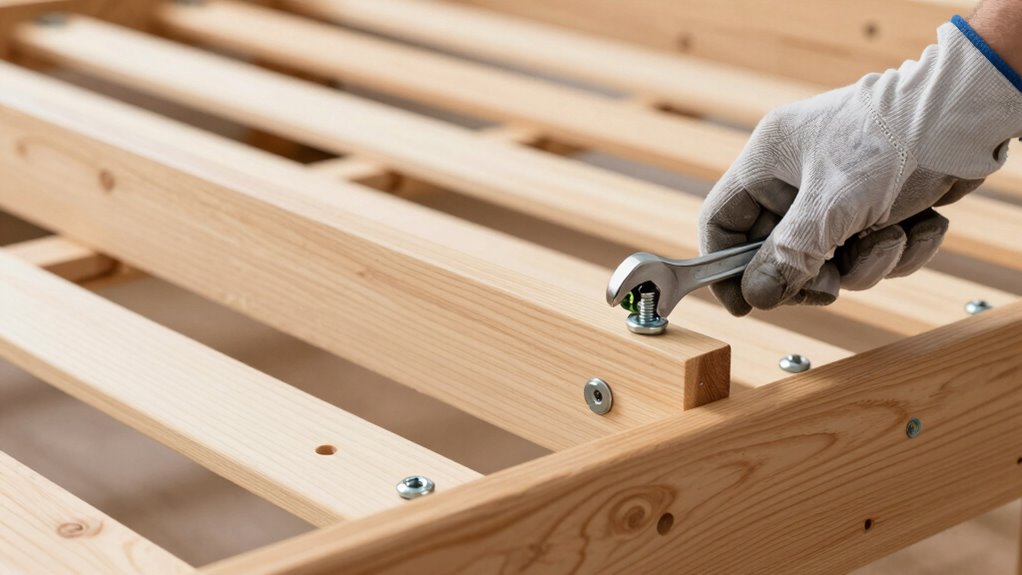
Ensuring the center support and slats are secure and level is essential for a stable bed. Start by inspecting your bed frame materials, making sure all support beams are properly aligned. If the support beam isn’t level, it can cause instability, so adjust or reposition it as needed. Check that all slats are evenly spaced and securely attached, preventing any movement that could cause wobbling. Tighten any loose screws or brackets holding the support system in place. Use a level to verify the support beam’s alignment and ensure the slats are flat and even across the frame. Properly secured and leveled support and slats distribute weight evenly, reducing wobbling and improving overall stability. Additionally, understanding the support system’s design can help you identify potential weak points and improve your bed’s stability.
Reinforce Worn or Weak Joints With Extra Hardware
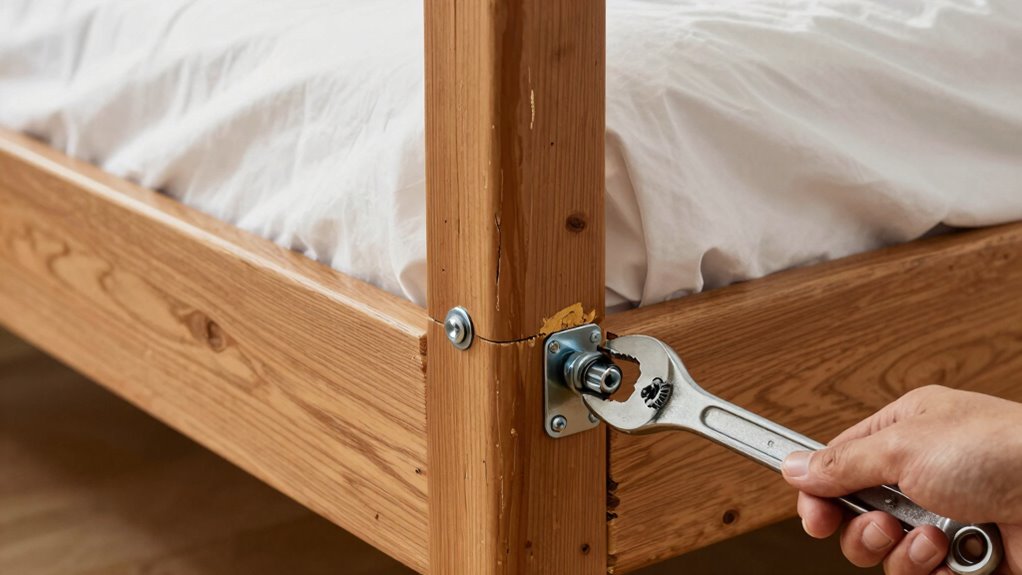
Worn or weak joints are a common cause of bed frame wobbling, but adding extra hardware can provide the needed support. To guarantee stability, consider joint reinforcement with hardware upgrades like brackets, braces, or metal plates. These additions strengthen loose connections and prevent future wobbling. When choosing hardware, focus on options that suit your frame’s material and design. Use the table below to identify the best reinforcement methods:
| Joint Type | Hardware Upgrade | Benefit |
|---|---|---|
| Corner joints | Metal brackets | Increased stability |
| Bed rail joints | Reinforcing braces | Prevents shifting |
| Center supports | Additional bolts or plates | Improves overall support |
Adding proper hardware ensures your bed frame remains sturdy over time.
Adjust and Level the Bed Frame for Stability
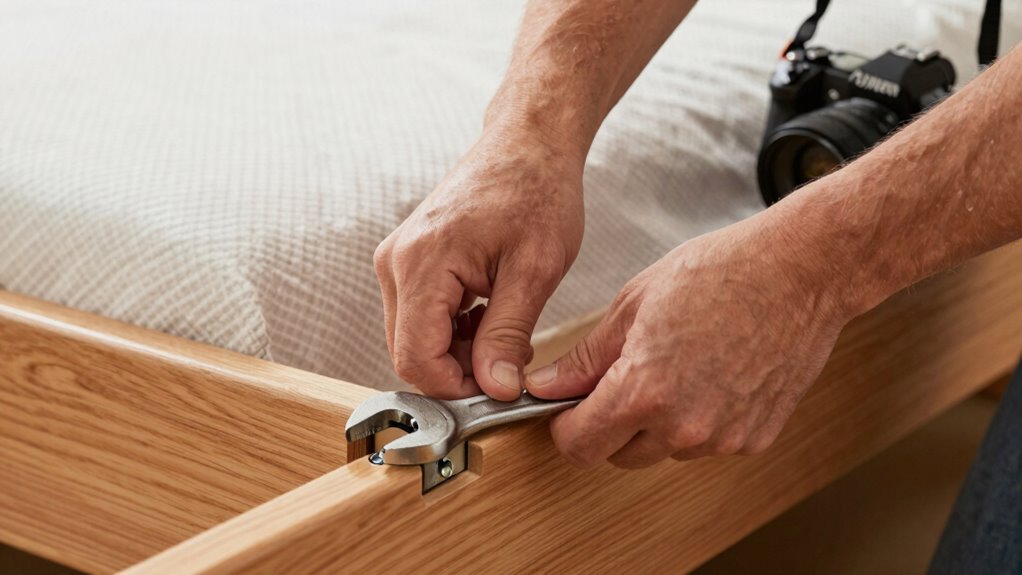
If your bed frame is still wobbly after reinforcing joints, the next step is to adjust and level it. Start by inspecting the bed frame materials—wood, metal, or a combination—as each may require different techniques. Check if the frame design includes adjustable legs or leveling glides; if so, use a level to identify uneven spots. Turn or tighten these legs or glides to ensure the frame sits flat on the floor. For frames without adjustable features, consider adding shims or pads under uneven legs. Make small adjustments and recheck with a level until the bed is stable. Properly leveling your bed frame helps eliminate wobbling, ensuring a safer and more comfortable sleep. Incorporating thermal behavior principles can also help you understand how to prevent future shifts or warping in different bed frame materials.
Check the Mattress and Foundation for Wobble Causes

After leveling the bed frame, the next step is to examine the mattress and foundation for potential wobble sources. First, check your bed mattress for uneven wear or shifting, which can cause instability. Make certain it sits evenly on the foundation. Next, inspect the foundation for wobble—look for loose or uneven slats, broken supports, or sagging areas. If the foundation wobble, it can transfer movement to the entire bed, making it feel unsteady. Tighten any loose screws or brackets on the foundation, and replace damaged parts if needed. Confirm that the mattress and foundation sit flush and secure. Additionally, inspecting the foundation materials for integrity can help identify hidden issues that contribute to wobbling. Addressing these issues helps eliminate wobble at its source, providing a more stable sleep surface and preventing further movement in your bed.
Maintain Your Bed Frame With Regular Checks
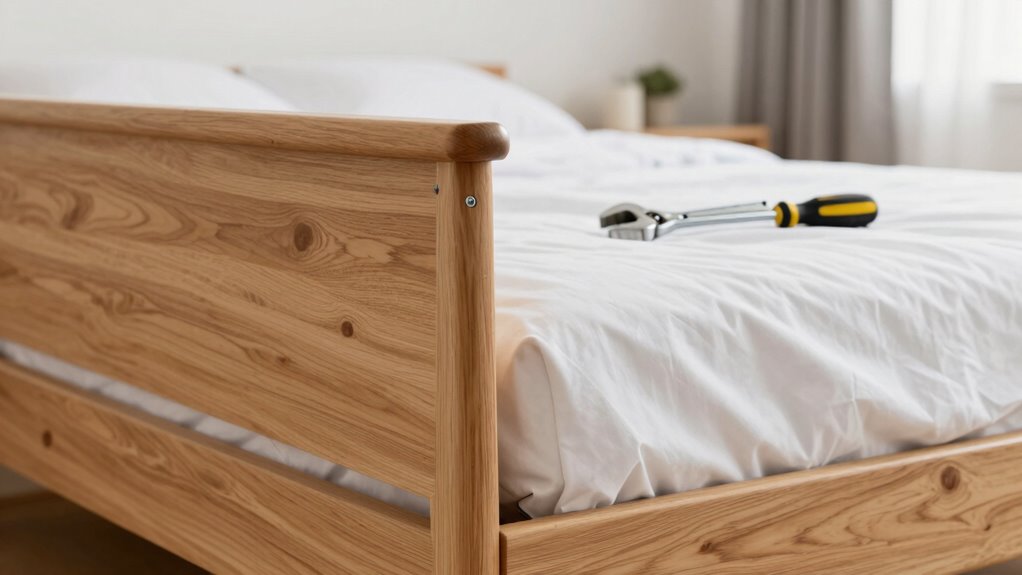
Regularly inspecting your bed frame is essential to keep it stable and prevent wobbling over time. By performing routine checks, you catch issues early and extend the life of your bed. Start by examining the bed frame materials—wood, metal, or other materials—for cracks, rust, or looseness. Next, focus on any decorative bed features, ensuring they’re securely attached and not causing instability. Finally, tighten all bolts, screws, and joints, especially in high-stress areas. This simple maintenance helps prevent wobbling caused by loose components or wear. Additionally, understanding structural integrity can help you identify potential issues before they become serious. Regular checks also allow you to spot signs of damage before they worsen, saving you time and money. Consistent maintenance keeps your bed sturdy, comfortable, and safe for nightly use.
Know When to Repair or Replace Your Bed Frame
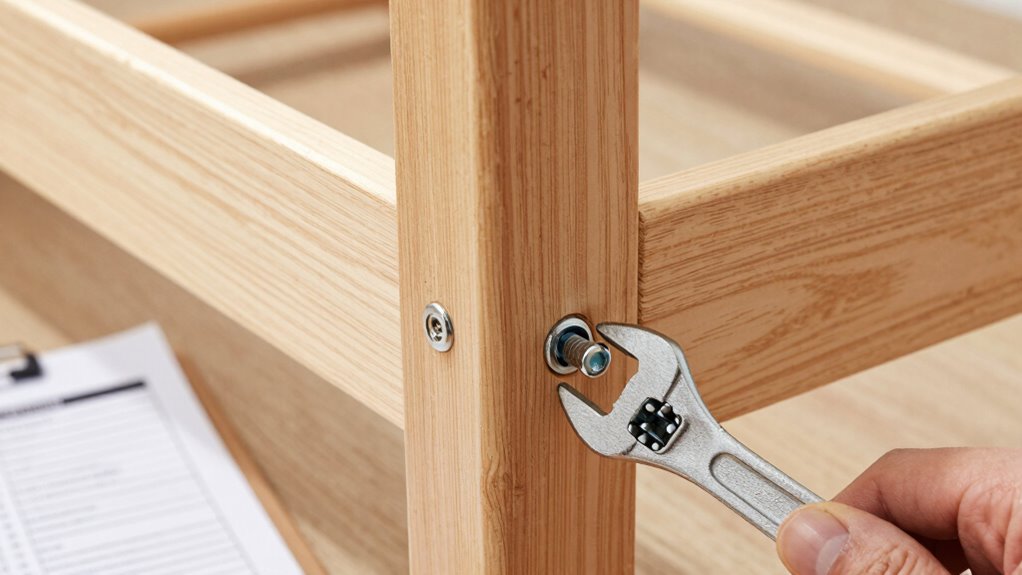
Before repairing your bed frame, assess its overall condition and see if the damage is fixable. Consider how old it is and how much wear it has endured over time. Then, weigh the repair costs against the price of a new frame to decide whether a fix or replacement makes more sense.
Assess Frame Condition
To determine whether your bed frame needs repair or replacement, start by thoroughly inspecting its condition. Check for visible damage like cracks, warping, or broken joints, which indicate the frame’s material may be compromised. Evaluate the frame design for stability—look for wobbling, loose connections, or sagging areas. Consider these key points:
- Examine the bed frame material—wood, metal, or composite—to see if it’s weakened or damaged.
- Inspect joints and welds for signs of rust, corrosion, or breakage.
- Assess overall stability—if the frame is bent, cracked, or no longer holds the mattress securely, it’s time to replace.
Consider Age and Wear
Evaluating how old your bed frame is and how much it’s been used can help you decide whether to repair or replace it. Older frames with significant wear may no longer offer adequate support, especially if the material durability has declined. Consider the bed frame’s longevity—if it’s been in use for over 10 years or shows signs of deterioration, replacing it might be more cost-effective than repairs. The table below highlights key factors to assess:
| Age of Bed Frame | Material Durability | Signs of Wear |
|---|---|---|
| Over 10 years | Low-quality materials | Cracks, broken slats |
| 5-10 years | Moderate durability | Squeaks, wobbliness |
| Less than 5 years | High-quality materials | Minimal wear |
Knowing when to repair or replace ensures your bed remains stable and safe.
Evaluate Repair Costs
Determining whether to repair or replace your bed frame depends on the repair costs relative to its value and lifespan. Conduct a cost comparison to decide if repairs are worthwhile. First, assess material considerations—wood, metal, or composite—since some materials are easier and cheaper to fix. Second, evaluate the extent of damage: minor issues like loose joints may cost little, while extensive damage could require costly replacements. Third, consider the age of the frame; if it’s nearing the end of its lifespan, replacement might be more economical. If repair costs are high compared to the frame’s remaining lifespan or material considerations complicate repairs, replacing the bed frame could be the smarter choice. This approach helps you avoid unnecessary expenses and ensures safety.
Frequently Asked Questions
How Often Should I Inspect My Bed Frame for Stability?
You should inspect your bed frame for stability at least once every three to six months as part of your bed frame maintenance routine. Regular inspections help you catch loose bolts, weakened joints, or worn parts early, preventing wobbliness. An established inspection schedule guarantees your bed remains sturdy and comfortable, reducing the risk of accidents or damage. Staying proactive keeps your bed in great shape and extends its lifespan effectively.
Can I Fix a Wobbly Bed Frame Without Tools?
Yes, you can fix a wobbly bed frame without tools, especially if it’s made of simple materials like wood or metal. Try tightening any loose joints or screws by hand, which often works like furniture assembly. For wooden frames, you might use clamps or even household items like rubber bands to stabilize parts temporarily. Keep in mind, though, that proper tightening and sometimes minor adjustments lead to a sturdier, wobble-free bed.
What Signs Indicate My Bed Frame Needs Replacement?
Your bed frame’s telling you it’s time to say goodbye when creaking sounds turn into persistent squeaks, or if it feels like a boat tossing on rough seas. Check the materials—wood can crack, metal may bend or rust. If repairs are futile or warranty coverage has expired, it’s a sign you need a new frame. Don’t ignore these signs; they’re your bed’s way of whispering it’s time for an upgrade.
Are There Specific Types of Hardware for Reinforcing Joints?
Yes, using specific hardware like metal brackets can substantially reinforce joints in your bed frame, providing extra stability. Wooden dowels also help by fitting tightly into the joints, preventing wobbling. You should prioritize metal brackets for added strength at key connection points, while wooden dowels are great for reinforcing the integrity of wood-to-wood joints. Combining these hardware options ensures a sturdier, wobble-free bed frame.
How Do I Prevent My Bed Frame From Wobbling in the Future?
To prevent your bed frame from wobbling again, choose sturdy bed frame materials like solid wood or metal, which offer better stability. Make certain your frame is compatible with your mattress size and weight, as an ill-fitting mattress can cause movement. Regularly check and tighten hardware, and consider adding support slats or corner braces for extra reinforcement. Proper assembly and maintenance keep your bed stable and wobble-free over time.
Conclusion
Regularly checking and tightening your bed frame can reduce wobbling by up to 80%. Keeping all parts secure guarantees better stability and extends the lifespan of your bed. Remember, a sturdy bed not only improves your sleep but also prevents potential injuries. So, make it a habit to inspect and maintain your frame—your nights will be more restful, and your bed will last longer!