For bunk beds, keep your mattress thickness to around 6 inches to guarantee safety and proper fit. Safety rails should be at least 5 inches above the mattress to prevent falls. Avoid thicker or overly plush mattresses, as they can create gaps or make rails less effective. Make sure your mattress matches the manufacturer’s guidelines to reduce risks. Learn more about how to keep your bunk bed safe and comfortable by exploring additional tips.
Key Takeaways
- Mattress thickness should not exceed 6 inches for safety compliance on bunk beds.
- Safety rails must be at least 5 inches above the mattress surface to prevent falls.
- Choose firm, snug-fitting mattresses between 6-8 inches thick for optimal safety.
- Ensure safety rails are continuous with no large openings and properly installed.
- Regularly inspect mattresses and rails for stability, wear, and proper fit to maintain safety.
What Are the Mattress Thickness Rules for Bunk Beds?
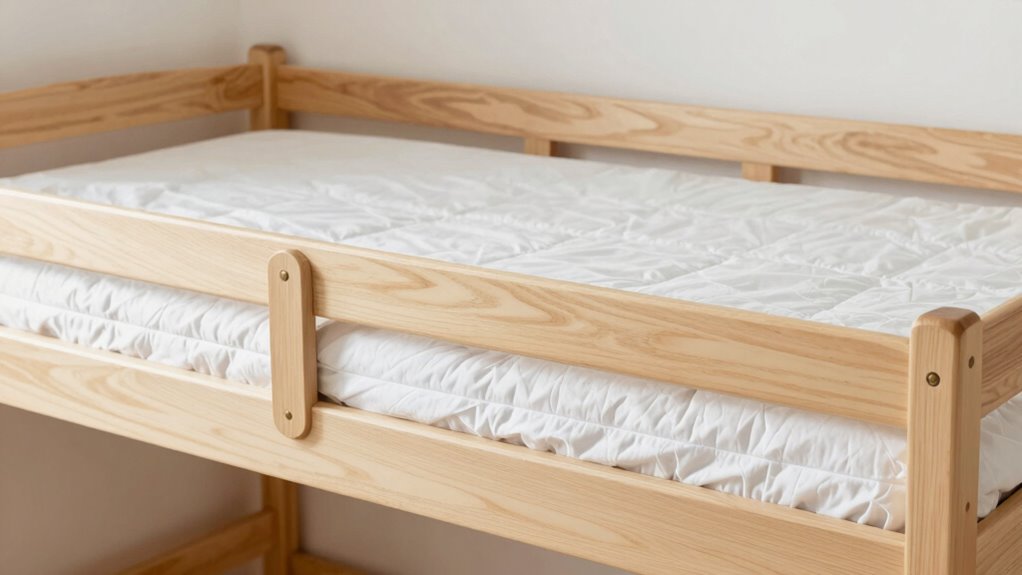
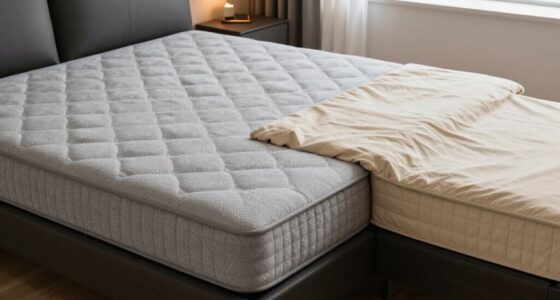
To guarantee safety, mattress thickness for bunk beds must meet specific guidelines. Safety standards specify that mattress thickness should typically not exceed 6 inches. Thicker mattresses can increase the risk of falls or make it difficult for safety rails to provide adequate protection. You need to measure your mattress carefully and compare it to the manufacturer’s recommendations and safety standards. If the mattress is too thick, it could compromise the bunk bed’s safety features. Always opt for a mattress that fits snugly within the frame, ensuring it doesn’t protrude or cause instability. Proper ventilation considerations are also important to prevent moisture buildup and ensure a safe sleeping environment. Following these mattress thickness rules helps prevent accidents and ensures the bunk bed remains a secure sleeping environment for users.
Do Bunk Beds Need Safety Rails? What Are the Requirements?
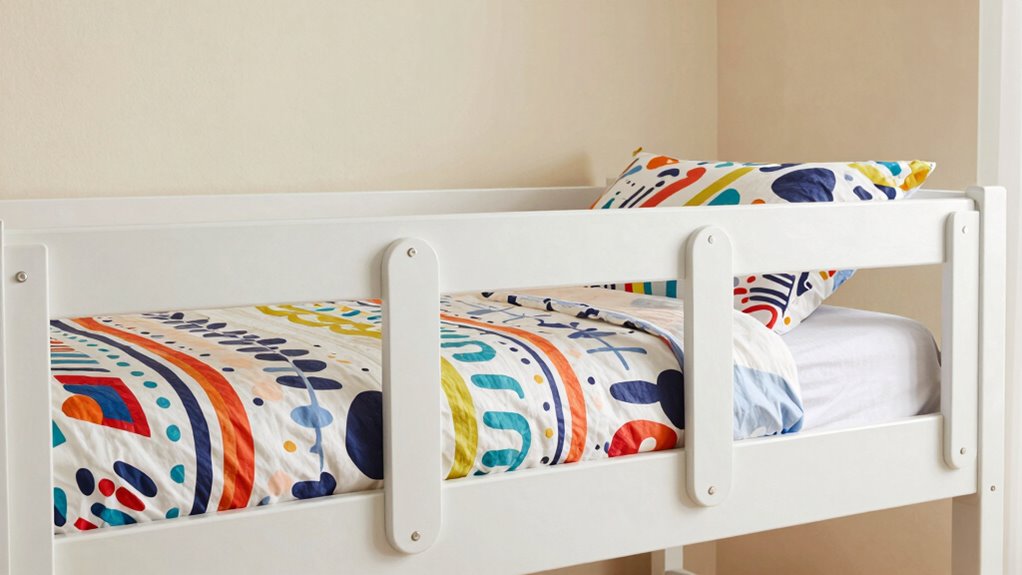
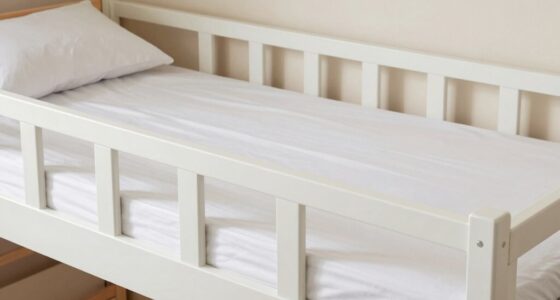
Bunk beds almost always require safety rails to prevent falls and guarantee occupant safety. The bunk bed design typically includes built-in safety rails on the upper bunk, meeting safety standards and reducing injury risk. These rails should be at least 5 inches above the mattress surface to ensure effective protection. When considering mattress material, choose a firm, snug-fitting mattress to avoid gaps that could pose safety hazards. Soft or overly thick mattresses can compromise the effectiveness of safety rails or cause the mattress to shift. Regulations often specify that safety rails must be continuous, with no openings large enough for a child to slip through. Always verify your bunk bed’s safety requirements to ensure proper design and mattress compatibility for safe use. Additionally, understanding projector contrast ratio can help in designing a safe and comfortable sleep environment by reducing glare and ensuring optimal lighting conditions.
How Do I Choose the Right Mattress for a Bunk Bed?
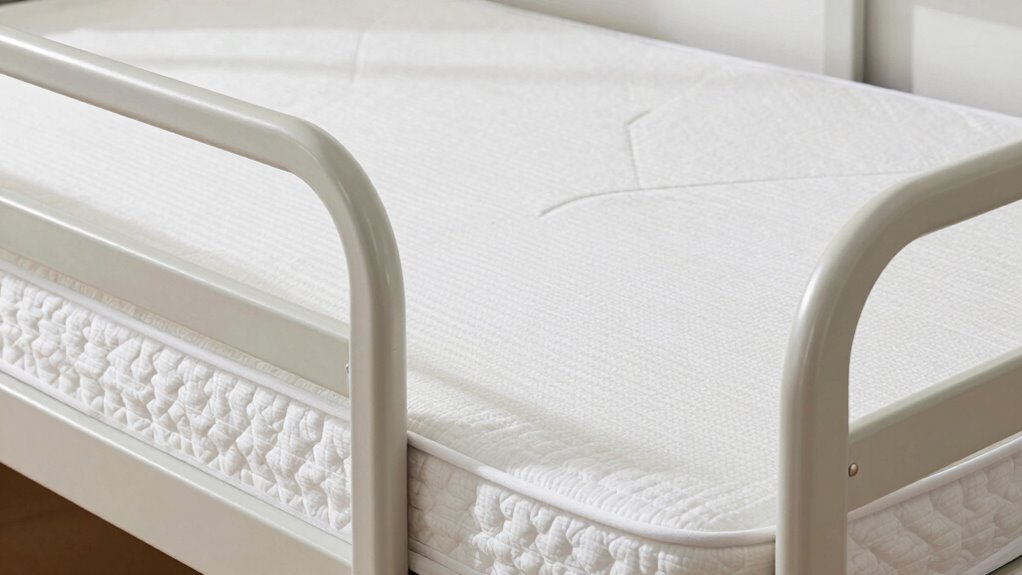
Choosing the right mattress for a bunk bed is essential for safety and comfort. Start by considering mattress materials; foam and innerspring options are popular, but verify they’re not too soft or thick. A thinner mattress, around 6-8 inches, fits most safety guidelines and provides added security. Your bed frame design matters too—look for a mattress that fits snugly within the frame to prevent slipping or gaps. Avoid overly plush mattresses that can compromise safety or stability. Check the manufacturer’s recommendations for compatible mattress types and thicknesses. Properly fitting mattresses help prevent accidents and ensure your bunk bed remains sturdy. Using at-home beauty tech devices designed for safety can also help monitor the condition of your bedding setup. By selecting the right materials and matching the mattress to your bed frame design, you create a safe, comfortable sleeping environment.
What Are the Risks of Not Following Mattress and Rail Rules?
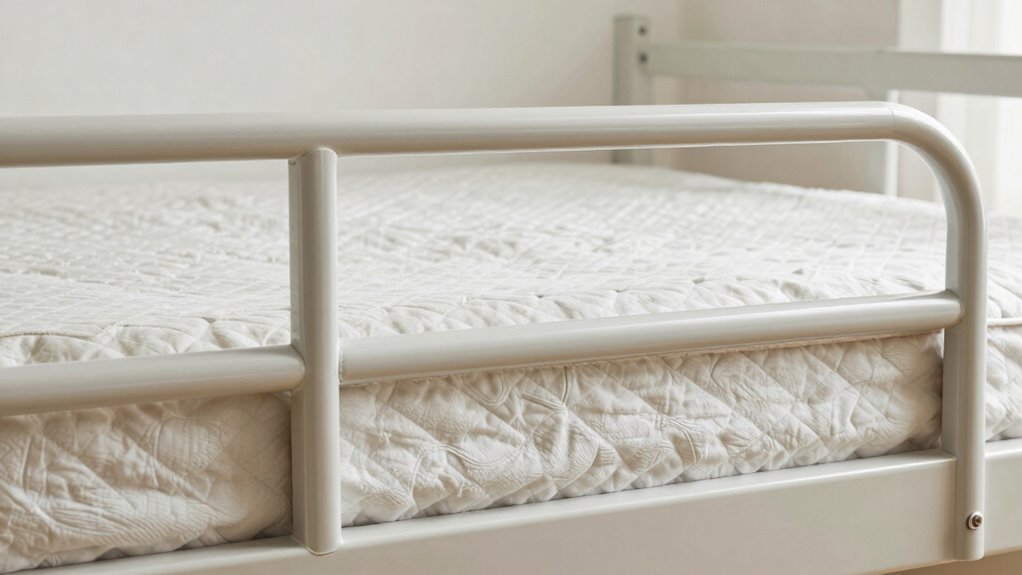
Failing to follow mattress and rail rules can lead to serious safety hazards. If you ignore recommended thickness or skip safety rails, your child risks injuries or mattress suffocation. Without proper rails, children may fall and sustain fractures or head injuries. Using an unsuitable mattress can cause gaps that trap limbs or heads, increasing injury risk. Here is a quick look at the hazards:
| Risk | Explanation |
|---|---|
| Child injuries | Falls or impact injuries from unsecured or low safety rails. |
| Mattress suffocation | Gaps or loose mattresses can block breathing or trap a child. |
Not adhering to these rules compromises safety, putting your child at unnecessary risk. Proper mattress thickness and sturdy safety rails are essential to prevent injuries and ensure safe sleep. Ensuring the mattress fits properly and adheres to safety standards helps minimize these risks.
How Can I Keep My Bunk Bed Safe and Comfortable?
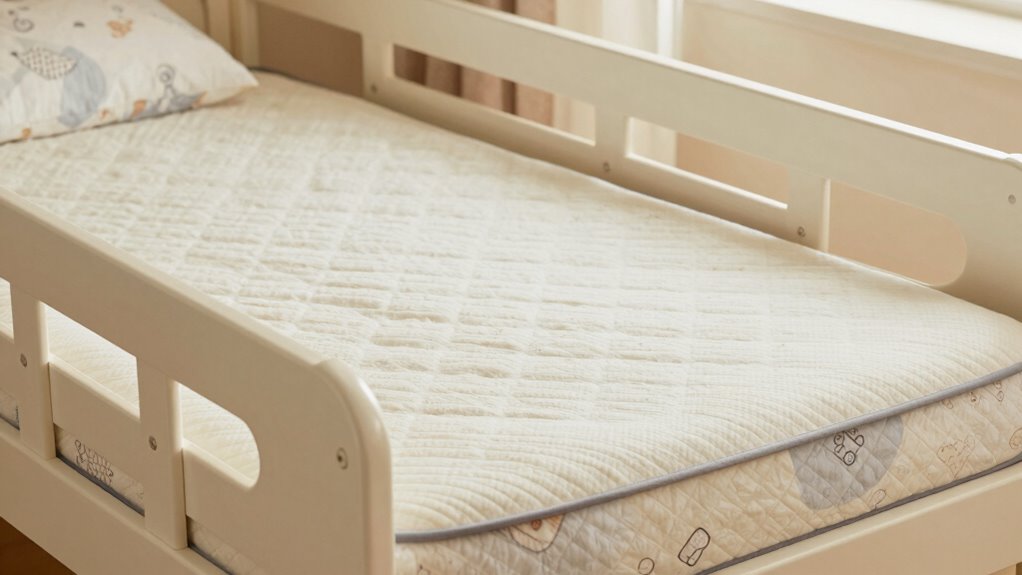
To keep your bunk bed both safe and comfortable, you should regularly check that all safety features are secure and in good condition. The bunk bed design plays an essential role in safety, so make certain guardrails are sturdy and properly installed, and that ladders are stable. When selecting bedding materials, choose breathable, non-toxic fabrics to enhance comfort and reduce risk of allergies or overheating. Keep mattresses well-fitted to prevent gaps that could pose safety hazards. Regularly inspect for wear and tear, and replace any damaged parts immediately. Proper mattress thickness also supports safety by preventing falls. Additionally, understanding navigation and mapping features in robotic cleaning devices can help you maintain a clean and hazard-free environment around the bunk bed area. By maintaining these elements, you create a secure, cozy environment that promotes restful sleep and peace of mind.
Frequently Asked Questions
Are There Specific Weight Limits for Bunk Bed Mattresses?
Yes, there are weight limits for bunk bed mattresses, typically around 200 to 300 pounds per sleeping area. These limits depend on the bunk bed design and mattress firmness. You should always check the manufacturer’s guidelines to guarantee safety. Keeping within these weight limits helps prevent accidents and mattress damage, ensuring a safe, comfortable sleep for everyone. Always choose a mattress that fits your bunk bed’s specifications.
Can I Use Memory Foam Mattresses on Bunk Beds?
You can use memory foam mattresses on bunk beds, but choose the right firmness for safety. About 60% of users prefer medium firmness, which provides support and comfort without excessive sinking. Make sure your memory foam mattress isn’t too thick—ideally between 4-6 inches—to meet safety rail requirements and prevent safety hazards. Always verify your bunk bed’s weight limits and manufacturer recommendations before selecting a memory foam mattress.
What Safety Features Should New Bunk Beds Include?
You should look for new bunk beds with a guardrail height of at least five inches above the mattress to prevent falls. Make sure the guardrails are sturdy and securely attached on all sides. Additionally, prioritize ladder safety by choosing a stable, easy-to-climb ladder with non-slip steps. These features help keep users safe, reducing the risk of accidents and ensuring a secure sleeping environment.
How Often Should I Check Safety Rails for Wear?
Think of safety rails like the sturdy guardrails on a mountain trail—you don’t want them to weaken over time. You should check safety rail maintenance and inspect for wear and tear weekly, especially after rough use or heavy activity. Regular inspections catch small issues before they become big problems, ensuring your bunk bed stays a safe, secure refuge for every climber. Stay vigilant, and enjoy worry-free sleepovers.
Are There Age Restrictions for Bunk Bed Usage?
You should generally avoid giving bunk beds to children under six, as bed height increases fall risk. Always guarantee the mattress allows proper ventilation to prevent overheating. As your child grows, keep an eye on the bed’s height and safety rails, adjusting as needed. Regularly check that safety features remain secure, especially if your child is active, to keep them safe and comfortable during sleep.
Conclusion
By choosing the right mattress thickness and installing sturdy safety rails, you create a safe haven in your child’s bunk bed. Imagine a cozy fortress, where safety rails stand tall like protective walls, while a comfortable mattress rests peacefully inside, like a soft bed of clouds. Balancing these elements keeps your little one secure and snug, turning their bunk bed into both a safe retreat and a restful escape from the world.