
To improve sleep hygiene, stick to a consistent schedule by going to bed and waking up at the same times every day, including weekends. Create a relaxing pre-sleep routine with calming activities and make your bedroom a sleep-friendly environment by controlling light, noise, and temperature. Limit screen time, caffeine, and alcohol near bedtime, and avoid long naps. Focusing on these simple habits can boost your sleep quality—continue exploring how these tips work for you.

Get home appliances delivered free with Prime
- Fast, free delivery on millions of items
- Prime Video, Amazon Music and more included
- Member-only deals all year
Establish a Consistent Sleep Schedule
To improve your sleep quality, establishing a consistent sleep schedule is essential. Going to bed and waking up at the same times each day helps regulate your body’s internal clock, making it easier to fall asleep and wake up refreshed. Avoid large bedtime snacks right before bed, as they can disrupt your sleep environment and cause discomfort. Instead, opt for light, healthy options if you’re hungry. Keep your sleep environment calm and comfortable—dim lighting, a cool temperature, and minimal noise support consistency. Sticking to a routine reinforces your body’s natural rhythms, making sleep more restorative. Over time, this consistency reduces nighttime awakenings and improves overall sleep quality, helping you feel more energized during the day. Consistent sleep scheduling also supports proper sleep hygiene practices, which are crucial for overall health and well-being. Incorporating relaxation techniques before bed, like deep breathing or gentle stretching, can further enhance your sleep routine and promote better sleep patterns. Establishing a bedtime routine that signals to your body it’s time to wind down can make it easier to fall asleep consistently. Developing awareness of your sleep environment can help identify and eliminate disturbances that interfere with restful sleep.
As an affiliate, we earn on qualifying purchases.
Build a Relaxing Bedtime Routine

Creating a relaxing bedtime routine signals to your body that it’s time to wind down, making it easier to fall asleep. You can incorporate calming activities that promote relaxation, such as listening to soothing bedtime music or using aromatherapy scents like lavender or chamomile. These cues help your mind associate certain routines with sleep, easing the progression from wakefulness. To build an effective routine, consider:
Establish a calming bedtime routine with soft music and soothing scents to signal your body it’s time to sleep.
- Playing gentle, calming bedtime music for 20-30 minutes before bed
- Diffusing aromatherapy scents to create a peaceful environment
- Engaging in light stretching or deep breathing exercises to relax your muscles
- Incorporating simple organized routines that you can consistently follow each night
- Remember that consistent sleep cues, like the use of Sun’s energy, can enhance your body’s ability to recognize sleep signals and improve overall sleep quality. Additionally, establishing a consistent sleep schedule helps reinforce these cues and supports your circadian rhythm. Incorporating sleep hygiene practices, such as limiting screen time before bed, further supports your ability to fall asleep naturally. In fact, the use of light cues like natural sunlight during the day can significantly bolster your sleep patterns.
Consistency is key; sticking to these habits nightly will strengthen your sleep cues and make falling asleep more natural.
As an affiliate, we earn on qualifying purchases.
Make Your Bedroom More Sleep-Friendly
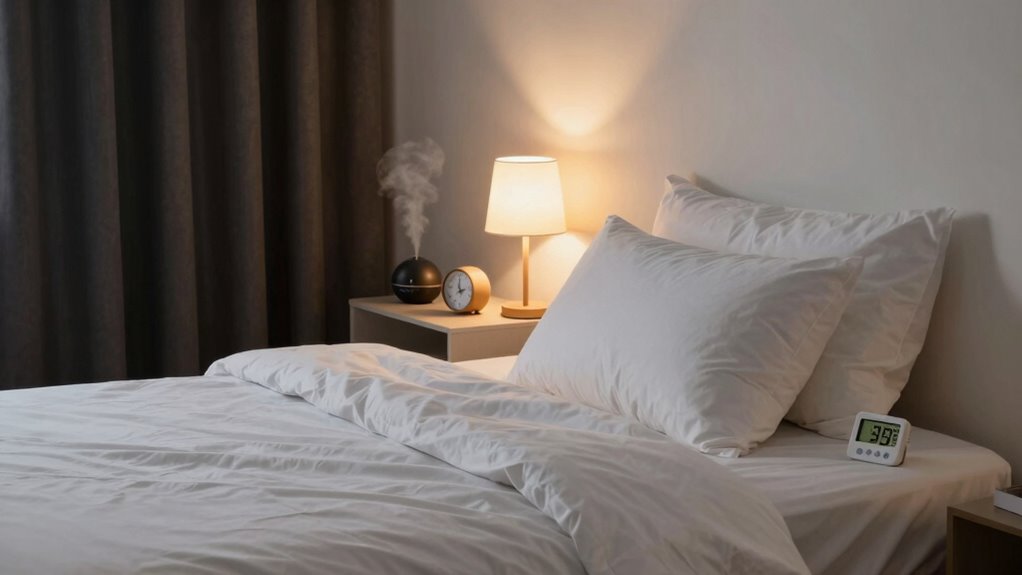
To make your bedroom more sleep-friendly, focus on controlling light exposure by blackout curtains or dimming lights before bed. Keep your room at a comfortable temperature and minimize noise distractions with earplugs or white noise machines. These small changes can markedly improve your quality of sleep, especially if you prioritize sleep hygiene practices that promote consistent, restorative rest. Additionally, creating a sleep-friendly environment by eliminating clutter and ensuring your mattress and pillows are comfortable can further support better sleep quality. Incorporating sleep environment factors, such as proper light control and sound insulation, can make a significant difference in your overall sleep experience. Using an air purifier in your bedroom can also help reduce airborne allergens and pollutants, creating a healthier space for restful sleep. Ensuring your sleep environment is optimized can contribute to more restorative and uninterrupted sleep nights.
Control Light Exposure
Controlling light exposure is essential for making your bedroom more sleep-friendly. Exposure to blue light from screens can disrupt your circadian rhythm, making it harder to fall asleep and wake up refreshed. To optimize your environment:
- Use blackout curtains or a sleep mask to block out external light sources.
- Limit screen time before bed, or use blue light filters on devices.
- Dim the lights in your bedroom an hour before bedtime to signal to your body that it’s time to wind down.
- Consider installing lighting controls to better manage light levels and support healthy sleep patterns.
- Incorporating smart lighting solutions can help automate light adjustments and maintain optimal sleep conditions.
- Adjusting your indoor lighting to minimize blue light exposure can further promote natural sleep cycles.
- Regularly monitoring light exposure helps ensure your environment remains conducive to restful sleep.
- Using light sensors can provide real-time feedback and help you personalize your lighting environment for better sleep quality.
Maintain Comfortable Temperature
Maintaining a comfortable temperature in your bedroom is essential for restful sleep. The ideal room temperature typically ranges between 60 and 67°F (15-19°C), helping your body cool down naturally. When the room is too hot or too cold, your sleep quality drops. Adjust your thermostat or use a fan or heater to find the right balance. Bedding comfort also plays a key role; choose lightweight sheets or a breathable duvet to prevent overheating. Consider layering your bedding so you can add or remove items as needed. Keep your bedroom well-ventilated to maintain fresh, comfortable air. Proper climate control can make a significant difference in sleep quality, especially for older adults who may be more sensitive to temperature fluctuations. Additionally, using air quality improvements like air purifiers can enhance overall sleep conditions by reducing allergens and pollutants. Maintaining optimal room temperature is also supported by reducing digital distractions, which can help your body better regulate its internal temperature during sleep. Using appropriate sleep environments can further optimize your sleep hygiene.
Minimize Noise Distractions
Noise disruptions can profoundly interfere with your sleep, making it harder to fall asleep or stay asleep through the night. To minimize noise distractions, consider soundproofing techniques like sealing gaps around windows and doors, adding heavy curtains, or using acoustic panels. These methods help block outside noise and create a quieter environment. Noise masking methods, such as using a white noise machine or a fan, can also help drown out disruptive sounds and promote deeper sleep. Additionally, try placing your bed away from noisy sources, like windows or shared walls, to further reduce disturbances. You might also consider integrating local automation devices to schedule noise-masking sounds during sleep hours automatically. By combining soundproofing techniques with noise masking methods, you create a sleep-friendly environment that helps you fall asleep faster and stay asleep longer, improving your overall sleep quality.
As an affiliate, we earn on qualifying purchases.
Cut Back on Screen Time Before Bed

Reducing your screen time before bed can substantially improve your sleep quality. Try limiting device usage at least an hour before bed and switch your screens to night mode to reduce blue light exposure. Establishing a screen-free period each night helps your body wind down and prepares you for restful sleep.
Limit Device Usage
Using screens right before bed can interfere with your sleep, as the blue light emitted from devices like smartphones and tablets suppresses melatonin production, making it harder to fall asleep. To improve your sleep hygiene, consider a screen detox at least an hour before bed. Establishing a device curfew helps reduce exposure and signals to your body that it’s time to wind down. You can also try:
- Creating a relaxing pre-sleep routine without screens
- Using physical books or magazines instead of digital content
- Keeping devices out of the bedroom altogether
Limiting device usage helps your brain relax and prepares it for restful sleep. By consciously reducing your screen time, you support better sleep quality and establish healthier habits.
Switch to Night Mode
Switching your device to night mode before bed can considerably reduce blue light exposure, helping your body produce more melatonin and fall asleep more easily. Night mode benefits include dimming screen brightness and shifting colors to warmer tones, which supports a healthier sleep environment. By making this simple change, you minimize the disruption to your circadian rhythm caused by harsh blue light. This creates a more relaxing atmosphere, signaling to your body that it’s time to wind down. An improved sleep environment promotes quicker sleep onset and better overall rest. Using night mode consistently before bed helps set a routine that encourages your body’s natural sleep signals, making it easier to fall asleep and stay asleep throughout the night.
Establish Screen-Free Time
To improve your sleep quality, it’s important to set aside time before bed without screens. Reducing screen time helps your brain wind down and prepares it for restful sleep. Consider implementing a digital detox at least an hour before bed to avoid the stimulating effects of blue light. This break can improve melatonin production and decrease alertness. To make this easier, try these strategies:
- Replace screen time with calming activities like reading or journaling
- Use physical alarm clocks instead of your phone to avoid temptation
- Set a consistent cutoff time for all electronic devices each night
As an affiliate, we earn on qualifying purchases.
Control Caffeine and Alcohol for Restful Sleep

Since caffeine and alcohol can considerably disrupt your sleep, managing their intake is essential for restful nights. Limiting caffeine intake, especially in the afternoon and evening, helps prevent it from interfering with your ability to fall asleep. Remember that caffeine isn’t just in coffee; it’s in tea, soda, and even some medications. Similarly, alcohol consumption might initially make you feel sleepy, but it often leads to fragmented sleep and early awakenings. To improve sleep quality, avoid drinking alcohol close to bedtime. Keep track of how much caffeine and alcohol you consume throughout the day, and aim to cut back at least a few hours before bed. This simple adjustment can substantially enhance your ability to fall asleep and stay asleep through the night.
Avoid Heavy and Spicy Meals at Night

Eating heavy or spicy meals before bed can interfere with your sleep by disrupting digestion. These foods increase the risk of acid reflux, making it harder to stay comfortable and fall asleep. To improve your sleep quality, opt for lighter, milder options in the evening.
Digestion Disrupts Sleep
Heavy and spicy meals before bed can substantially interfere with your sleep. They can disrupt your digestive health and make it harder to fall asleep or stay asleep throughout the night. When you eat late or consume large, spicy dishes, your body works overtime to digest, which can cause discomfort and alertness when you want to wind down. Proper meal timing helps your digestive system settle before bedtime, promoting better sleep quality. To support restful sleep, avoid these pitfalls:
- Consuming high-fat or greasy foods that slow digestion
- Eating large portions close to bedtime
- Including spicy ingredients that irritate your stomach
Acid Reflux Risks
Consuming heavy and spicy meals at night can markedly increase your risk of acid reflux, disrupting your sleep and causing discomfort. When you eat large or spicy foods before bed, stomach acid can flow back into your esophagus, leading to acid reflux episodes. This not only causes heartburn but also results in sleep disturbance, making it harder to fall asleep or stay asleep. To understand better, consider this table:
| Food Type | Effect on Acid Reflux | Timing Recommendations |
|---|---|---|
| Spicy Foods | Increase reflux risk | Avoid 2-3 hours before bed |
| Heavy Meals | Delay digestion, raise reflux | Eat at least 3 hours before sleep |
| Fatty Foods | Relax LES, worsen reflux | Limit at night |
| Alcohol | Relax LES, cause reflux | Minimize in evening |
| Large Portions | Overload stomach, trigger reflux | Moderate size, earlier dinner |
Reducing spicy and heavy meals at night helps minimize acid reflux and promotes better sleep.
Sleep Quality Impacts
Since spicy and heavy meals can cause acid reflux, they often disrupt your sleep quality by leading to discomfort and frequent awakenings. This affects your overall sleep environment, making it harder to achieve restful sleep. Poor sleep quality can reduce your ability to recall dreams clearly, impacting your nighttime awareness. To improve sleep, avoid large, spicy, or greasy foods before bed. Additionally, consider these factors:
- Eating lighter meals promotes a calmer sleep environment, reducing disruptions.
- A stable sleep environment supports better dream recall by minimizing disturbances.
- Maintaining consistent mealtimes helps regulate digestion, leading to deeper, more restorative sleep.
Exercise Regularly to Improve Sleep Quality

Regular exercise can considerably enhance your sleep quality, but timing and consistency are key. Engaging in physical activity during the day helps regulate your sleep cycle and reduces stress. Incorporate bedtime stretching to wind down, promoting relaxation before sleep. Avoid vigorous workouts close to bedtime, as they can make falling asleep harder. Instead, aim for exercise earlier in the day to improve sleep environment and overall restfulness. A consistent routine strengthens your circadian rhythm, helping you fall asleep faster and enjoy deeper sleep. Remember, the goal is to make exercise a regular part of your day, not a sporadic activity. When combined with good sleep environment practices, like keeping your bedroom cool and dark, regular exercise becomes a powerful tool for quality sleep.
Track Your Sleep Patterns to Spot Disruptors
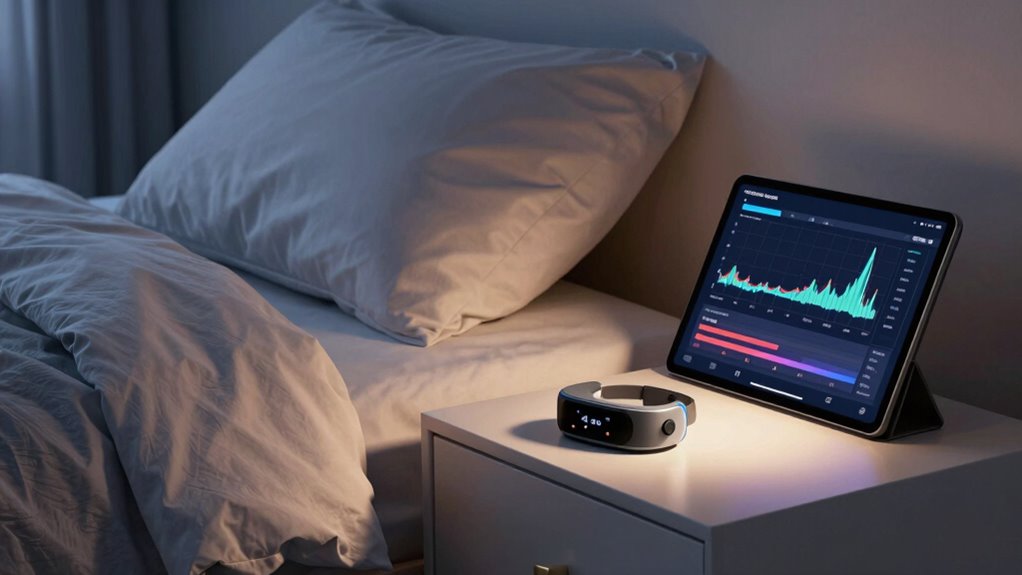
Tracking your sleep patterns allows you to identify habits or factors that may be disrupting your rest. By analyzing your sleep pattern data, you can pinpoint specific sleep disruptors that interfere with quality sleep. Regular sleep pattern analysis helps reveal inconsistencies in sleep and wake times, which may hinder your body’s natural rhythm. You might discover that certain activities or substances are linked to poor sleep quality.
Consider these common disruptors:
- Consuming caffeine or alcohol close to bedtime
- Exposure to screens or bright lights late in the evening
- Irregular sleep schedules on weekends
Skip Napping During the Day to Keep Sleep Drive Strong

Skipping daytime naps helps maintain a strong sleep drive, making it easier to fall asleep and stay asleep at night. When you avoid napping, your body’s need for rest builds up naturally, signaling your brain that it’s time for sleep when evening comes. Daytime napping can weaken your sleep drive and disrupt your regular sleep patterns, leading to difficulty falling asleep later. To visualize this, consider the following ideas:
| Daytime Napping | Sleep Drive Effect |
|---|---|
| Short naps | Slight reduction |
| Long naps | Significant reduction |
| Late afternoon | Interferes with sleep |
| No naps | Maintains strong drive |
| Consistent schedule | Supports healthy sleep |
Stick to your routine, and your sleep drive stays strong and reliable.
Start Your Day With a Calm, Consistent Wake-Up Routine

Starting your day with a calm, consistent wake-up routine sets the tone for a restful night. Incorporate morning mindfulness to start the day with intention and reduce stress. A gentle awakening helps you avoid abrupt shifts from sleep to activity, promoting overall sleep quality. To establish this routine, consider these practices:
- Wake up at the same time daily, even on weekends, to reinforce your body’s internal clock
- Spend a few minutes stretching or practicing deep breathing to promote relaxation
- Avoid screens immediately upon waking; instead, engage in quiet activities like journaling or listening to calming music
Frequently Asked Questions
Can Sleep Hygiene Tips Work for Insomnia or Sleep Disorders?
Yes, sleep hygiene tips can help manage insomnia and sleep disorders. By practicing good sleep hygiene, you create a healthier sleep environment, which complements sleep therapy and reduces dependence on sleep medication. While these tips may not completely cure serious conditions, they often improve sleep quality and make other treatments more effective. Consistency is key, and combining good habits with professional guidance offers the best chance for better rest.
How Long Does It Take to See Improvements From Sleep Hygiene Practices?
You can expect to see sleep improvement within a week to a month when you consistently follow sleep hygiene habits. The key is patience and persistence, as habits effectiveness builds over time. By sticking to regular sleep and wake times, avoiding screens before bed, and creating a calming environment, you’ll notice better sleep quality. Keep at it, and your efforts will pay off with healthier, more restful nights.
Are There Specific Sleep Hygiene Routines for Shift Workers?
Yes, as a shift worker, you should tailor your sleep hygiene routines to address shift work challenges. Use daytime sleep strategies like creating a dark, cool, and quiet environment, even during the day. Stick to a consistent sleep schedule, and consider blackout curtains or eye masks to block out light. Avoid caffeine and screens before sleep, and try relaxing routines to signal your body it’s time to rest.
What Are the Signs That My Sleep Environment Needs Changing?
They say, “You are what you sleep in,” so if your sleep environment isn’t right, it’s time for a change. Signs include dust accumulation that worsens allergies or breathing, and an uncomfortable bedroom temperature—too hot or cold—that disrupts your rest. If you wake up feeling unrested or notice dust in your space, consider cleaning thoroughly and adjusting your thermostat. Proper sleep environment is key to a good night’s sleep.
Can Sleep Hygiene Habits Help With Mental Health Issues?
Yes, sleep hygiene habits can substantially support your mental health. When you prioritize good sleep practices, you help reduce anxiety and improve your overall mood. Establishing a consistent sleep schedule, creating a relaxing bedtime routine, and avoiding screens before bed all contribute to better sleep and mental health. These habits make it easier to manage stress, enhance your emotional resilience, and provide essential mental health support through improved sleep and reduced anxiety.
Conclusion
By sticking to these simple sleep hygiene tips, you’ll set yourself up for better rest. Did you know that consistent sleep schedules can boost sleep quality by 50%? It’s not about perfection but persistence. Prioritize your sleep like a valuable habit, and you’ll wake up feeling refreshed and ready to face the day. Small changes add up—so start tonight and enjoy the benefits of truly restful sleep.
Halloween Picks
halloween
As an affiliate, we earn on qualifying purchases.