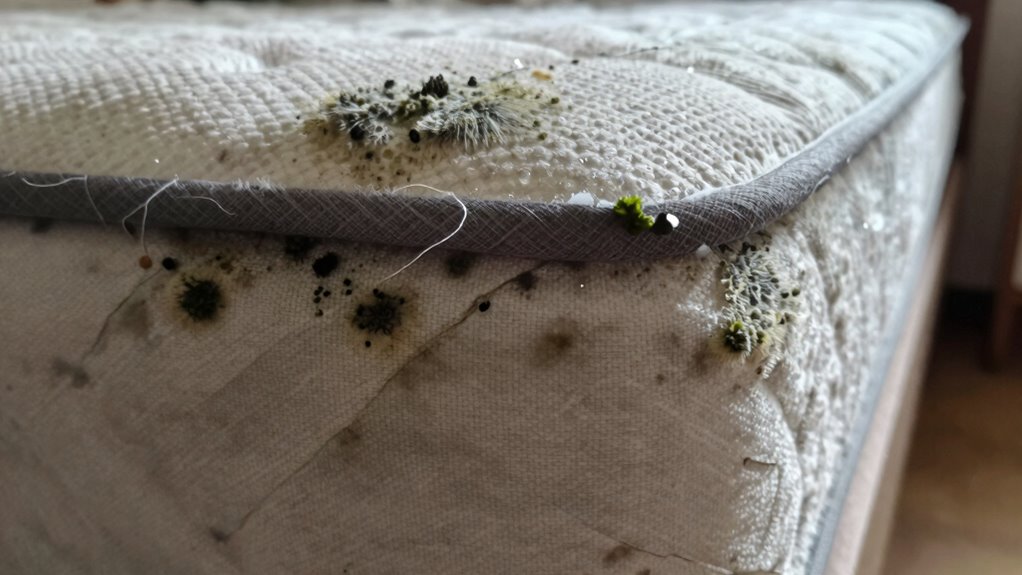
Mold becomes a problem for your mattress when moisture, dust, and humidity create the perfect environment for spores to settle and grow. Spills, high humidity, and poor ventilation allow mold to infiltrate seams and materials, leading to hidden growth. Over time, this can cause health issues like allergies and respiratory problems. To protect your sleep space, it’s important to understand how mold develops and how to prevent it, which you’ll discover next.

Get home appliances delivered free with Prime
- Fast, free delivery on millions of items
- Prime Video, Amazon Music and more included
- Member-only deals all year
Key Takeaways
- Mattresses can harbor mold due to moisture, humidity, and organic debris like skin cells and dust mites.
- Spills, leaks, and inadequate ventilation create damp conditions that promote mold growth in mattresses.
- Visible mold, musty odors, or dampness indicate potential mold presence in mattresses.
- Mold spores can infiltrate mattresses from the environment and bedding, especially in humid conditions.
- Proper moisture control, cleaning, and breathable materials help prevent mold from developing in mattresses.
What Is Mold and Why Is It a Health Concern?
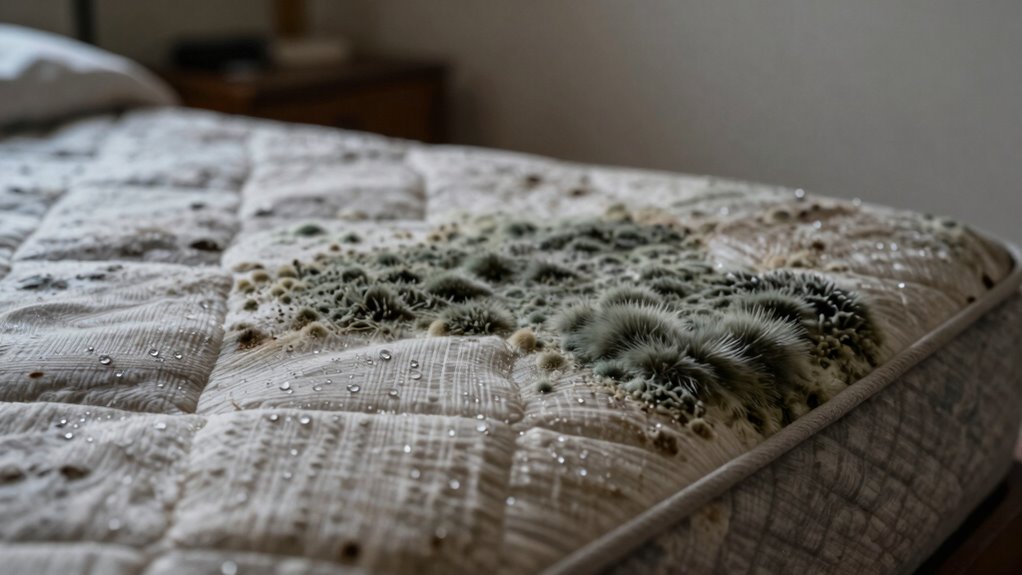
Mold is a type of fungus that grows in damp, humid environments, and it can be found both indoors and outdoors. When mold grows, it releases tiny mold spores into the air, which you can inhale unknowingly. These spores are lightweight and spread easily, especially in areas with moisture. Breathing in mold spores can pose serious health risks, particularly for those with allergies, asthma, or weakened immune systems. Common health symptoms include respiratory issues, coughing, sneezing, and irritation of the eyes, nose, or throat. Long-term exposure may lead to more severe health problems. It’s important to identify and eliminate mold presence early to protect your health and prevent spores from spreading further throughout your home. Understanding mold growth conditions is crucial for effective prevention and remediation.
How Does Mold Get Into My Mattress?
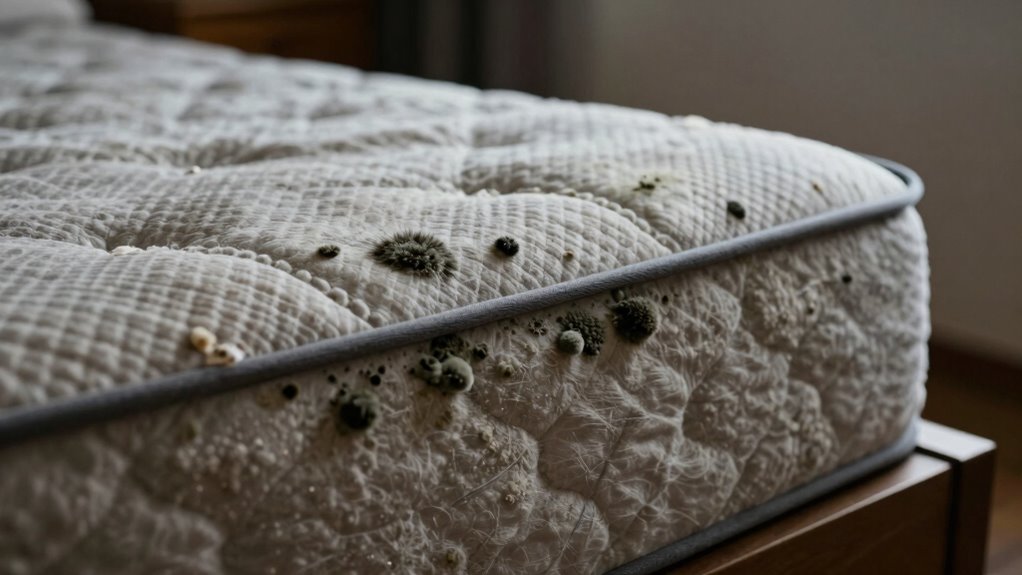
Because mattresses are often exposed to moisture and humidity, mold can find its way inside through small leaks, spills, or consistently high humidity levels. Dust accumulation on your mattress provides a fertile ground for mold spores to settle and grow. When humidity levels stay elevated, moisture seeps into the mattress materials, creating an ideal environment for mold development. Even if you don’t notice leaks or spills, dust and humid conditions can allow mold spores to infiltrate from the air or bedding. Over time, this combination of dust buildup and persistent moisture encourages mold growth deep within your mattress, making it harder to detect and remove. Staying vigilant about humidity and cleaning dust regularly helps prevent mold from taking hold. Controlling moisture in your sleeping environment is essential to reduce the risk of mold growth.
What Conditions Lead to Mold Growth on Mattresses?
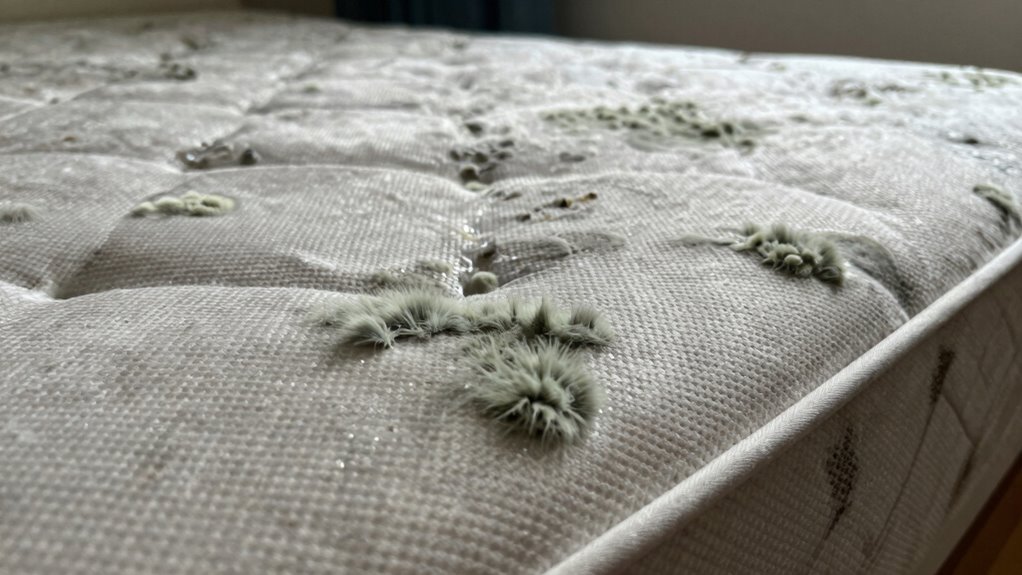
High humidity levels and moisture are primary factors that create an environment conducive to mold growth on mattresses. Damp environments provide the perfect setting for mold spores to thrive. When your mattress stays wet or humid, mold can quickly develop, especially if there’s organic debris like skin cells, sweat, or dust mites present. These materials act as food sources for mold, fueling its growth. Poor ventilation or leaks can trap moisture in your bedding and mattress, prolonging dampness. Even spills or humidity from breathing and sweating can contribute if not dried promptly. Mold needs a combination of moisture, organic material, and warmth to flourish. Protect your mattress by controlling humidity, ensuring proper airflow, and cleaning organic debris regularly. Additionally, maintaining proper ventilation can significantly reduce the risk of mold development.
How Can I Tell If My Mattress Has Mold?
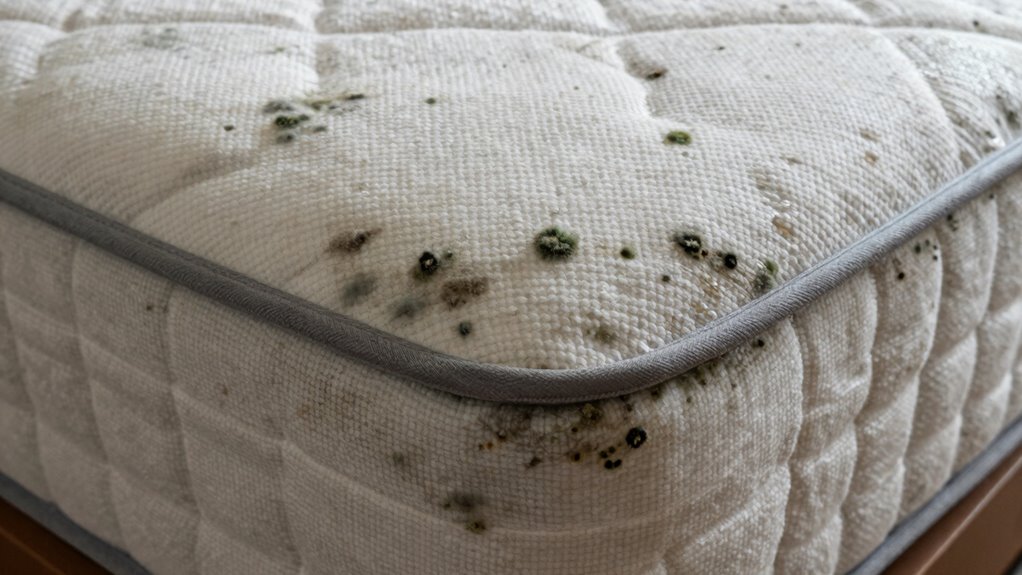
Detecting mold on your mattress can be challenging since it often hides in hidden areas or beneath the surface. To identify mold, start with a thorough mattress inspection, looking for visible signs like discoloration, dark spots, or fuzzy patches. Pay close attention to seams, crevices, and beneath the mattress where mold spores can thrive unnoticed. Sniff for musty or earthy odors, which are common indicators of mold presence. Feel for any dampness or unusual textures, as these can also signal mold growth. Remember, mold isn’t always visible, so if you suspect contamination, consider using a mold testing kit or consulting a professional for an accurate assessment. Regular mattress inspection is key to early mold detection and maintaining a healthy sleeping environment. Incorporating thermal behavior knowledge can help you understand how moisture and temperature fluctuations contribute to mold development over time.
How Does Moldy Mattress Exposure Affect My Health?
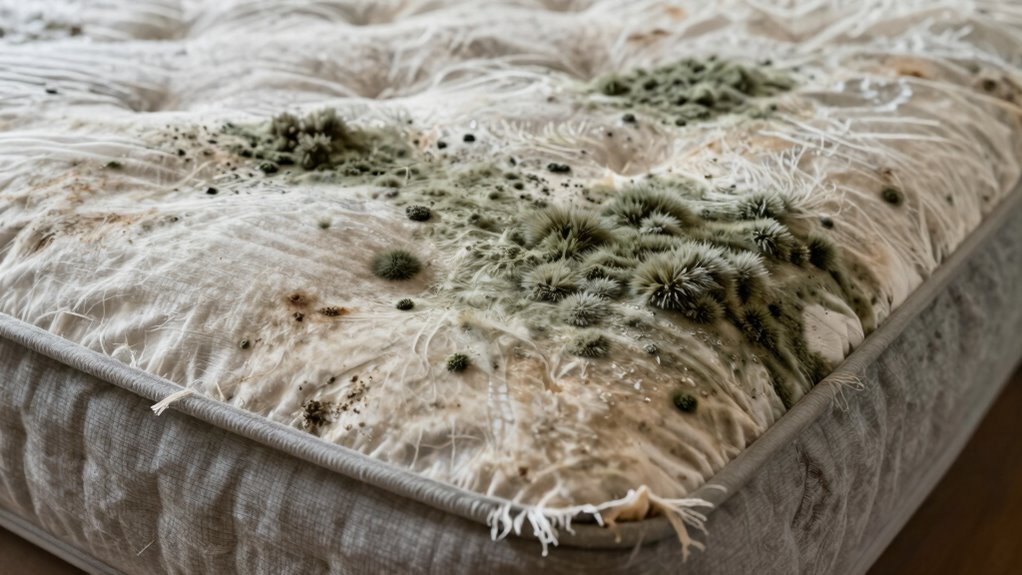
Exposure to moldy mattresses can lead to a range of health problems, especially if you sleep on or spend extended time around them. Mold spores and mycotoxins can trigger allergy symptoms and respiratory issues. You might experience symptoms like sneezing, coughing, nasal congestion, or wheezing. Prolonged exposure can worsen asthma or cause sinus infections. Mold exposure can also cause skin irritation or worsen existing allergies. To stay safe, watch out for:
Prolonged contact with moldy mattresses can trigger allergies, respiratory issues, and skin irritation.
- Persistent coughs or wheezing
- Frequent sneezing or nasal congestion
- Itchy or watery eyes
- Skin rashes or irritation
- Increased asthma attacks
If you notice these signs, it’s crucial to address the mold problem quickly to protect your health and prevent further issues. Essential oils for respiratory health such as eucalyptus, peppermint, and tea tree oil may help support your respiratory system during recovery.
What Are Effective Ways to Prevent Mold on Your Mattress?
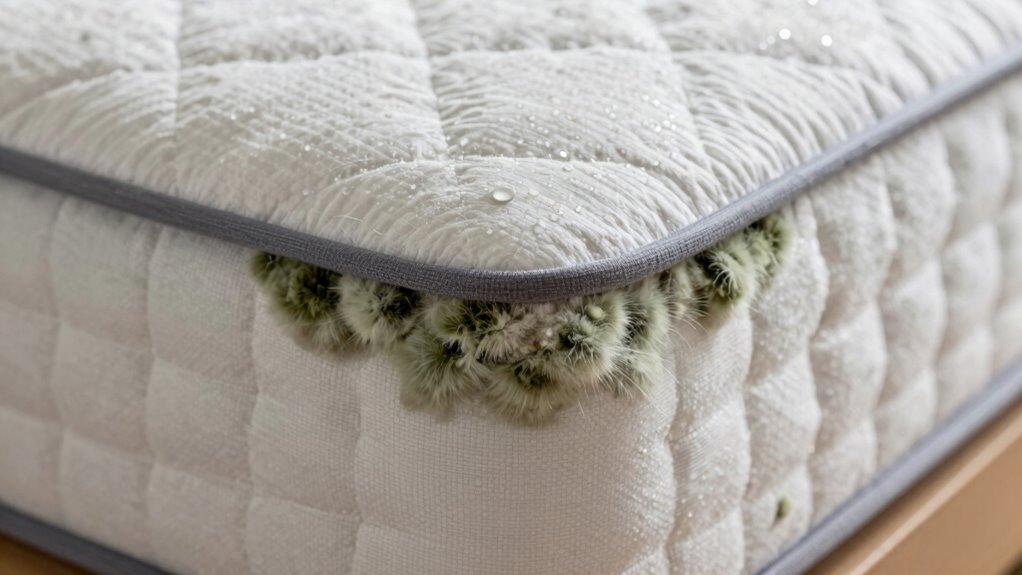
Wondering how to keep mold from taking hold on your mattress? Effective mattress maintenance starts with moisture control. Keep your bedroom well-ventilated to reduce humidity, ideally below 50%. Use a dehumidifier if needed, especially in damp environments. Regularly check your mattress for signs of moisture or dampness, and don’t let it stay wet. Protect your mattress with a waterproof cover to prevent spills and sweat from seeping in. When making your bed, ensure sheets are dry and clean. Avoid placing your mattress directly on the floor, as this can trap moisture. Be mindful of mold prevention strategies to further reduce the risk of growth. By maintaining a dry, well-ventilated environment and practicing good mattress maintenance, you considerably reduce the risk of mold growth. This simple approach helps keep your mattress fresh and safe.
How Can I Remove Mold From My Mattress Safely?
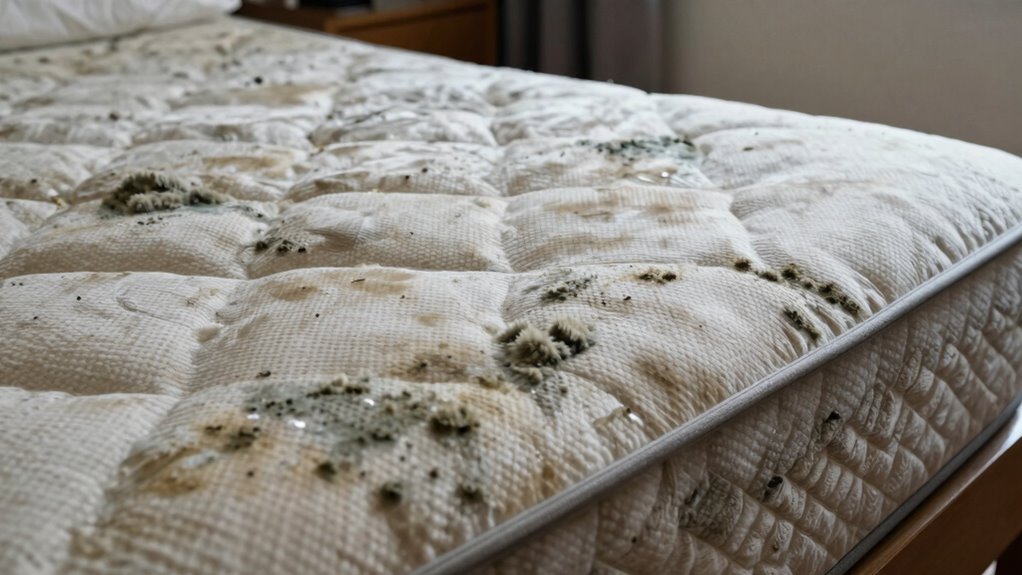
If mold has started to appear on your mattress, addressing it promptly and safely is important to prevent health risks and further damage. Start by removing all bedding and ventilating the area. Use cleaning techniques like a mixture of water and mild detergent or white vinegar to spot-clean affected areas. For stubborn mold, applying a DIY solution of baking soda and hydrogen peroxide can help. Remember to wear gloves and a mask during cleaning. Here are some effective steps:
- Spray affected areas with vinegar or a DIY mold cleaner
- Scrub gently with a soft-bristled brush
- Use a damp cloth to wipe away residue
- Let the mattress dry completely in sunlight
- Consider using a dehumidifier to prevent future mold growth
- Innovative European Cloud Servers for sustainable and secure storage of your cleaning records can help ensure proper documentation of your mold remediation process.
Always make certain the mattress is thoroughly dry before replacing bedding.
What Extra Steps Can I Take to Keep My Bedroom Mold-Free?
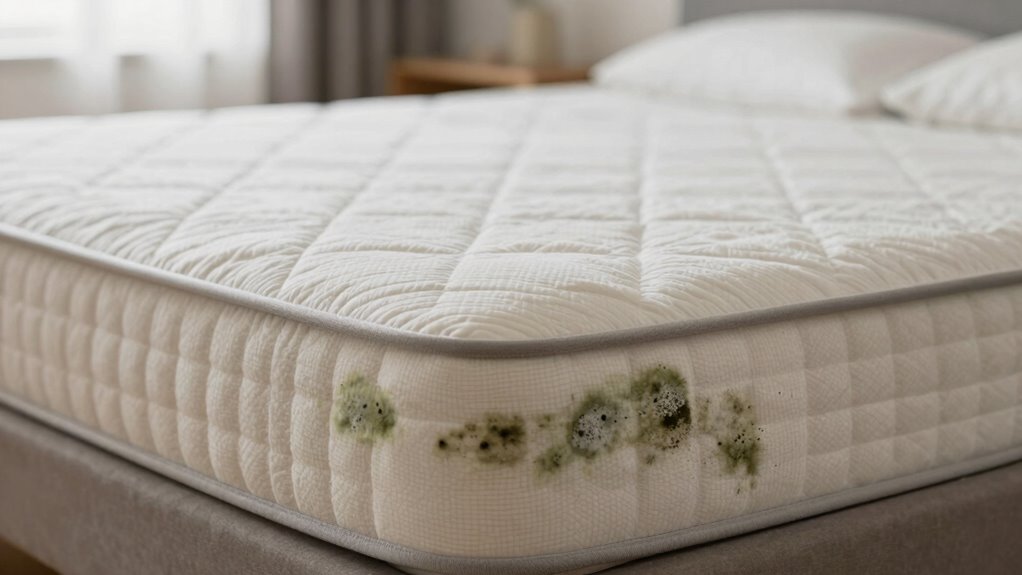
To keep your bedroom mold-free, you should improve ventilation by opening windows or using exhaust fans regularly. Consider using mold-resistant materials for walls and furniture to prevent mold growth. Additionally, cleaning your mattress frequently helps reduce moisture and mold spores, creating a healthier sleeping environment. Incorporating financial education can also help you allocate resources effectively for home maintenance and mold prevention efforts.
Improve Ventilation Strategies
Enhancing ventilation is one of the most effective ways to prevent mold growth in your bedroom. Proper airflow improvement helps keep moisture levels low, reducing the chances of mold thriving on your mattress and surroundings. To improve ventilation, consider these steps:
- Use exhaust fans in the bathroom and nearby areas
- Open windows regularly to promote fresh air exchange
- Install ceiling fans to circulate air effectively
- Keep interior doors open to enhance airflow
- Use a dehumidifier to maintain optimal humidity levels
- Regularly monitor indoor humidity to ensure it stays within the recommended range humidity control
Focusing on humidity control is key—aim for 30-50% moisture content. Good airflow prevents pockets of dampness where mold can develop. Consistent ventilation boosts air quality and minimizes mold risk, protecting your health and your mattress.
Use Mold-Resistant Materials
Using mold-resistant materials is a proactive way to keep your bedroom mold-free. These materials help prevent mold growth on surfaces like your mattress and bedding, reducing moisture retention that fosters mold. Choosing mattresses made with mold resistant materials can markedly improve mattress longevity, ensuring your investment lasts longer and stays healthier. Look for options with antimicrobial or waterproof barriers designed to resist mold spores. Incorporating mold-resistant materials into your bedding and furniture creates a barrier against moisture and mold growth, especially in humid environments. This extra step not only protects your health but also extends the lifespan of your mattress. By prioritizing mold-resistant options, you set a foundation for a cleaner, healthier sleeping environment.
Regular Mattress Cleaning
Regularly cleaning your mattress is essential for preventing mold buildup in your bedroom. It helps reduce dust mites and allergen buildup, which can contribute to mold growth. To keep your mattress fresh and mold-free, consider these extra steps:
- Vacuum your mattress weekly using a HEPA filter to remove dust mites and allergens.
- Use a mattress protector that’s water-resistant and breathable.
- Spot clean stains immediately with mild detergent and dry thoroughly.
- Air out your mattress regularly by removing bedding and letting it sit in sunlight.
- Consider using a dehumidifier to control humidity levels and inhibit mold growth.
- Additionally, ensuring proper airflow around your mattress and bedroom can significantly reduce moisture accumulation and inhibit mold development air circulation.
These practices help maintain a cleaner, healthier sleeping environment and reduce the risk of mold-related health issues.
Frequently Asked Questions
Can Mold on Mattresses Cause Long-Term Health Issues?
Yes, mold on mattresses can cause long-term health issues. If you have a mold allergy or respiratory problems, exposure can worsen symptoms and lead to chronic conditions. Breathing in mold spores while sleeping may trigger asthma attacks or sinus issues. To protect your health, regularly clean your mattress, use mold-resistant covers, and replace it if mold persists. Staying proactive helps prevent long-term health complications from mold exposure.
Are Certain Mattress Materials More Prone to Mold Growth?
Ever wondered which mattress materials are more prone to mold growth? Certain materials, like memory foam and latex, tend to have higher mold susceptibility because they retain moisture and heat, creating ideal conditions for mold. In contrast, innerspring mattresses with better airflow are less vulnerable. To minimize mold risks, choose breathable, moisture-wicking materials and keep your mattress dry. Isn’t protecting your health worth the extra effort?
How Often Should I Replace My Mattress to Prevent Mold?
You should replace your mattress every 7 to 10 years to prevent mold growth, as this aligns with its typical lifespan. Regularly using mold prevention strategies, like keeping your mattress dry, using a dehumidifier, and airing it out, helps extend its life. If you notice musty smells or visible mold, replace it sooner. Staying proactive guarantees a healthier sleeping environment and reduces mold-related health risks.
Do Air Purifiers Help Reduce Mold Spores in the Bedroom?
Think of your bedroom as a garden, where good air quality is like healthy soil. An air purifier acts as a vigilant gardener, capturing mold spores before they spread, helping with mold prevention. While it can’t remove every spore, it markedly reduces airborne mold, protecting your respiratory health. So yes, air purifiers help reduce mold spores and improve your overall air quality, making your bedroom a safer, cleaner space.
What Are Natural Remedies to Treat Mold on Mattresses?
To treat mold on your mattress naturally, start by mixing baking soda with water to create a paste and scrub the affected area. You can also add a few drops of essential oils like tea tree or lavender, which have antifungal properties. Let the mixture sit for a while, then vacuum thoroughly. Regularly airing out the mattress and using these remedies helps prevent mold growth and keeps your sleeping environment healthier.
Conclusion
Keeping mold out of your mattress is like guarding a treasure chest—you want to protect your health’s precious gems. By staying vigilant and taking simple steps, you can turn your bedroom into a mold-free sanctuary. Think of it as nurturing a cozy, safe harbor where restful nights and good health can flourish. With a little effort, you’ll keep mold at bay and your sleep space shining bright like a lighthouse guiding you to nightly peace.
NFL season / tailgating Picks
team gear
As an affiliate, we earn on qualifying purchases.