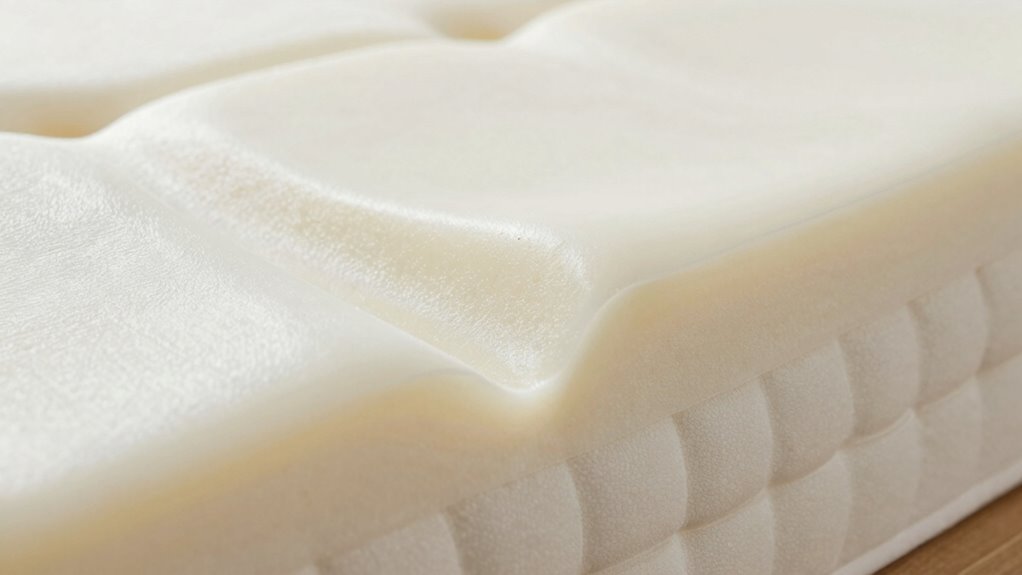

Latex feels different from foam because of its unique composition and support style. Latex, made from rubber tree sap, offers firm, responsive support with lively bounce and quick response, while foam molds slowly to your body for plush comfort and absorbs impact better. These differences affect how they distribute pressure and respond to movement. If you want to understand how these materials impact your sleep experience, there’s more to discover below.

Get home appliances delivered free — and shop member deals
- Fast, free delivery on millions of items
- Access to Prime Big Deal Days deals on October 6–7
- Prime Video, Amazon Music and more included
Key Takeaways
- Latex provides a firmer, more responsive feel due to its natural elasticity and quick rebound, unlike foam’s softer, contouring response.
- Latex quickly molds around the body, offering even pressure distribution, whereas foam gradually contours, creating a softer, plush sensation.
- The material composition: latex’s organic rubber structure maintains firmness longer, while foam’s chemical-based makeup can soften over time.
- Latex’s inherent bounce and elasticity give it a lively, springy feel, contrasting with foam’s impact-absorbing, cushioned softness.
- Durability differences influence long-term firmness; latex retains initial firmness, while foam may soften or sag with use.
As an affiliate, we earn on qualifying purchases.
What Are Latex and Foam Made Of?
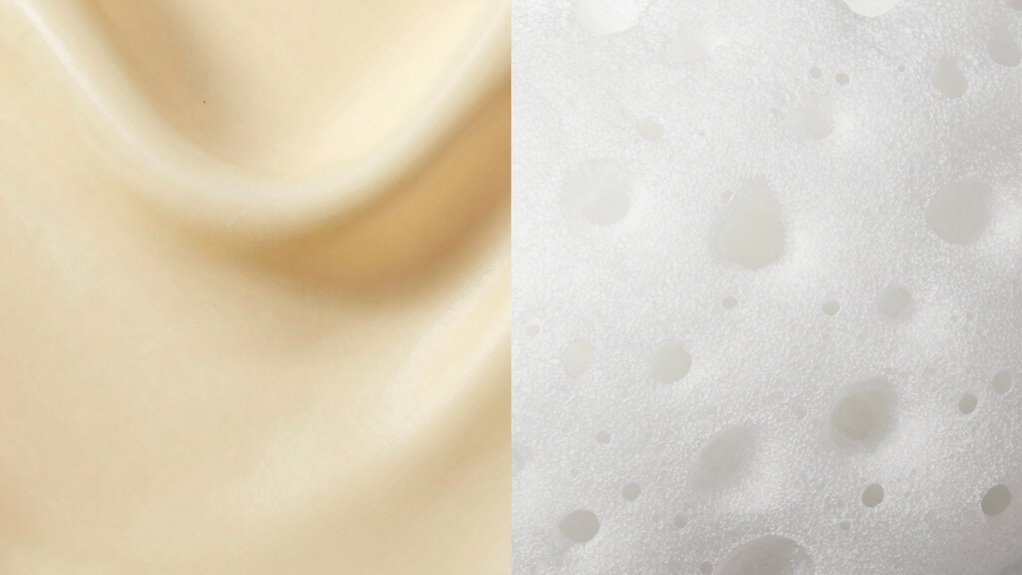
Latex and foam are popular materials used in mattresses and cushions, but they are made from quite different substances. Latex is derived from the sap of rubber trees, making its material composition natural and organic. It undergoes a manufacturing process called vulcanization, which stabilizes its structure and enhances durability. Foam, on the other hand, is typically made from polyurethane or memory foam, created through a chemical reaction that produces a spongy, flexible material. The manufacturing process for foam involves mixing chemicals, pouring into molds, and curing at high temperatures. These processes determine the firmness, resilience, and overall feel of each material. Understanding their composition and manufacturing helps you grasp why latex and foam deliver distinct comfort and support.
As an affiliate, we earn on qualifying purchases.
How Do Latex and Foam Support Your Body Differently?
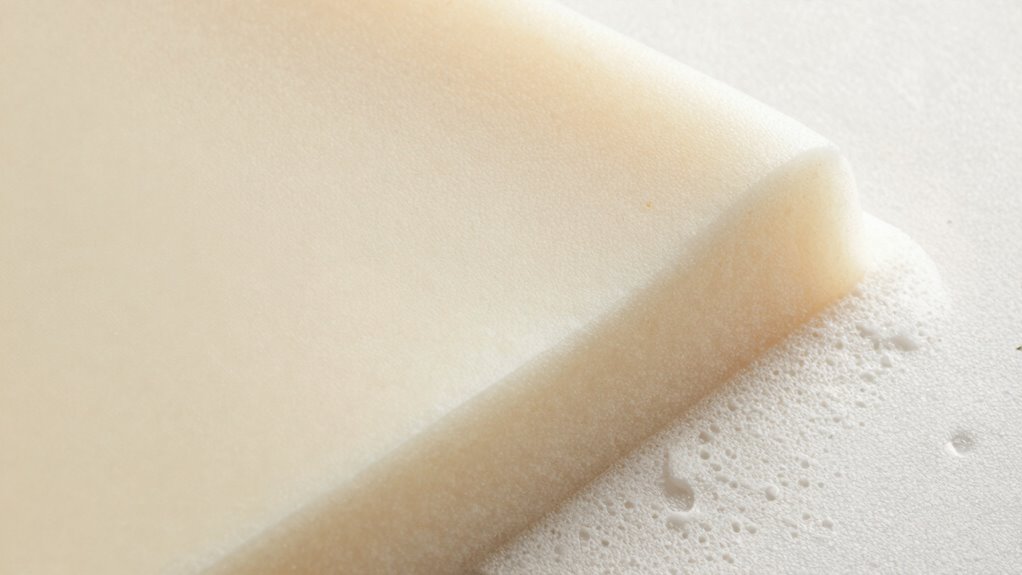
While both latex and foam provide support, they do so in different ways that can affect your comfort. Latex offers firm, responsive support with bounce, conforming gradually to your body while maintaining its elasticity. It’s also known for its durability and latex sustainability, making it eco-friendly. Foam, on the other hand, absorbs pressure quickly, contouring closely to your body. However, some foam types can trigger allergies due to foam allergens like chemical off-gassing or synthetic materials. Here’s a comparison:
| Feature | Latex Support | Foam Support |
|---|---|---|
| Response | Bouncy, responsive | Slow, contouring |
| Sustainability | Eco-friendly, long-lasting | Varies, often less sustainable |
| Allergens | Generally hypoallergenic | Potential foam allergens |
| Feel | Firm but flexible | Soft, plush, and cushioning |
| Durability | Highly durable | Varies, may degrade faster |
As an affiliate, we earn on qualifying purchases.
Does Latex Bounce More Than Foam? Here’s How They Compare
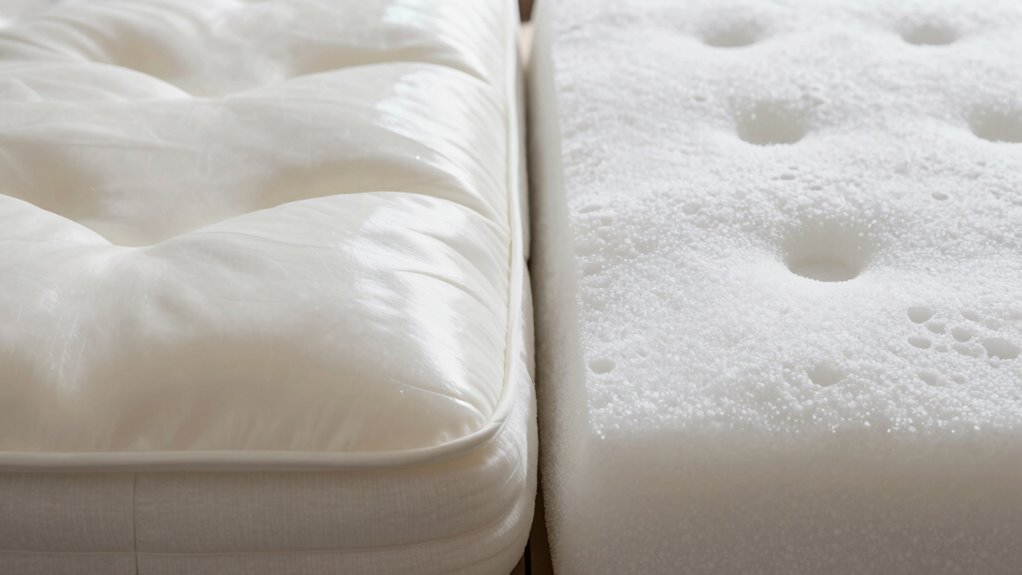
When comparing latex and foam support, bounce plays a major role in how each material responds under pressure. Latex bounce is often more noticeable, providing a lively, springy feel that returns energy quickly. Foam response, on the other hand, tends to be softer and more subdued, absorbing impact rather than pushing back. You might prefer latex if you want a mattress that offers more resilience and quicker recovery after movement. Conversely, foam is ideal if you seek a gentle, enveloping sensation. Consider these points:
Latex offers lively bounce and quick recovery, while foam absorbs impact for a softer, enveloping feel.
- Latex offers a more energetic bounce, enhancing responsiveness.
- Foam absorbs pressure, reducing motion transfer.
- The difference in foam response versus latex bounce influences sleep comfort and movement ease.
- Projector technology impacts the overall experience by affecting image quality and viewing comfort, similar to how material properties influence sleep.
As an affiliate, we earn on qualifying purchases.
How Do Latex and Foam Conform and Distribute Pressure?

Both latex and foam respond differently to pressure, shaping how they conform to your body. Latex has excellent conforming properties, instantly molding around your curves and evenly distributing pressure. This quick response helps reduce pressure points and offers a firm yet supportive feel. Foam, especially memory foam, conforms more slowly, contouring gradually to your shape. Its pressure distribution is more targeted, relieving stress on specific areas. Latex’s elastic nature allows it to bounce back quickly, maintaining even support over time. Foam’s viscoelastic qualities enable it to adapt deeply but may create more localized pressure relief. Additionally, material responsiveness plays a crucial role in how each material reacts under pressure. Understanding these differences helps you choose the material that best matches your pressure distribution needs, whether you prefer the quick, firm response of latex or the slow, contouring embrace of foam.
Will Latex and Foam Keep Their Feel Over Time?

Latex and foam are durable materials, but their feel can change over time depending on usage and conditions. Their durability comparisons show that latex generally maintains its firmness longer due to higher material longevity, while foam may soften or sag faster. Factors like body weight, sleeping habits, and environmental conditions influence how well they retain their initial feel. To understand if your mattress will stay supportive, consider these points:
- Latex’s resilience often results in less deformation over years.
- Foam’s softer structure may compress more with frequent use.
- Proper care can prolong the lifespan and preserve feel for both materials.
- Material longevity assessments indicate latex tends to hold its firmness better over time, making it a more stable long-term choice. Additionally, environmental factors such as humidity and temperature can impact how each material performs over the years.
- Regularly inspecting and maintaining your mattress can help preserve its initial firmness and comfort, ensuring a longer-lasting sleep surface.
- Maintaining optimal humidity control can also help prevent material breakdown and extend the lifespan of both latex and foam mattresses.
- Understanding the material properties can aid in choosing the best option for your long-term comfort and durability.
Frequently Asked Questions
How Does the Firmness of Latex Affect Sleep Quality?
The firmness of latex considerably impacts your sleep quality by improving pressure distribution and spinal alignment. When your mattress is firm enough, it supports your body evenly, reducing pressure points and preventing aches. This ideal support helps keep your spine properly aligned, which minimizes discomfort and promotes deeper, more restorative sleep. Choosing the right firmness level ensures you wake up feeling refreshed and free of pain, making your sleep more restful and rejuvenating.
Can Latex Firmness Vary Between Different Brands?
Just like no two snowflakes are identical, latex firmness can vary between brands. You might find some brands offer a consistent feel, like a familiar handshake, thanks to strict manufacturing standards. Others might differ due to manufacturing differences, leading to variations in firmness. So, if you’re seeking a specific feel, it’s crucial to compare brands carefully, as each one may produce latex with its unique touch, influencing your sleep comfort.
Is Latex Firmness Suitable for All Sleep Positions?
Latex firmness can suit most sleep positions because it offers excellent mattress support and adapts well to your sleep posture. If you sleep on your side, a slightly softer latex provides cushioning for shoulders and hips. For back or stomach sleepers, firmer latex maintains proper spinal alignment. Overall, latex’s responsiveness makes it versatile, but choosing the right firmness level guarantees ideal comfort and support for your specific sleep posture.
How Does Temperature Influence Latex Firmness?
Temperature influences latex firmness through temperature sensitivity, meaning it becomes softer when it’s warm and firmer when it’s cool. This natural property allows for firmness adjustment based on your body temperature, providing a more personalized sleep experience. As your room or body heat varies, latex responds accordingly, offering consistent comfort. So, if you prefer a softer feel in warmer conditions or firmer support when cooler, latex adapts to meet your needs effortlessly.
What Role Does Latex Firmness Play in Allergy Prevention?
Latex firmness can help reduce allergy symptoms if you have latex sensitivity, as firmer latex tends to have fewer surface areas where allergens can accumulate. By choosing a medium or firm latex mattress, you minimize exposure to latex proteins, lowering allergy risks. Keep in mind, however, that some people with latex sensitivity might still experience reactions, so it’s crucial to test and confirm what works best for you.
Conclusion
Understanding the differences between latex and foam helps you choose the right support for your sleep. Latex, known for its durability, can last up to 15 years, maintaining its firmness longer than foam. Notably, latex mattresses are 10% more resilient, providing a bouncier feel that many sleepers love. By knowing how each material responds to pressure and time, you can make a confident choice that ensures a comfortable, supportive sleep for years to come.
Cold & flu season Picks
humidifiers
As an affiliate, we earn on qualifying purchases.