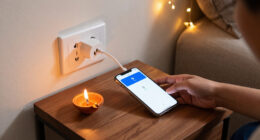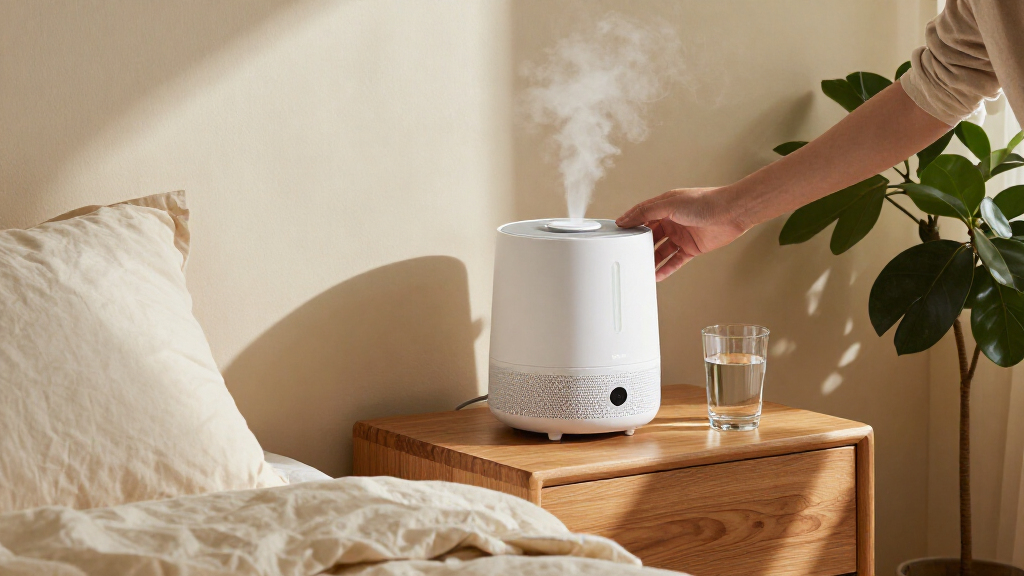
When people compare smart humidifiers, the real choice is often between an app-connected model with detailed controls and a simpler smart model that adjusts humidity automatically. Both can reduce the need to guess when to switch the unit on, but they differ in how much control they offer, what setup they require, and how much they typically cost. App-connected humidifiers suit people who want remote access, schedules, or smart home routines; basic smart humidifiers are a better fit for buyers who mainly want the room to stay near a chosen humidity level without managing another app.

Get home appliances delivered free with Prime
- Fast, free delivery on millions of items
- Prime Video, Amazon Music and more included
- Member-only deals all year

Levoit Dual 200S Smart Top-Fill Cool Mist Humidifier, 3 L
- ✔ Capacity: 3 liters
- ✔ Operation: Ultrasonic cool mist
- ✔ Runtime: Up to 25 hours

DREO 6L Smart Cool Mist Humidifier
- ✔ Capacity: 6 liters
- ✔ Operation: Ultrasonic cool mist
- ✔ Runtime: Up to 60 hours in sleep mode

GoveeLife Smart 3L Top-Fill Cool Mist Humidifier
- ✔ Capacity: 3 liters
- ✔ Operation: Ultrasonic cool mist
- ✔ Runtime: Up to 25 hours
Neither label guarantees clean operation or accurate readings. Room size, sensor placement, water handling, and cleaning needs matter at least as much as connectivity. The comparison below focuses on common product types, since features and performance vary by model.
At a Glance
| Criteria | App-connected smart humidifiers | Basic smart humidifiers | Winner |
|---|---|---|---|
| Control and automation | App settings, schedules, and often automatic humidity modes | Usually provides a target humidity setting and automatic on/off control | A |
| Remote access | Usually available through a phone app; some models support voice or smart home routines | Limited or absent; controls are commonly on the unit | A |
| Setup and reliability | More features to configure; depends on Wi-Fi and app support | Fewer connected steps and less dependence on network services | B |
| Maintenance | Requires regular cleaning; app reminders may help if included | Requires regular cleaning, usually without app-based reminders | Tie |
| Room coverage | Varies by model; often offered in larger-capacity versions | Varies by model; check rated room size and output | Depends |
| Price and value | Typically costs more; worth it when remote control or integrations get regular use | Usually less expensive; better value when automatic humidity control is enough | Depends |
Levoit Dual 200S Smart Top-Fill Cool Mist Humidifier, 3 L
The Levoit Dual 200S earns the top spot because its built-in humidistat and auto mode give its smart controls a practical purpose: the unit can work toward a selected humidity level without relying on an accessory sensor. That makes it a more complete out-of-box choice than GoveeLife, whose automatic adjustment requires a separately sold thermo-hygrometer. With a 3-liter tank and runtime up to 25 hours, Levoit is aimed at everyday room use rather than the extended coverage and capacity offered by DREO.Its top-fill design is intended to make filling and cleaning less awkward, while the app, voice controls, schedules, and timer offer several ways to fit humidification around a household routine. Quiet operation at up to 28 dB and a display light that can be switched off are useful in a bedroom. The 360-degree nozzle and essential-oil compatibility add flexibility, although neither replaces the core job of managing room humidity.There are upkeep considerations. The supplied guidance recommends distilled or purified water to help limit white dust or humming, and the filter sponge may need changing about monthly depending on water hardness. Its stated coverage, 107–290 square feet, is also much narrower than DREO’s up-to-500-square-foot rating. We would choose Levoit for self-contained automatic control in a smaller or mid-sized room, and look at DREO if room size and time between refills matter more.
Pros:
- Built-in humidistat supports auto mode without a separate sensor.
- Top-fill 3-liter tank with up to 25 hours of stated runtime.
- App, voice, onboard controls, scheduling, and timer.
- Quiet operation and a display light that can be turned off.
Cons:
- Stated coverage is limited to 107–290 square feet, below DREO’s rating.
- Distilled or purified water is recommended to help reduce white dust or humming.
- Filter sponge may need monthly replacement depending on water hardness.
Best for: Buyers who want app and voice control plus automatic humidity adjustment from a built-in humidistat, without adding a separate sensor.
Not ideal for: People humidifying a large room, or buyers who want to avoid water recommendations and periodic filter sponge replacement.
Bottom line: For a smaller room where we want automatic humidity control included, Levoit is the most balanced smart pick in this group.
“For a smaller room where we want automatic humidity control included, Levoit is the most balanced smart pick in this group.”
DREO 6L Smart Cool Mist Humidifier
When room size and refill frequency lead our decision, DREO is the clear step up from the two 3-liter models. Its 6-liter tank is paired with a stated runtime of up to 60 hours in sleep mode and coverage up to 500 square feet. Those figures make it the most suitable option here for a larger space or for buyers who would rather refill less often. Levoit and GoveeLife are easier to position as smaller-room choices, but their 3-liter capacity gives them less room to stretch between fills.DREO still has the connected basics: app, touch, and voice controls, plus auto, manual, and sleep modes and adjustable humidity settings. The 28 dB noise specification supports bedroom use, while a top-fill tank helps with routine refilling. It also includes an aroma diffuser and night light, so it can cover some of the same comfort preferences as GoveeLife. The difference is that DREO’s strongest reason to choose it is capacity, not its lighting features.We should keep the coverage number in perspective: the supplied details specify rooms up to 500 square feet, not an unlimited whole-home solution. Its runtime figure is specifically stated for sleep mode, so buyers should not assume every setting lasts as long. Like the other ultrasonic picks, it needs a corded electrical connection. Compared with Levoit, DREO gives up the supplied model’s explicit built-in humidistat detail in exchange for a larger tank and broader stated coverage. Choose it when room scale and fewer refills outrank having that specific automatic-control setup.
Pros:
- 6-liter capacity is double that of the two 3-liter alternatives.
- Up to 60 hours of runtime in sleep mode.
- Stated coverage reaches up to 500 square feet.
- App, touch, and voice controls with adjustable humidity settings.
Cons:
- Coverage is specified for rooms up to 500 square feet, which may not suit larger spaces.
- The runtime figure applies to sleep mode; other settings may differ.
- Requires corded electric power.
Best for: Buyers with a larger room, or anyone prioritizing a larger tank and longer stated runtime over a compact footprint.
Not ideal for: People who need a portable, cordless unit or specifically want the built-in humidistat called out for Levoit.
Bottom line: DREO is the most compelling choice when a larger room and less frequent refilling matter more than the Levoit’s built-in humidistat.
“DREO is the most compelling choice when a larger room and less frequent refilling matter more than the Levoit’s built-in humidistat.”
GoveeLife Smart 3L Top-Fill Cool Mist Humidifier
GoveeLife is the most feature-forward choice for buyers who enjoy customizing the atmosphere around a humidifier. Alongside app, touch, and voice controls, it has an adjustable RGB night light, sleep mode, and schedules, timers, and cleaning reminders in the app. Its 3-liter tank and up-to-25-hour runtime put it in the same general capacity class as Levoit, while its noise specification reaches as low as 24 dB. That is slightly lower on paper than Levoit’s stated maximum of 28 dB, though noise figures alone do not establish how either will sound in a particular room.The key compromise is automatic humidity adjustment. Unlike Levoit’s built-in humidistat, GoveeLife requires a separately sold GoveeLife thermo-hygrometer for that function. This adds a purchase and another device to place and manage. If we mainly want remote on/off control, schedules, reminders, or a soft room light, the humidifier can still make sense without the sensor. If maintaining a target humidity automatically is the reason we want a smart model, Levoit is the more straightforward option.Connectivity also has a boundary: the unit supports 2.4 GHz Wi-Fi only. Buyers with a network configured around another band should check compatibility before choosing it. The top-fill design and cleaning brush support regular care, and voice assistant compatibility includes Alexa, Google Assistant, and IFTTT. We would pick GoveeLife for an app-centered routine and lighting, but skip it if included automatic humidity control or a simpler network setup takes priority.
Pros:
- App, touch, and voice controls with scheduling, timers, and cleaning reminders.
- Adjustable RGB night light and sleep mode.
- Top-fill 3-liter tank with up to 25 hours of stated runtime.
- Noise specification as low as 24 dB.
Cons:
- Automatic humidity adjustment requires a separately sold thermo-hygrometer.
- Supports 2.4 GHz Wi-Fi only.
- Its 3-liter tank offers less capacity than DREO’s 6-liter model.
Best for: Buyers who want app scheduling, cleaning reminders, voice control, and an adjustable night light in a 3-liter humidifier.
Not ideal for: Anyone who expects automatic humidity adjustment without buying a separate thermo-hygrometer, or whose Wi-Fi setup cannot support 2.4 GHz.
Bottom line: GoveeLife suits buyers who value lighting and app routines, while Levoit is the better fit when automatic humidity control should be ready from the start.
“GoveeLife suits buyers who value lighting and app routines, while Levoit is the better fit when automatic humidity control should be ready from the start.”
As an Amazon Associate we earn from qualifying purchases.
Key Differences
The clearest difference is how much involvement the humidifier asks of you. App-connected models let you check status and change settings from elsewhere, and some can follow schedules or respond to smart home routines. That can be useful when the unit is in a bedroom, nursery, or other room you do not want to visit at night. A basic smart model still reduces manual effort by regulating humidity around a set point, but it generally offers fewer ways to monitor or control it remotely.
The convenience comes with tradeoffs. App-connected models can take longer to set up and may rely on Wi-Fi, an account, or software support for some functions. A simpler model avoids much of that friction. Neither type avoids water refills or cleaning, and connected alerts cannot replace routine care. In daily use, the best value depends on whether remote controls and routines solve a recurring problem or merely add features that will rarely be opened.
Room fit and upkeep can outweigh the smart distinction. Check the manufacturer’s coverage guidance, tank capacity, refill method, and cleaning instructions before choosing. A well-matched basic model may serve a small bedroom better than a connected unit designed for a larger space, while a large room may need higher output regardless of app features.
Detailed Comparison
Control and automation (App-connected smart humidifiers wins — moderate)
App-connected models usually provide more ways to manage settings, including schedules and humidity targets, while basic smart models tend to concentrate on automatic adjustment around a selected level. App control wins by a moderate margin for households with changing routines. If you only want the machine to stop and start automatically, the simpler option covers the central need with less to manage.
Remote access (App-connected smart humidifiers wins — moderate)
App-connected models generally let users check status or change settings from a phone, though exact functions differ. Basic smart models commonly require changes at the device. This is a major practical gap for someone who wants to adjust a nursery unit without entering the room, but a minor one if the humidifier sits nearby and its controls are easy to reach.
Setup and reliability (Basic smart humidifiers wins — minor)
A basic model usually has fewer setup steps and fewer features that depend on a stable network or app support. App-connected units add convenience but may need Wi-Fi pairing, permissions, and occasional troubleshooting. The simpler model wins by a minor to moderate margin for buyers who prefer straightforward controls; connected features are most useful when their setup remains dependable.
Maintenance (minor difference)
Both types need routine cleaning, fresh water, and attention to the manufacturer’s instructions. Some connected models can send reminders, which may help users keep a schedule, but an alert does not clean the tank or replace filter care. There is no consistent category winner, so compare the specific unit’s design and maintenance steps.
Room coverage (major difference)
Smart features do not determine how much space a humidifier can handle. Coverage and output vary by model in both categories, so neither wins as a class. The difference is major for comfort: an undersized unit may struggle to reach its target, while excess output in a small room can create damp conditions. Match the rated coverage to the room and follow placement guidance.
Price and value (moderate difference)
App-connected models typically cost more because they include additional controls and connectivity. The premium is reasonable if you will use remote access, schedules, or integrations often. If the main goal is automatic humidity adjustment, a basic smart model is usually the stronger value. Prices and feature sets vary, so compare the actual models rather than assuming every connected unit is better equipped.
App-connected smart humidifiers: Pros and Cons
Pros:
- Remote monitoring and changes are often available
- Schedules and smart home integrations may reduce routine adjustments
- More control options for households with changing needs
Cons:
- Usually costs more
- May require app setup, Wi-Fi, and ongoing software support
- More features can add setup and troubleshooting
Basic smart humidifiers: Pros and Cons
Pros:
- Typically simpler to set up and operate
- Automatic humidity control handles the core task
- Usually costs less than a feature-rich connected model
Cons:
- Often lacks remote access and detailed scheduling
- Controls may require visiting the unit
- May not provide app reminders or integrations
Who Should Choose What
Choose App-connected smart humidifiers if:
- You want to check or adjust the unit remotely, especially at night or while away.
- You will use schedules or smart home routines to fit changing household patterns.
- The added controls solve a regular inconvenience and justify the higher price.
Choose Basic smart humidifiers if:
- You mainly want automatic humidity control at a set level.
- You prefer physical controls and a simpler setup.
- You want to spend less and do not need phone access or integrations.
Skip both if: Skip both categories if the available models do not suit your room size, cleaning capacity, or refill needs; choose a unit with appropriate output and manageable upkeep, whether or not it is marketed as smart.
Value for Money
Paying more for app-connected control is worthwhile when remote access, scheduling, or integrations will make a real difference to your routine. For example, a unit in a room you avoid entering while someone sleeps can be easier to manage from a phone. If you expect to set the humidity target once and leave the device to regulate itself, those extra features may not earn back their cost. A basic smart model is then the better value, provided its coverage, tank, and maintenance design fit the room.
Compare like with like: room rating, output, tank capacity, refill access, and cleaning requirements. A higher price does not automatically mean better humidity control or easier upkeep. Pay for the features you will use, and treat connectivity as an added convenience rather than a substitute for a good room match.
Final Verdict
For most buyers who simply want a room kept near a chosen humidity level, a basic smart humidifier is the better value. It handles the main automatic task without asking you to configure an app or pay for controls you may not use. Choose an app-connected model if remote adjustments, scheduling, or smart home routines solve a repeated problem in your household. The deciding factor is whether you will use those connected features regularly; either way, room coverage and manageable cleaning should come first.
Frequently Asked Questions
What makes a humidifier smart?
In this comparison, a smart humidifier can regulate operation around a humidity setting rather than relying only on manual switching. App-connected models add phone controls and may include schedules or integrations. Product labels vary, so check the listed functions rather than relying on the word “smart.”
Is an app-connected humidifier worth the extra cost?
It can be worth paying more if you regularly want remote access, schedules, or smart home routines. If you will set a target on the unit and rarely change it, a basic smart model is likely the better value.
Do smart humidifiers clean themselves?
No. Smart controls and reminders do not replace cleaning, water changes, or filter care. Follow the manufacturer’s maintenance instructions for the specific model.
How do I choose a humidifier for my room?
Check the model’s rated room coverage and output against the space, then consider tank size, refill access, and cleaning demands. Connectivity does not determine whether a unit is appropriately sized.