
TL;DR

Get home appliances delivered free with Prime
- Fast, free delivery on millions of items
- Prime Video, Amazon Music and more included
- Member-only deals all year
A House Beautiful report says homebuilders can focus spending on choices that are costly or disruptive to change later, including plumbing layouts, windows, flooring and exterior materials. Designers recommend saving on replaceable items such as decorative fixtures, appliances and accessories, and finishing bonus rooms when the budget allows.
A House Beautiful report featuring advice from interior designer Shandon Barrett and home-design executive Tammy Crosby recommends spending early on home features that are difficult or costly to change, while delaying decorative upgrades that can be replaced later. The guidance focuses on layouts, windows, flooring and exterior materials as priorities, with fixtures, appliances and unfinished bonus spaces among possible places to save.
Crosby, CEO of The House Designers, says plumbing and gas plans should be settled before construction because moving lines later can involve breaking concrete slabs or cutting floor joists. She recommends considering rough-ins for possible future needs, such as a basement bathroom, outdoor kitchen or ice maker, even if the fixtures will not be installed right away. The report does not provide cost estimates for those additions.
Windows and doors also warrant early decisions, according to the report, because changing their size or location later can require work on siding, framing and interior drywall. Crosby recommends considering larger or additional windows in living areas and stairwells, as well as double- or triple-pane low-emissivity glass. She says the latter can reduce energy bills over the home’s life, but the report gives no figures or independent comparison of potential savings.
For floors, Crosby advises choosing tile locations upfront and considering continuous hard-surface materials, such as hardwood or luxury vinyl plank, in main areas. She also advises prioritizing a resilient exterior, including siding and roofing, because later replacement can require substantial labor and equipment. Barrett’s broader advice is to spend on permanent finishes and everyday essentials, rather than assuming every room needs to be completed immediately.
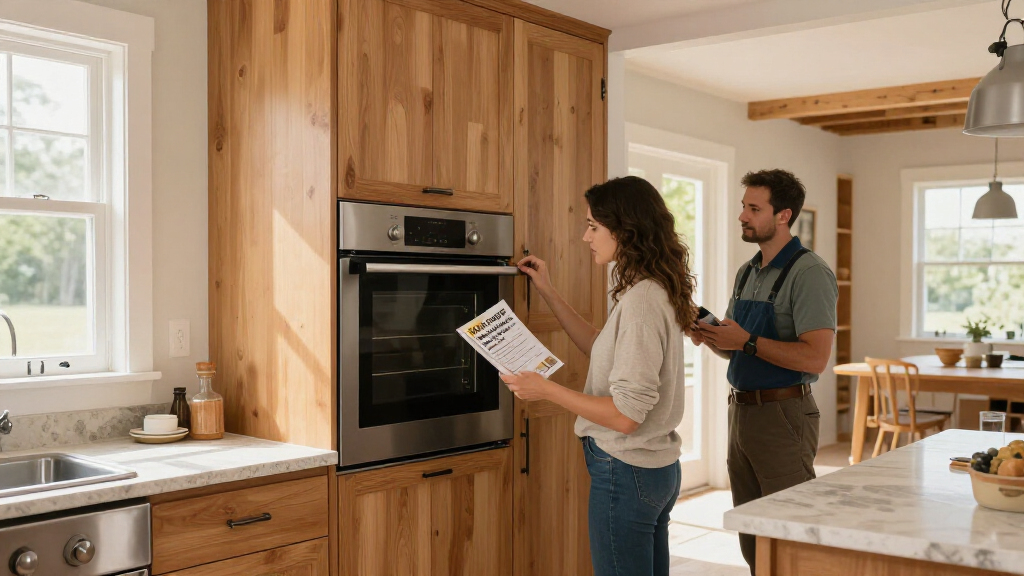
The suggested savings are mostly on items that can be changed with less disruption. Barrett says homeowners can install simple builder-grade lighting and upgrade decorative fixtures later, provided electrical planning is done properly. Crosby says standard or existing appliances can be used initially if cabinet openings and utility connections are sized for future replacements. The report also recommends keeping paint and wall treatments simple, choosing affordable accessories, and leaving a bonus room unfinished until it is needed.
Put Early Spending Into Hard-to-Change Choices
The advice matters because decisions made during construction can set the cost and complexity of later changes. A misplaced plumbing line or a window added after walls and siding are complete may involve several trades and repairs, while a light fixture or rug can usually be replaced without reopening walls. Prioritizing those differences can help buyers direct limited budgets toward construction choices with lasting consequences.
The report is guidance, not a price comparison or a guarantee that a particular upgrade will pay for itself. Its recommendations may help homeowners discuss sequencing with builders, but the best choices depend on the site, local climate, household needs and contract. Decisions about energy-efficient windows or exterior products should be compared using product specifications, installation costs and available warranties rather than broad savings claims alone.
double pane low-emissivity windows
As an affiliate, we earn on qualifying purchases.
As an affiliate, we earn on qualifying purchases.
Plan the Home Before Finishes
The report’s central distinction is between work that is integrated into the structure and finishes that are comparatively easy to update. Plumbing, gas, framing and exterior work become harder to alter after a home is enclosed. By contrast, decorative lighting, hardware, paint, accessories and freestanding appliances can often be upgraded on a different timetable.
That approach also applies to space planning. A builder may be able to frame a bonus room during initial construction while leaving insulation, drywall and flooring for later, Crosby says. The report does not establish that leaving a room unfinished is permitted or practical in every project; homeowners would need to confirm code, contract and construction requirements with their builder and local authorities.
“It’s not about spending the most money; it’s about spending it in the right places.”
— Shandon Barrett, interior designer at Love vs. Design
As an affiliate, we earn on qualifying purchases.
Costs Depend on the Project
The report does not include a project budget, contractor bids, quantified material comparisons or independent data on energy savings. It also does not specify local building-code requirements, product lifespans beyond its general appliance estimate, or whether individual upgrades would raise a home’s resale value. Statements about long-term savings are attributed recommendations, not guaranteed outcomes.
Homeowners’ costs and options can vary with location, design, labor rates and existing site conditions. The report also does not explain how to handle unfinished bonus space under particular permits, financing arrangements or builder contracts. Those details remain project-specific and should be confirmed before plans are finalized.
As an affiliate, we earn on qualifying purchases.
Confirm Priorities With the Builder
For people planning a build, the next step is to review the home’s layout and future needs with the architect or builder before construction begins. That discussion can cover plumbing and utility rough-ins, window placement, flooring transitions, exterior specifications and appliance dimensions. Homeowners can also ask for itemized pricing and product details to compare upfront costs with likely maintenance and replacement needs.
After the structural and utility choices are set, buyers can decide which decorative items and secondary spaces fit the available budget. Any plan to delay work on a bonus room should be checked against local requirements and the construction agreement. The source report announces no new building rule or industry-wide deadline; its recommendations are practical expert guidance for individual projects.
As an affiliate, we earn on qualifying purchases.
Key Questions
What does the report recommend spending more on?
It prioritizes plumbing and gas planning, windows and doors, main-area flooring, and durable exterior materials because changes after construction can be disruptive. The report does not give fixed spending amounts.
Which home-building upgrades can be postponed?
The experts suggest considering later upgrades to decorative lighting, cabinet hardware, paint and wall treatments, accessories and appliances. They advise planning electrical connections, appliance openings and utility hookups for future choices.
Should homeowners install plumbing rough-ins they may not use yet?
Crosby recommends considering rough-ins for likely future needs, such as a basement bathroom or outdoor kitchen, while the home is being built. Whether that is cost-effective depends on the project, so homeowners should ask their builder for pricing and confirm applicable requirements.
Does the report prove that upgraded windows or roofing will save money?
No. Crosby says low-emissivity windows can save on energy bills and recommends high-performance exterior choices, but the report provides no quantified savings or independent cost analysis. Results depend on the products, installation and local conditions.
Source: rss
NFL season / tailgating Picks
team gear
As an affiliate, we earn on qualifying purchases.