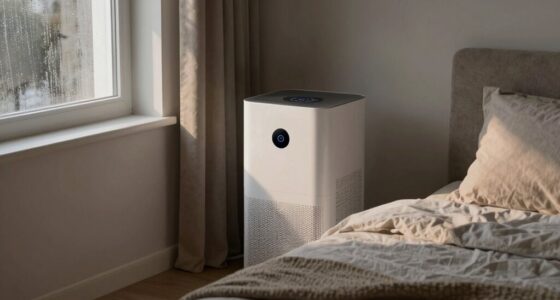
To make falling asleep easier, clean and organize your bedroom, removing clutter and using calming colors and textures. Establish a consistent bedtime routine with relaxing activities like gentle stretching or deep breathing, while avoiding screens before bed. Manage lighting by dimming lights and keeping the room cool, and improve air quality with ventilation or plants. Stay disciplined with your schedule and environment to create a peaceful space that signals your body it’s time to sleep. Keep going for more tips!
Listen free for 30 days with Audible
Thousands of audiobooks and originals — cancel anytime.
As an affiliate, we earn on qualifying purchases.
Key Takeaways
- Clear clutter and keep surfaces tidy to create a calming, organized space conducive to sleep.
- Establish a consistent bedtime routine involving relaxing activities like reading or gentle stretching.
- Dim lights and set the room temperature between 60-67°F to promote natural sleep cycles.
- Improve air quality with ventilation, air purifiers, or plants to reduce allergens and pollutants.
- Maintain a regular sleep schedule and keep the environment consistently inviting and peaceful.

If your bedroom feels cluttered or uninspiring, it can be hard to relax or get a good night’s sleep. Your sleep environment plays a vital role in how easily you drift off each night. A messy or chaotic space can increase stress and make winding down feel like a challenge, while a calm, organized bedroom encourages relaxation. To set yourself up for restful sleep, start by simplifying your space. Clear away unnecessary clutter, keep surfaces tidy, and choose soothing colors or textures that promote tranquility. When your environment feels peaceful, your mind is less likely to be distracted or anxious, making it easier to fall asleep naturally.
A tidy, peaceful bedroom fosters relaxation and makes it easier to fall asleep naturally.
In addition to tidying up, establishing consistent bedtime rituals helps signal to your body that it’s time to wind down. These rituals could include reading a book, gentle stretching, or practicing deep breathing exercises. The key is to create a routine that you follow every night, reinforcing the connection between these activities and sleep. Over time, your brain begins to associate these rituals with relaxation, making it easier to shift into sleep mode. Avoid screens or stimulating activities right before bed, as the blue light from devices can interfere with melatonin production, the hormone that regulates sleep.
Creating a calming sleep environment also involves controlling lighting and temperature. Dim the lights at least an hour before bed to help your body produce melatonin naturally. Consider using blackout curtains or an eye mask if outside light is a problem. Keep the room at a comfortable temperature—generally between 60 and 67 degrees Fahrenheit—so you don’t wake up feeling too hot or too cold. A peaceful environment, combined with your bedtime rituals, sets the stage for a restful night. Improving indoor air quality through proper ventilation and purification can also help create a healthier sleep space, reducing allergens and pollutants that might disrupt rest. Incorporating plants or air purifiers can naturally enhance indoor air quality, supporting better sleep. Additionally, paying attention to air circulation can help maintain a fresh and invigorating environment that promotes relaxation. Proper air quality is essential for a restful sleep, as pollutants and allergens may interfere with your ability to rest deeply. Ensuring good air flow can also help prevent stuffiness and maintain a comfortable atmosphere for sleep.
Consistency is key. Going to bed and waking up at the same time every day helps regulate your internal clock, making it easier to fall asleep and wake up refreshed. Incorporate small, calming activities into your nightly routine and keep your sleep space tidy and inviting. Over time, these simple adjustments create a powerful reset routine that can substantially improve your sleep quality. When your environment is soothing and your rituals are established, falling asleep becomes less of a struggle and more of a natural shift. With patience and discipline, you’ll find it easier to unwind at night and enjoy more restorative sleep each morning.
As an affiliate, we earn on qualifying purchases.
Frequently Asked Questions
How Long Should the Reset Routine Take Each Night?
You should spend about 10 to 15 minutes on your bedroom reset routine each night. During this time, focus on optimizing your sleep environment by dimming lights, adjusting the temperature, and decluttering. Incorporate relaxation techniques like deep breathing or gentle stretches to signal your body it’s time to unwind. Keeping this routine consistent helps your mind and body associate these steps with sleep, making it easier to fall asleep quickly.
Can I Customize the Routine for Different Sleep Issues?
Yes, you can customize your reset routine for different sleep issues by exploring personalization options and sleep disorder adaptations. For instance, if stress keeps you awake, add relaxation techniques like deep breathing or meditation. If discomfort is a problem, incorporate gentle stretches or adjust your bedding. Tailoring your routine helps target specific sleep challenges, making it more effective and easier to stick with each night.
Is This Routine Effective for Shift Workers?
Shift workers, your sleep environment and bedtime rituals can still be your sanctuary, even if your schedule feels like a shifting tide. This routine can be effective if you adapt your sleep environment to mimic night conditions, like blackout curtains and white noise. Establish consistent bedtime rituals, regardless of clock hours, to signal your body it’s time to wind down. With dedication, you can create a restful haven amidst your irregular hours.
Should I Include Exercise in the Reset Routine?
Including exercise in your reset routine can boost your sleep hygiene and overall sleep quality. Exercise benefits your body by reducing stress, promoting relaxation, and helping regulate your circadian rhythm. However, avoid vigorous activity close to bedtime, as it might interfere with falling asleep. Incorporate light stretches or gentle yoga in your routine to enjoy the benefits without disrupting your sleep. This approach can make it easier to shift into restful sleep.
How Quickly Will I Notice Improvements in Sleep Quality?
You might notice improvements in your sleep quality within a few days to a week. Focusing on good sleep hygiene, like maintaining a consistent schedule, and practicing relaxation techniques can speed up this process. As you implement your bedroom reset routine, you’ll likely experience better sleep, deeper rest, and easier shifts into sleep. Consistency is key, so stick with your routine to see lasting benefits.
white noise air purifier for sleep
As an affiliate, we earn on qualifying purchases.
As an affiliate, we earn on qualifying purchases.
Conclusion
Remember, creating a calming bedroom environment isn’t about perfection; it’s about making small, consistent changes that foster peace and restful sleep. Even on busy nights, taking just a few minutes to reset your space can transform your bedtime routine. Don’t let the chaos of the day steal your chance for deep, restorative sleep. You deserve a peaceful sanctuary—embrace this routine and give yourself the gift of true rest tonight and every night.
As an affiliate, we earn on qualifying purchases.
sleep environment temperature control
As an affiliate, we earn on qualifying purchases.
As an affiliate, we earn on qualifying purchases.
Grilling season Picks
grills
As an affiliate, we earn on qualifying purchases.