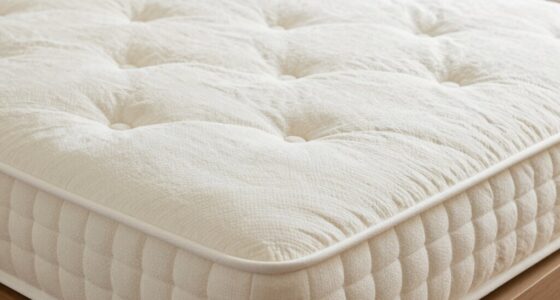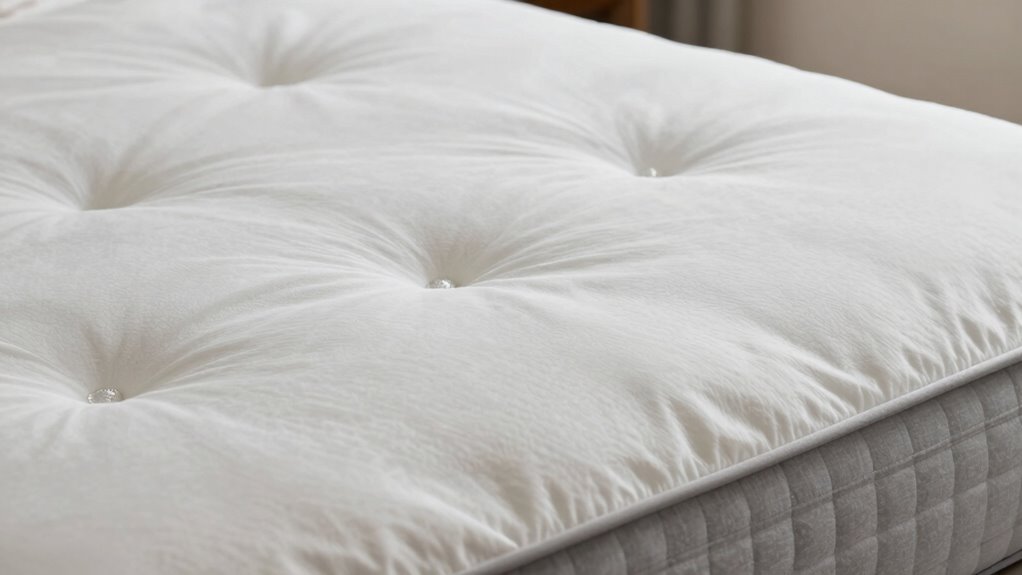

Feeling hot during sleep is often due to pressure and compression, not the room or body temperature. When your mattress or sleep posture causes excessive pressure on joints or muscles, it leads to localized heat and discomfort. Firm or unsupportive mattresses create pressure points that restrict blood flow, making you feel warmer. Adjusting your sleep position and mattress support can help reduce compression and improve comfort. Stay tuned to discover how these changes can help you sleep cooler and better.
Listen free for 30 days with Audible
Thousands of audiobooks and originals — cancel anytime.
As an affiliate, we earn on qualifying purchases.
Key Takeaways
- Compression from poor sleep posture or firm mattresses restricts blood flow, generating localized heat sensations.
- Excessive pressure points cause muscle tension and discomfort, leading to a feeling of being overheated.
- Improper support and misalignment increase pressure, which can mimic the sensation of heat without actual temperature rise.
- Tossing and turning to relieve pressure points can cause perceived warmth due to ongoing compression cycles.
- Adjusting sleep position and support reduces compression, decreasing heat sensations during sleep.

Many people assume that feeling excessively hot during sleep is solely due to high room or body temperature, but often, the real culprit is compression rather than heat. When you lie down to sleep, your body’s position and the way your mattress supports you play a pivotal role in how comfortable and cool you feel throughout the night. Poor sleep posture or an unsuitable mattress firmness can cause pressure points that lead to discomfort and, ironically, a sensation of overheating. You might be tossing and turning because your body is trying to relieve pressure, which increases muscle tension and restricts circulation, making you feel warmer.
Your sleep posture considerably impacts how your body interacts with your mattress. If you sleep in a position that causes your joints to bend or compress certain areas excessively, it can lead to localized pressure. This compression can restrict blood flow and cause your muscles to overwork, which raises your core temperature. For example, sleeping on your stomach often puts strain on your neck and shoulders, and if your pillow or mattress doesn’t support your natural alignment, it can cause uneven pressure distribution. This discomfort not only disrupts your sleep but can also make you feel hotter as your body struggles to find relief. Paying attention to your sleep environment and making adjustments can significantly improve your comfort.
Mattress firmness is another key factor. If your mattress is too firm, it can create rigid pressure points, especially around your hips, shoulders, and back. When these areas are compressed against the firm surface, blood flow can be hampered, leading to localized heat and discomfort. Conversely, a mattress that’s too soft might cause your body to sink too deeply, leading to misalignment and uneven pressure distribution. Both extremes can contribute to a sensation of heat caused by compression rather than actual temperature. The goal is to find a balance—something that supports your body without creating excessive pressure—allowing your muscles to relax and your blood flow to stay unobstructed. Proper pressure distribution across your body is essential for reducing heat buildup caused by compression.
Recognizing that support and alignment significantly influence your sleep comfort can help you make better choices when selecting a mattress or adjusting your sleeping position. Additionally, the body’s interaction with the mattress can create pressure points that lead to discomfort and heat. Ensuring your mattress provides adequate pressure distribution can help prevent localized overheating and promote better circulation. Ultimately, adjusting your sleep posture and choosing the right mattress firmness can markedly reduce compression-related heat. Proper support helps your body maintain a neutral position, reducing pressure points that cause discomfort and excess warmth. When your body is properly aligned and free from unnecessary compression, you’ll likely notice a cooler, more restful sleep. Recognizing that your sleep environment and positioning influence how hot you feel can help you make targeted changes, leading to a more comfortable night’s rest without solely relying on cooling sheets or temperature control devices.
As an affiliate, we earn on qualifying purchases.
Frequently Asked Questions
How Does Compression Affect Sleep Quality Beyond Temperature Issues?
Compression affects your sleep quality by creating pressure points that cause discomfort and disrupt rest. It can also misalign your spine, leading to aches and stiffness. When your body isn’t properly supported, you toss and turn more, preventing deep, restorative sleep. By addressing compression, you help maintain better spinal alignment and reduce pressure points, so you wake up feeling more refreshed and less sore.
Can Specific Sleep Positions Cause Compression-Related Hot Sleep Complaints?
Picture your sleep posture as a delicate dance; some moves might cause unwanted pressure, turning your rest into a fiery battle. Certain positions, like sleeping on your stomach or with arms overhead, can create compression points that trap heat. Your mattress design plays an essential role, too. If it doesn’t support your body’s natural curves, it amplifies compression, making hot sleep complaints more likely—so choose a mattress that cradles you gently and aligns your spine.
Are Certain Mattress Materials More Prone to Causing Compression Discomfort?
Yes, certain mattress materials are more prone to causing compression discomfort. You should look for mattresses with varying foam densities and firmness levels. High-density foams can provide better support, reducing compression, while overly soft or overly firm mattresses might cause pressure points. Choosing a mattress with balanced foam density and appropriate firmness guarantees you avoid excessive compression, leading to a more comfortable, cooler sleep experience without hot sleep complaints.
How Long Does It Typically Take to Notice Relief From Compression-Related Hot Sleep Issues?
You might notice relief from compression-related hot sleep issues within a few days to a week, depending on your sleep posture and mattress firmness. When you adjust your sleep posture or switch to a mattress with the right firmness, it reduces pressure points and improves airflow. Consistently maintaining these changes helps your body adapt, leading to cooler, more comfortable sleep as your compression discomfort diminishes over time.
Do Age or Health Conditions Influence Compression-Related Sleep Discomfort?
Yes, age factors and health conditions can influence your compression-related sleep discomfort. As you age, your body may become more sensitive to compression, making hot sleep issues more noticeable. Certain health conditions, like circulatory problems or nerve issues, can also heighten discomfort from compression. These factors can intensify your experience, so it’s crucial to take them into account when addressing sleep problems caused by compression.
supportive mattress for proper alignment
As an affiliate, we earn on qualifying purchases.
As an affiliate, we earn on qualifying purchases.
Conclusion
So, next time you wake up feeling hot, consider the unexpected culprit—compression rather than temperature. Maybe it’s just a coincidence that your mattress feels snug, or that a slight shift in your sleeping position aligns with those fiery nights. Sometimes, the true cause is hidden beneath the surface, waiting silently to be uncovered. Keep an open mind, and you might find that relief comes from easing compression rather than chasing cooler nights.
As an affiliate, we earn on qualifying purchases.
As an affiliate, we earn on qualifying purchases.
Labor Day sales Picks
labor day deals
As an affiliate, we earn on qualifying purchases.