
When you sleep in a sealed bedroom, your body naturally produces CO2 through respiration, which can build up without proper airflow. The lack of ventilation traps this CO2 inside, especially when windows and doors stay closed. Over time, CO2 levels rise, causing discomfort or drowsiness. Fans, ventilation systems, or opening windows help reduce this buildup by promoting air exchange. Keep going to discover more ways to improve your sleep environment and breathe easier overnight.
Open a free Amazon Business account
Business pricing, bulk buying and tax-exempt orders.
As an affiliate, we earn on qualifying purchases.
Key Takeaways
- Body respiration during sleep continuously releases CO2, increasing indoor levels in a sealed environment.
- Lack of ventilation prevents fresh air from diluting accumulated CO2 overnight.
- Sealed rooms trap CO2, leading to higher concentrations by morning.
- Natural airflow diminishes at night, reducing the exchange of indoor and outdoor air.
- Insufficient airflow and closed windows cause CO2 to build up gradually during sleep.
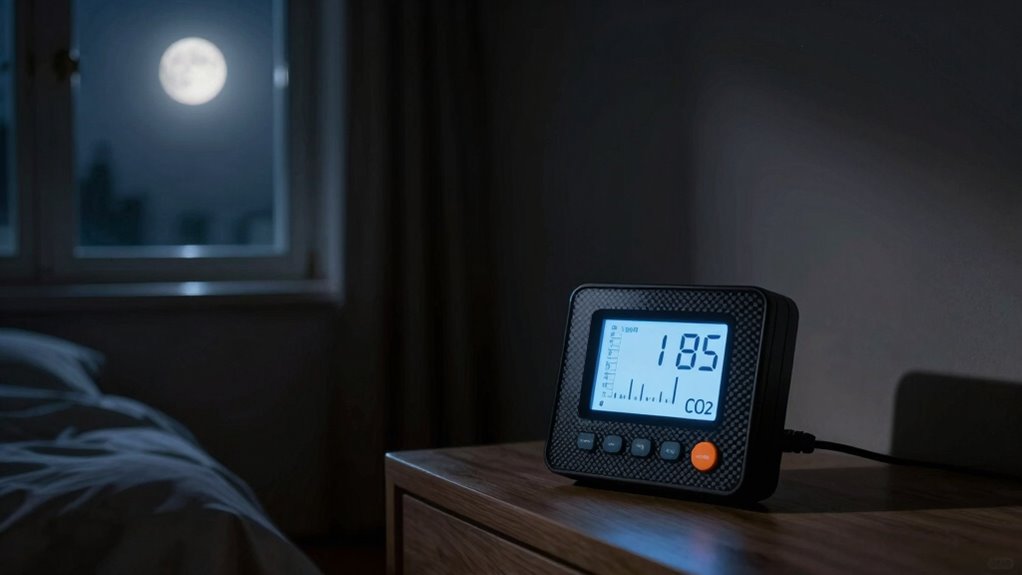
When your bedroom is closed off overnight, carbon dioxide (CO2) can accumulate rapidly, leaving you with higher levels of the gas by morning. This buildup happens because your body continues to produce CO2 while you sleep, and without proper air exchange, the gas gets trapped inside. Even if you’re alone, your body’s natural respiration releases enough CO2 to raise its concentration in a sealed space. Over time, this can lead to discomfort, headaches, or drowsiness when you wake up. Understanding why this occurs highlights the importance of maintaining good air circulation in your sleeping environment. Ensuring adequate air exchange during sleep is essential for maintaining healthy indoor air quality. Indoor plants can play a role in managing indoor air quality, but their impact on CO2 levels is limited during the night. While plants absorb CO2 during the day through photosynthesis, many reduce this activity or even release CO2 in the absence of sunlight. So, relying solely on indoor plants won’t considerably prevent CO2 buildup overnight. Instead, ensuring proper air circulation becomes essential. When your bedroom lacks fresh air exchange, the concentration of CO2 naturally increases because the stale, CO2-rich air isn’t replaced with oxygen-rich outside air. Good air circulation can be achieved by opening windows before going to bed or using a fan to promote airflow. Even a small crack in a window can help dilute the accumulated CO2, making the room safer and more comfortable. This simple act prevents the air from stagnating and reduces the likelihood of excessive CO2 buildup. If you’re in a climate where opening windows isn’t feasible, an air purifier with a fresh air intake or ventilation system can assist in maintaining healthy air quality. The key is to facilitate continuous exchange of indoor and outdoor air so that CO2 doesn’t reach uncomfortable levels. You might also consider the placement of indoor plants, not just for their aesthetic appeal but for their role in improving overall air quality during the day. However, at night, their effect on CO2 levels is minimal, so relying on good air circulation remains your best strategy. Proper ventilation not only reduces CO2 but also helps control humidity and remove other indoor pollutants, creating a healthier, more restful sleeping space. Additionally, maintaining proper ventilation can help prevent the buildup of other indoor pollutants that could affect sleep quality.

VOOPNU Air Purifiers for Bedroom, High Efficiency Filter, 1076 Ft², Black
- Easy-to-Use Control Panel: Intuitive design for simple operation
- Compact and Powerful: Covers 1076 sq ft in small size
- 360° Airflow: Provides comprehensive air circulation
As an affiliate, we earn on qualifying purchases.
As an affiliate, we earn on qualifying purchases.
Frequently Asked Questions
Can Elevated CO2 Levels Cause Long-Term Health Issues?
Elevated CO2 levels can cause long-term health issues if you’re exposed regularly without proper ventilation. Poor indoor air quality may lead to headaches, fatigue, and respiratory problems over time. To prevent this, you should improve ventilation in your bedroom, such as opening windows or using air purifiers. These ventilation improvements help maintain healthier indoor air quality, reducing CO2 buildup and supporting your overall well-being.
How Quickly Can CO2 Concentrations Rise Overnight?
CO2 levels can rise quite quickly overnight, especially if your room lacks proper air circulation and ventilation frequency is low. Without fresh air, CO2 accumulates as you breathe, causing concentrations to increase within a few hours. To prevent this, guarantee your bedroom is well-ventilated by opening windows or using ventilation systems. Regular airflow helps keep CO2 levels in check and promotes better sleep and overall health.
Do Different Room Sizes Affect CO2 Buildup?
Imagine your room as a cozy haven where ventilation strategies and room volume play key roles. In smaller spaces, CO2 tends to accumulate faster because the limited volume doesn’t dilute the air as effectively. Larger rooms can better disperse CO2, slowing buildup. So, yes, different room sizes impact CO2 levels overnight. Proper ventilation strategies, like opening windows or using air purifiers, help manage buildup regardless of room size.
Are There Specific Signs Indicating High CO2 Levels?
You might notice signs like stuffy air, headaches, or drowsiness, which indicate poor air quality caused by high CO2 levels. Poor ventilation systems can’t refresh the air, leading to buildup overnight. If your room feels stale or you wake up with a sore throat, these are signs that CO2 levels are too high. Improving ventilation, such as opening windows or using air purifiers, can help maintain healthier air quality.
Can Plants Help Reduce CO2 in Bedrooms?
Yes, plants can help reduce CO2 in bedrooms through plant absorption, where they take in carbon dioxide during photosynthesis. However, their impact is limited indoors without natural ventilation. To effectively lower CO2 levels, you should open windows or use ventilation systems alongside having plants. This combination improves air quality, allowing fresh air to circulate and preventing CO2 buildup overnight, ensuring a healthier sleeping environment.

Honeywell TurboForce Air Circulator, Small Tabletop Fan, Quiet Personal Fan for Home or Office, 3 Speeds, 90 Degree Pivoting Head, Black, HT900
- Size and Placement: Small tabletop or wall-mounted fan
- Quiet Operation: 25% quieter than comparable fans
- Powerful Airflow: Aerodynamic turbo design for maximum airflow
As an affiliate, we earn on qualifying purchases.
As an affiliate, we earn on qualifying purchases.
Conclusion
Understanding how CO2 can build up overnight helps you take simple steps to improve your bedroom air quality. Since your body releases about 0.4 liters of CO2 per hour while sleeping, even a small, closed room can see CO2 levels rise considerably by morning. This buildup can affect your sleep quality and overall health. Staying ventilated or using air purifiers can make a noticeable difference, ensuring you wake up refreshed and breathing easier.

White Window Sash Vent Stops 6-Pack 1714WHITE, Nylon Snap-in
- Reliable Window Opening Control: Limits how far your window sash can open
- Durable Nylon Construction: Made from high-strength, wear-resistant nylon
- Universal Fit for Vinyl Windows: Fits standard adaptor slot of 1.875" x 0.285"
As an affiliate, we earn on qualifying purchases.
As an affiliate, we earn on qualifying purchases.

KHEOED Built-in Register Booster Fan with Cover for Air Heat Vent with Fan,Fits 4"x10" Duct/Ceiling/Floor Vents, Improves AC & Heating/Cooling,Quiet 10-Speed Household/Bedroom Ventilation,smart,Bronze
- Whole House Airflow Improvement: Enhances HVAC airflow for comfort
- Ultra-Quiet Operation: Silent, long-lasting motor technology
- Smart 10-Speed Control: Remote control with personalized settings
As an affiliate, we earn on qualifying purchases.
As an affiliate, we earn on qualifying purchases.
Evergreen bestsellers Picks
bestsellers
As an affiliate, we earn on qualifying purchases.