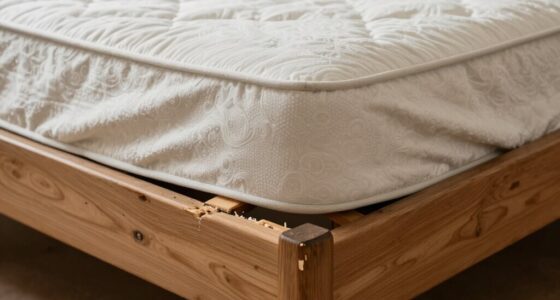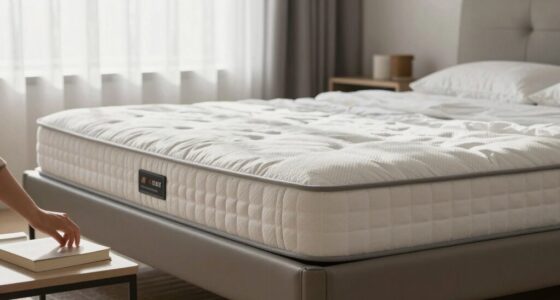

Your bed frame’s stability is mainly influenced by its shape, support system, and construction quality. A broad, low-profile frame with well-placed support beams offers better stability, while tall or narrow frames may wobble. The support system, such as slats or solid platforms, also plays a key role in weight distribution and preventing sagging. Pay attention to materials and joints, as these also affect long-term sturdiness. Keep exploring to discover more ways to enhance your bed’s stability.
Listen free for 30 days with Audible
Thousands of audiobooks and originals — cancel anytime.
As an affiliate, we earn on qualifying purchases.
Key Takeaways
- Support beam placement and crossbar configuration directly influence the frame’s stability and weight distribution.
- The overall shape and base width of the frame determine contact area and resistance to wobbling.
- Slat spacing affects mattress support and prevents sagging, impacting overall frame stability.
- Frame height and vertical proportions influence top-heaviness and risk of wobbling.
- Material strength and joint reinforcement are crucial for maintaining structural integrity over time.
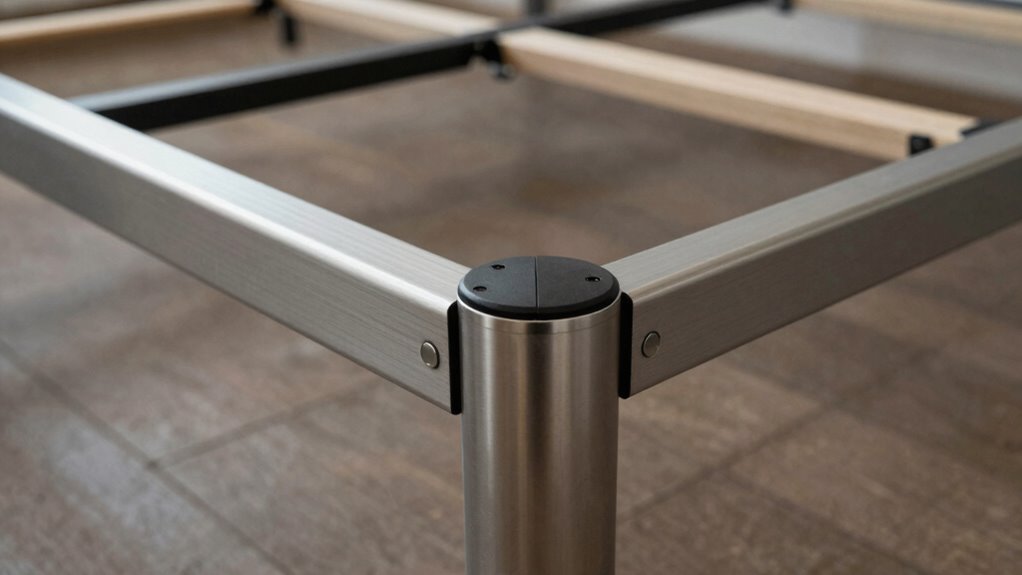
When choosing a bed frame, understanding its geometry is vital because it directly impacts stability, comfort, and style. The shape and design of the frame influence how well your mattress is supported and how securely it stays in place. A well-designed bed frame offers a solid foundation, preventing unwanted movement and sagging over time, which can disrupt your sleep quality. The key to achieving this stability lies in grasping the importance of mattress support and frame materials, both of which are dictated by the frame’s geometry.
The structure of the bed frame determines how weight is distributed across the mattress. For maximum mattress support, look for frames with a sturdy, evenly spaced support system—whether slats, a solid platform, or a combination. The spacing between slats, for example, affects how well the mattress maintains its shape and comfort. Narrower gaps provide better support for memory foam or hybrid mattresses, reducing sagging and prolonging their lifespan. Conversely, wider gaps might cause uneven support, leading to discomfort and potential damage. The frame’s overall geometry, including the placement of support beams and crossbars, ensures that weight is spread evenly, which is essential for stability. Additionally, understanding the frame materials helps in selecting a durable and stable option that will withstand regular use over time.
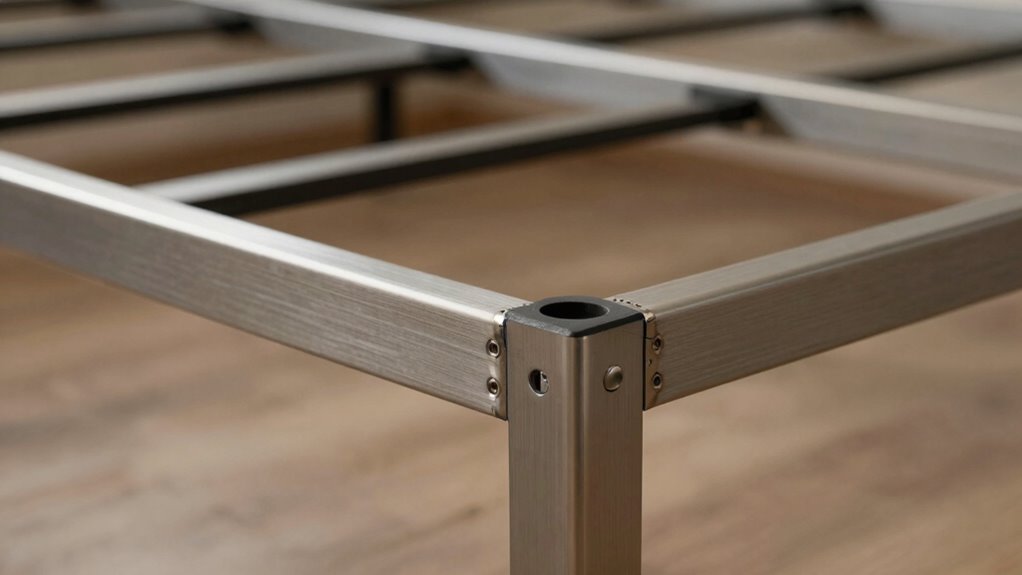
Frame materials also play an important role in the frame’s stability and overall durability. Metal frames, often constructed with tubular or box steel, tend to be more resistant to warping and can support heavier mattresses without bending. Their geometric design usually involves robust support bars and reinforced corners that enhance stability. Wood frames, on the other hand, can vary widely depending on the type of wood and construction quality. Solid hardwood frames offer excellent stability due to their density and structural integrity, especially when built with precise joints and strong support beams. However, cheaper or poorly designed wooden frames might warp or weaken over time, especially if their geometry doesn’t evenly distribute weight or if the materials aren’t high quality. Proper design considerations like joint reinforcement and support placement are crucial for maintaining long-term stability. Recognizing the geometric principles behind different frame styles can help in selecting a design that balances aesthetics with structural integrity. Moreover, the design layout of the frame can influence how easily it can be assembled and how well it integrates into various bedroom styles. In addition, the overall design, including the shape and style, contributes to both stability and visual appeal, emphasizing the importance of understanding frame geometry in the selection process.
The shape of the bed frame itself, such as a platform style, four-poster, or sleigh design, also influences stability. Platform beds with low profiles and a broad base tend to be more stable because they have a larger contact area with the floor. Meanwhile, frames with overly tall or narrow structures may become top-heavy and prone to wobbling. Ultimately, understanding how the geometry of the frame integrates with your mattress support system and the materials used can greatly improve your bed’s stability, comfort, and longevity.
metal bed frame with support beams
As an affiliate, we earn on qualifying purchases.
As an affiliate, we earn on qualifying purchases.
Frequently Asked Questions
How Does Mattress Weight Impact Bed Frame Stability?
Mattress weight directly impacts your bed frame stability because heavier mattresses put more stress on the frame. If your bed frame design isn’t suited for your mattress’s weight, it may wobble or break over time. To guarantee proper mattress compatibility, choose a frame that supports the weight and size of your mattress, and consider reinforced or sturdier materials if you have a heavier mattress. This keeps your bed stable and safe.
What Materials Best Enhance Frame Stability?
You should choose sturdy materials like steel or hardwood for your bed frame, as they provide excellent stability and durability. Frame material choices like metal or solid wood enhance overall support, especially when paired with a well-designed bed frame. Opt for a bed frame design that includes reinforced joints and a solid foundation, ensuring stability and preventing wobbling or shifting over time.
Can Adjustable Bed Frames Affect Overall Geometry?
Yes, adjustable bed frames can affect overall geometry. The adjustable mechanisms change the bed’s shape and position, which may impact bed frame alignment over time. If the adjustments aren’t made properly or the frame isn’t designed for frequent changes, it could lead to instability or misalignment. To maintain stability, make certain the adjustable mechanisms are sturdy and regularly check that the frame maintains proper geometry during different positions.
How Does Bed Frame Size Influence Stability?
Imagine your bed as the anchor of your sanctuary—size truly matters. When you choose a larger bed frame, it enhances stability by offering more support and reducing wobbling, especially if the design emphasizes sturdy construction. Conversely, smaller frames might feel less secure. So, your bed frame size directly influences stability, blending aesthetics with design. A well-sized, thoughtfully designed bed frame guarantees both beauty and solid support for restful nights.
What Role Do Bed Frame Legs Play in Stability?
Your bed frame legs are essential for stability, with their design and placement directly impacting balance. Well-crafted leg design evenly distributes weight, preventing wobbling or shifting. Proper frame alignment guarantees that all legs support the mattress equally, reducing stress on any single point. When your legs are sturdy and correctly aligned, your bed stays stable, providing a safe and comfortable sleeping experience.
wooden bed frame with reinforced joints
As an affiliate, we earn on qualifying purchases.
As an affiliate, we earn on qualifying purchases.
Conclusion
Think of your bed frame like a sturdy bridge—every angle and joint must work together to support your weight. I once saw a flimsy frame wobble with the slightest movement, like a boat on choppy waters. When you pay attention to the geometry, you build a solid foundation that keeps your nights peaceful and stable. Remember, a well-designed frame isn’t just about looks; it’s about creating a safe, restful haven you can rely on every night.

BedBro Bunkie Board Queen 10mm (60" x 80") – Gray Under Mattress Support, Anti-Sag & Noise-Free,Platform & Slatted Beds. Breathable Low Profile Bed Board for Metal Frame
- Universal Compatibility: Fits most queen bed frames
- Anti-Sag Support: Reduces mattress sag and gaps
- Low-Profile Design: Maintains original bed height
As an affiliate, we earn on qualifying purchases.
As an affiliate, we earn on qualifying purchases.
low-profile bed frame with sturdy support
As an affiliate, we earn on qualifying purchases.
As an affiliate, we earn on qualifying purchases.
College move-in / dorm season Picks
dorm essentials
As an affiliate, we earn on qualifying purchases.