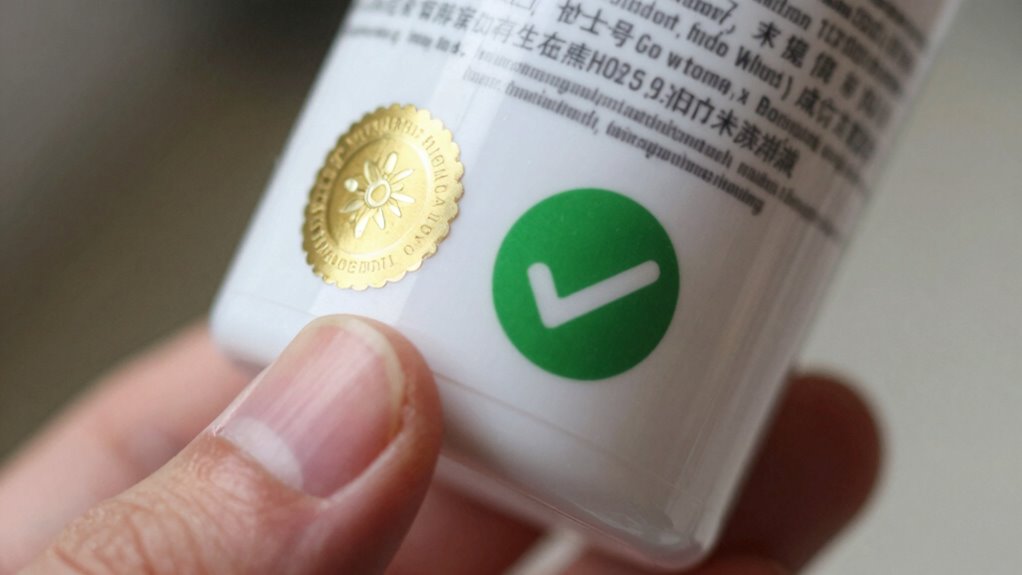

You should carefully examine certification logos because counterfeit or misleading marks can falsely show compliance, risking your safety and trust. Recognizing genuine logos from official sources guarantees the product meets strict standards and isn’t falsely claiming quality or safety. Misinterpreting or overlooking important details can lead you to make uninformed decisions. Knowing what to look for helps protect you from fraud and ensures product reliability. Keep going to discover how to confidently verify authentic certification marks.
Key Takeaways
- Genuine logos confirm product compliance with strict standards, ensuring safety and quality.
- Counterfeit logos can mislead consumers, making careful reading essential for accurate verification.
- Recognizing official logos involves checking credentials on certifying organization’s website.
- Similar-looking or misleading logos can cause confusion about product authenticity.
- Understanding certification standards helps consumers make informed and trustworthy purchasing decisions.
When you see certification logos on products or websites, it’s easy to assume they guarantee quality or safety. But in reality, not all logos are created equal, and some might be misleading or lack genuine credibility. That’s why it’s vital to read these symbols carefully. Certification logos are often used to signal brand authenticity, suggesting that a product has met certain standards or passed specific tests. However, some companies might misuse or fake these logos to give their products an air of legitimacy, which can deceive unwary consumers. You need to look beyond the surface to determine whether the certification is legitimate or just a marketing ploy.
Understanding what a certification logo truly signifies helps you protect your consumer trust. When you verify the authenticity of a logo, you’re making an informed choice, reducing the risk of purchasing subpar or unsafe products. For example, a genuine organic certification logo indicates that the product meets strict standards, while a counterfeit logo might be slapped on products that don’t actually adhere to those standards. Recognizing the difference helps you uphold your expectations of quality and safety. It’s also important to note that some certification logos are industry-specific. A logo linked to food safety, for instance, might not be relevant for electronics or clothing. Reading carefully guarantees you’re paying attention to the right certifications for each product.
Additionally, some logos can be confusing or similar to official marks, which makes it easy to get misled. You might see a logo that looks official but isn’t issued by a recognized authority. Checking the certifying organization’s website or credentials can clarify whether the certification is genuine. Verifying the legitimacy of certification logos is essential for making smart buying decisions. Recognizing counterfeit or misleading logos helps you avoid false claims and ensures you’re investing in products that truly meet standards. When you take the time to verify these details, you reinforce your consumer trust—not just in the product, but also in your ability to make smart, safe choices.
Furthermore, understanding credibility standards within the certification process can help you better evaluate whether a logo is trustworthy or not. Recognizing the standards compliance of a certification can also indicate whether the product has been evaluated by a reputable authority. Also, being aware of certification processes can help you identify whether the verification was thorough and independent. In the end, the importance of reading certification logos carefully cannot be overstated. They influence your perception of brand authenticity and help you avoid being duped by counterfeit or misleading symbols. By paying close attention, you demonstrate a proactive approach to safeguarding yourself from false claims. This diligent approach benefits your personal safety and satisfaction and encourages companies to maintain genuine standards, fostering a marketplace built on transparency and trust. So next time you encounter a certification logo, pause, look closely, and verify what it really means before making your purchase.
genuine certification logo verification tools
As an affiliate, we earn on qualifying purchases.
As an affiliate, we earn on qualifying purchases.
Frequently Asked Questions
How Can I Verify the Authenticity of a Certification Logo?
To verify a certification logo’s authenticity, start by examining its design details and comparing it with official brand recognition guides. Check for inconsistencies or low-quality printing, which can indicate a fake. Visit the certifying organization’s website to confirm the logo’s appearance and legitimacy. Genuine logos follow specific logo design standards, so a careful comparison helps guarantee you’re dealing with an authentic certification, protecting you from scams.
Are All Certification Logos Equally Trustworthy?
Not all certification logos are created equal, despite their shiny brand recognition and clever logo design. You might be fooled into trusting a flashy badge, but some logos are just clever design tricks, not proof of credibility. Always scrutinize the issuing authority behind the logo. A trustworthy certification logo comes from a reputable organization, not just a pretty picture that makes you feel warm and fuzzy inside. Don’t be duped by style over substance.
What Common Symbols Indicate Fake Certification Logos?
You should watch out for counterfeit marks and logo design inconsistencies that often indicate fake certification logos. Fake logos may have blurred edges, uneven fonts, or incorrect color schemes, making them look suspicious. Authentic certification logos are usually precise, well-designed, and consistent across different platforms. If you notice any irregularities or mismatched symbols, it’s a good sign that the logo might be counterfeit, and you should verify its legitimacy before trusting it.
Do Certification Logos Expire or Change Over Time?
Certification logos often evolve with design trends and standards, so they do change over time. You might notice subtle updates in logo design evolution or new elements reflecting current certification practices. Certification logo history shows that expiration isn’t common unless specified, but brands frequently refresh their logos to stay relevant. Keep an eye on official sources for the latest updates, ensuring you recognize genuine logos amid changing visuals.
How Do Certification Logos Influence Consumer Trust?
Certification logos greatly influence your trust by enhancing brand recognition and strengthening visual branding. When you see a certified logo, you’re more likely to believe in the product’s quality and safety. Clear, recognizable logos reassure you that the product meets specific standards, making your purchasing decision easier. As a result, well-designed certification logos boost consumer confidence, emphasizing the importance of reading them carefully to guarantee authenticity and maintain trust in the brand.

Exam Ref SC-900 Microsoft Security, Compliance, and Identity Fundamentals
As an affiliate, we earn on qualifying purchases.
As an affiliate, we earn on qualifying purchases.
Conclusion
So, next time you see a certification logo, don’t just glance and move on—give it your full attention. A quick glance can be like missing a treasure map, leading you straight into the jaws of a scam. Reading carefully guarantees you’re not fooled by fake claims or misleading symbols. Remember, your trust is priceless—it’s worth scrutinizing every logo like it’s the key to opening a world of genuine quality and safety.

Moonzdudu Pocket Pinger Gold & Silver Coin Ping Tester Kit
- All-in-One Verification Kit: Complete set with storage case
- Simple Testing Process: Tap coins and check resonance
- Accurate Size Measurement: Use caliper for precise diameter
As an affiliate, we earn on qualifying purchases.
As an affiliate, we earn on qualifying purchases.
official certification logo scanner
As an affiliate, we earn on qualifying purchases.
As an affiliate, we earn on qualifying purchases.