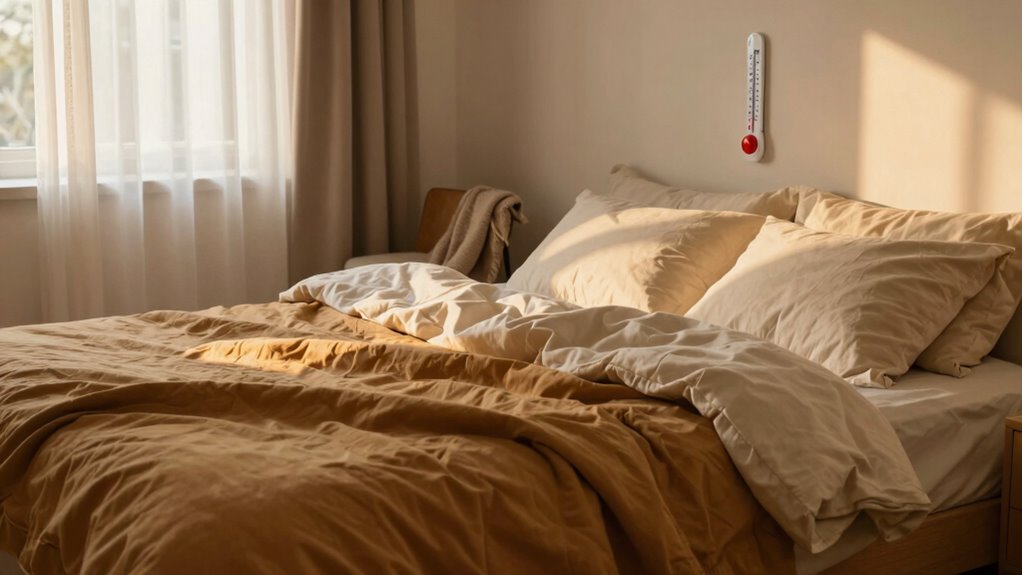

To tell if your bed stays warm or your room is cold, lie in bed and see how quickly you feel warmth under the covers. If you warm up fast and stay cozy even in a chilly room, your bedding is doing its job. But if you feel cold even with covers, your bedding might need improvement or your room could be too cold. Keep exploring these tips to pinpoint the real issue and stay warmer tonight.
Play games included with Prime
Start a Prime free trial and play with Amazon Luna on your devices.
As an affiliate, we earn on qualifying purchases.
Key Takeaways
- Lie in bed with covers and note how quickly warmth develops; slow warmth suggests bedding issues, quick warmth indicates room temperature problems.
- Feel the bed surface directly; if it’s cold, bedding insulation might be inadequate, even if the room is warm.
- Check room temperature separately with a thermometer; a cold room points to ambient air as the main cause.
- Test with different bedding materials; natural fibers like wool retain heat better than synthetic fabrics.
- Seal drafts and improve room insulation if the room remains cold despite warm bedding.
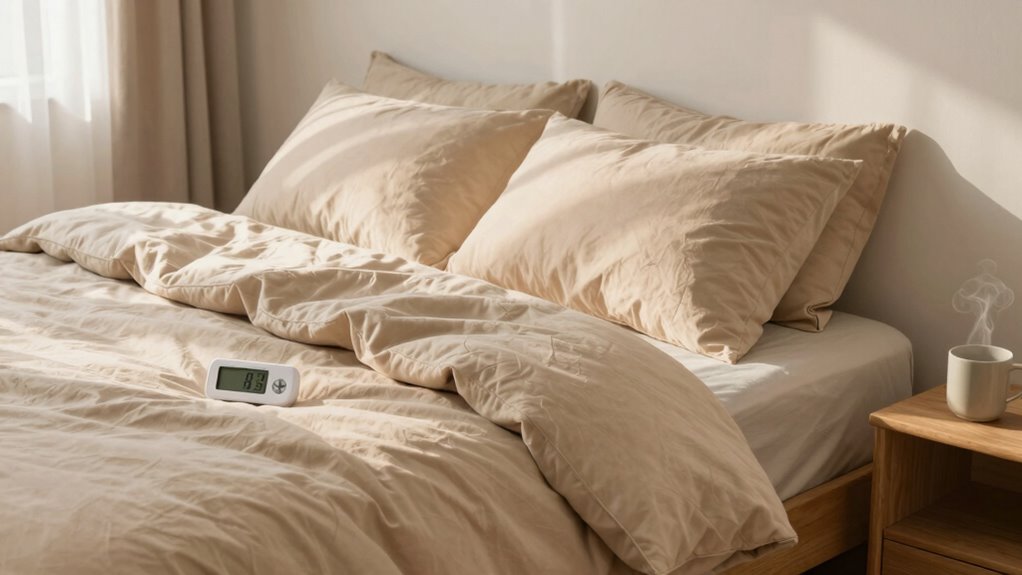
When trying to stay warm at night, it’s important to determine whether your bed or your room is the main culprit behind the chill. The key lies in understanding how your body interacts with your sleeping environment, especially when it comes to temperature regulation. Your bedding materials play a significant role here. Natural fibers like wool or flannel tend to trap heat better than synthetic fabrics like polyester or nylon. If you notice that your bed feels cold even after getting under the covers, it could be your bedding materials not providing enough insulation. Conversely, if your room is cold, no amount of thick blankets might fully compensate for the chilly air.
Identify whether your bed or room causes the cold to target effective warmth solutions.
To figure out which factor is more influential, start by testing your bed’s warmth separately from the room’s temperature. When you’re lying in bed, pay attention to how quickly you start to feel cold when you’re under the covers versus when you’re just sitting or standing in the room. If you find that your bed warms up quickly and feels cozy once you’re under the blankets, but the room remains cold, then the room’s temperature is likely the main issue. On the other hand, if you’re warm at first but then start feeling cold even with your bedding, it’s a sign that your bedding materials aren’t sufficiently insulating or that your sleep setup needs an upgrade.
Another way to assess this is by checking how your bedding materials affect your comfort. Natural fibers like wool or fleece are better at maintaining warmth because they wick moisture away and trap heat. If you’re using lightweight or synthetic bedding, you might not retain enough heat, especially if your room is cool. In that case, adding more layers or switching to warmer materials can help. Also, consider the fit of your bedding—loose, poorly fitting covers allow heat to escape, while snug, well-fitted bedding keeps warmth in. Additionally, understanding the thermal properties of your bedding can guide you in choosing the right materials for colder nights. Recognizing the room insulation and how it influences overall warmth can also be beneficial, as even the best bedding cannot compensate for major drafts or poor insulation.
Beyond bedding, examine the room’s heating sources and insulation. If your room has poor insulation or drafts, it’ll be tough for any bedding to keep you warm. Small adjustments like sealing gaps around windows or using a space heater can make a notable difference. Ensuring proper ventilation can also help maintain consistent temperature levels in your room. Ultimately, understanding whether your bed or your room is the main source of cold helps you target your solutions more effectively—whether that means upgrading your bedding materials or improving room insulation and heating.
As an affiliate, we earn on qualifying purchases.
Frequently Asked Questions
Can Bedding Materials Affect Warmth More Than Room Temperature?
Yes, bedding materials can affect warmth more than room temperature. You’ll find that bedding with high insulation quality, like flannel or down comforters, traps heat effectively, making you feel warmer regardless of the room’s temperature. Conversely, lighter materials like cotton or linen offer less insulation. So, if you want extra warmth, focus on choosing bedding with better insulation qualities, even if your room isn’t particularly cold.
How Do I Measure My Room’s Actual Temperature Accurately?
You can measure your room’s actual temperature accurately by using a reliable thermometer placed away from drafts and direct sunlight. Make sure your thermostat is properly calibrated for precise readings. Check window insulation to prevent heat loss, which can skew temperature readings. Regularly monitor these factors, and record the temperature at different times to get an accurate picture of your room’s warmth. This helps you adjust heating or bedding for maximum comfort.
Do Sleeping Positions Influence How Warm I Feel Overnight?
Yes, your sleeping posture can influence how warm you feel overnight. For example, curling up in a fetal position traps body heat better, keeping you warmer, while sprawled-out positions expose more surface area and may make you feel cooler. Additionally, bed insulation plays a role—well-insulated bedding retains heat, complementing your sleeping posture. Adjust your position and bedding to optimize warmth and stay comfortable throughout the night.
Are There Specific Signs Indicating My Bed’s Insulation Quality?
Your bed’s insulation can be revealed by feeling how quickly it cools or stays warm. If your mattress materials trap heat like a cozy cave, you’ll notice it stays warm long after you lie down. Conversely, if it loses warmth fast, it’s poorly insulated. Signs include waking up cold or sweating excessively. High-quality bed insulation keeps your body heat in, making your sleep environment feel like a warm, comforting hug.
How Do External Weather Changes Impact Room Warmth Versus Bed Warmth?
External weather changes affect room warmth more directly than your bed’s warmth. When outdoor temperatures drop, indoor humidity often decreases, making your room feel cooler. You might notice the need for seasonal clothing choices, like sweaters or heavier blankets. If your bed stays warm despite cold weather outside, it’s likely insulated well or heated. Conversely, if the room feels cool but your bed remains warm, external weather influences room temperature more.
As an affiliate, we earn on qualifying purchases.
Conclusion
So, simply sift through your sleep space to spot the subtle signs. Is your bed’s snugness the source of your warmth, or does your room radiate a reassuring refuge? By deciphering these details, you’ll discover your perfect sleeping sanctuary. Embrace the insight, enhance your environment, and enjoy nights of cozy, comfortable comfort. Remember, a little awareness awakens a world of well-earned restful nights, making sweet dreams a simple, satisfying certainty.
As an affiliate, we earn on qualifying purchases.
As an affiliate, we earn on qualifying purchases.
Fall Picks
fall essentials
As an affiliate, we earn on qualifying purchases.