
Raising humidity in your home can help fix dry sinuses caused by low moisture levels and mouth breathing, providing soothing relief overnight. However, it can’t address underlying issues like infections, allergies, or environmental irritants. Maintaining a humidity level around 40-50% often works best, but overdoing it can create mold and worsen problems. To find out more about optimizing your sinus comfort, continue exploring effective strategies you can try tonight.
Listen free for 30 days with Audible
Thousands of audiobooks and originals — cancel anytime.
As an affiliate, we earn on qualifying purchases.
Key Takeaways
- Humidity levels of 30-50% can moisturize nasal passages and reduce dryness during sleep.
- Proper humidity helps alleviate sinus irritation but cannot treat underlying infections or allergies.
- Over-humidification may promote mold growth, worsening sinus issues.
- Humidity alone cannot eliminate airborne irritants or allergens causing sinus dryness.
- Regular cleaning and maintenance of humidifiers are essential for safe, effective relief.
As an affiliate, we earn on qualifying purchases.
Why Do I Wake up With Dry Sinuses at Night?
Waking up with dry sinuses at night can be frustrating, and several factors may be to blame. Sinus infections often cause inflammation and dryness, making it harder for mucus to stay moist overnight. Allergy triggers, like dust mites or pet dander, can also inflame your nasal passages, leading to dryness and discomfort. When you’re exposed to these triggers while sleeping, your sinuses may become dehydrated, resulting in dry, crusty sensations in the morning. Additionally, breathing through your mouth during sleep can worsen dryness, as it bypasses the natural humidifying process of nasal passages. Understanding whether sinus infections or allergy triggers are causing your dry sinuses can help you take targeted steps to alleviate the issue.
air purifier for allergies and sinus relief
As an affiliate, we earn on qualifying purchases.
As an affiliate, we earn on qualifying purchases.
How Do Humidity Levels Affect Dry Sinuses?
Humidity levels play a crucial role in maintaining healthy sinuses, especially at night. When indoor humidity is too low, your nasal passages lose moisture, leading to dryness and discomfort. This is particularly problematic if you suffer from seasonal allergies, as dry sinuses can worsen congestion and irritation. Proper humidity helps keep nasal moisture balanced, reducing inflammation and improving airflow. Conversely, overly humid environments can promote mold and dust mites, which may trigger allergy symptoms. Ideally, maintaining indoor humidity between 30-50% supports ideal nasal moisture levels. By regulating humidity, you can prevent your sinuses from drying out overnight, easing discomfort and reducing the likelihood of waking up with dry, irritated sinuses. Additionally, humidity control devices can help maintain consistent levels, ensuring a comfortable sleep environment. Proper humidity creates a more comfortable, healthier sleeping environment.

TempPro TP50 Digital Hygrometer Indoor Thermometer Room Thermometer
- Wellness Indicator: Displays air condition levels
- High Accuracy & Fast Updates: Measures with ±2-3%RH and ±1°F, updates every 10 seconds
- Record Tracking: Displays high and low temperature and humidity
As an affiliate, we earn on qualifying purchases.
As an affiliate, we earn on qualifying purchases.
What Role Does Indoor Air Quality Play in Sinus Health?
Indoor air quality directly affects your sinus health, especially at night. Using air purifiers can remove allergens and irritants, making breathing easier. Additionally, maintaining proper humidity levels helps prevent dry sinuses and supports overall comfort. Ensuring good air circulation can further reduce stagnant air and airborne contaminants, promoting healthier sinus conditions. Proper ventilation systems are essential for maintaining optimal indoor air quality and preventing issues related to poor airflow. Incorporating ventilation strategies can further enhance overall air quality, creating a healthier sleeping environment. Regularly checking and maintaining humidity levels can also help prevent sinus dryness and irritation during the night. Maintaining proper air exchange rates is crucial for continuous air renewal and reducing indoor pollutants.
Air Purification Benefits
Clean indoor air plays an essential role in maintaining healthy sinuses, especially at night. An air purifier improves air quality by removing dust, pollen, pet dander, and airborne pollutants that can irritate your sinuses. Effective air filtration reduces allergens and airborne irritants, helping to prevent inflammation and congestion. When the air is cleaner, your sinuses are less likely to become inflamed or dry out due to irritants. Using an air purifier can also minimize exposure to indoor pollutants from cooking, smoking, or household chemicals. This creates a healthier environment that supports sinus health and reduces nighttime discomfort. Keep in mind, the right air purifier not only filters out harmful particles but also promotes easier breathing, helping your sinuses stay clear and comfortable overnight. Understanding air filtration and how it works can help you choose the most effective device for your needs.
Humidity Level Impact
Since ideal moisture levels can greatly influence your sinus health, maintaining proper humidity in your home is essential. Humidity control ensures your indoor air isn’t too dry or too humid, both of which can affect sinus hydration. When the air is too dry, your mucous membranes dry out, leading to discomfort and increased susceptibility to infections. Conversely, excessive humidity can promote mold growth and dust mites, worsening sinus issues. Keeping humidity levels within the recommended range (around 40-60%) helps preserve sinus hydration and prevents irritation. Proper humidity management supports your body’s natural defenses, reduces dryness, and promotes clear breathing. Additionally, monitoring and adjusting your indoor humidity can help prevent the development of mold and dust mites, which are known to exacerbate sinus problems. Maintaining optimal humidity levels can also improve indoor air quality, making your sleeping environment more comfortable. Proper humidity levels are crucial for sinus health and overall respiratory comfort. By monitoring and adjusting your indoor humidity, you directly influence your sinus health and overall comfort during the night, especially when using humidifiers or dehumidifiers to regulate moisture levels.
As an affiliate, we earn on qualifying purchases.
What Are the Best Remedies for Dry Sinuses at Night?
Using a humidifier can add moisture to your air, easing dry sinuses overnight. You might also try natural remedies like saline nasal sprays or steam inhalation for quick relief. These simple strategies can make a noticeable difference in your comfort and sinus health. Additionally, maintaining proper humidity levels can prevent your sinuses from becoming dry in the first place proper humidity levels. Incorporating connected home fitness devices like smart humidifiers can help you monitor and maintain optimal humidity automatically, supporting healthier sinuses over time. Ensuring your environment stays within the ideal indoor humidity range can further enhance sinus comfort and reduce irritation. Regularly checking indoor humidity levels with a hygrometer can help you stay within that optimal range to prevent dry sinuses and respiratory discomfort.
Humidifier Benefits and Tips
A humidifier can be one of the most effective remedies for dry sinuses at night, as it helps add moisture to the air and prevent your nasal passages from drying out. To maximize its benefits, regular humidifier maintenance is essential—clean it weekly to prevent mold and bacteria growth. Aim for ideal humidity levels between 30-50%, which keeps your sinuses moist without promoting mold or dust mites. Use a hygrometer to monitor humidity and adjust your device accordingly. Place the humidifier in a central location, ensuring it’s not too close to your bed to avoid excess moisture. Proper maintenance and maintaining the right humidity level can considerably reduce dry sinus symptoms and promote easier breathing throughout the night. Incorporating air quality awareness can further enhance your environment’s comfort and health. Additionally, utilizing humidifiers with automatic shut-off can help maintain consistent humidity levels without constant monitoring. Regularly checking your humidity levels ensures optimal comfort and health benefits, and choosing a device with easy cleaning features can make maintenance simpler and more effective. Ensuring your humidifier has automatic humidity control can help prevent over-humidification and related issues.
Natural Remedies for Relief
When dealing with dry sinuses at night, natural remedies can provide effective relief without relying on medications. Drinking warm herbal teas, like chamomile or ginger, soothes your throat and adds moisture to your nasal passages. These teas also have anti-inflammatory properties that can help reduce dryness. Nasal irrigation, using a neti pot or saline spray, flushes out irritants and moisturizes your sinuses directly, providing immediate relief. It’s a simple, drug-free method to clear congestion and restore moisture. Incorporating humidifiers can further enhance air moisture levels and improve your comfort during sleep. Using natural ingredients in your remedies can also support skin hydration and overall sinus health. Proper humidification techniques can make a significant difference in maintaining optimal humidity levels at night, especially in dry environments. Combining herbal teas and nasal irrigation creates a natural approach to easing dryness, helping you breathe more comfortably at night. Always use sterile water for nasal irrigation and consult your healthcare provider if you have concerns or persistent symptoms.
Can Humidifiers Help Relieve Dry Sinuses?
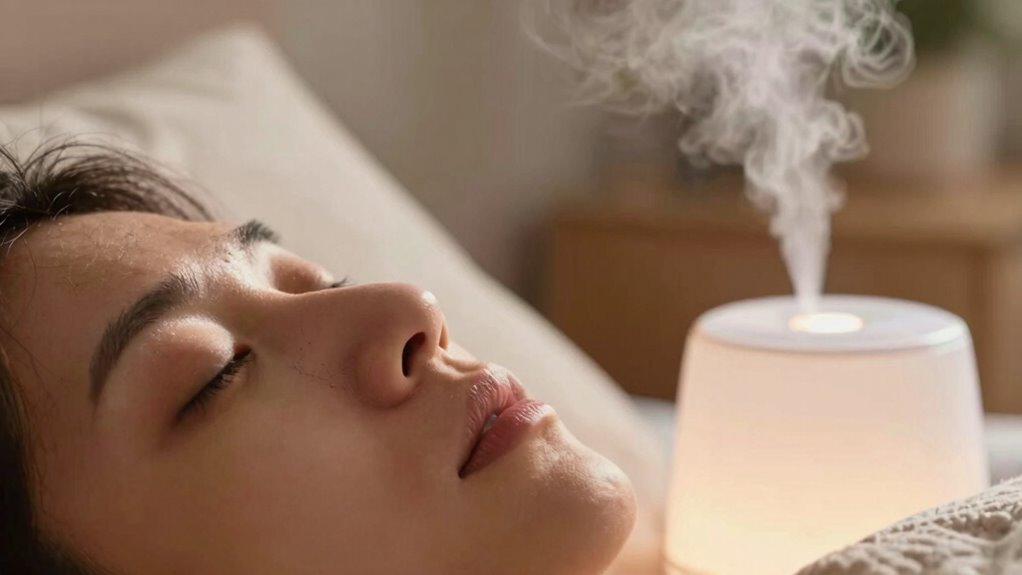
Humidifiers can effectively relieve dry sinuses at night by adding moisture to the air, which helps keep your nasal passages moist and comfortable. To guarantee they work well, proper humidifier maintenance is essential—regular cleaning prevents mold and bacteria buildup. If you have allergies or sensitivities, choose an allergen-friendly model and use distilled or filtered water to reduce dust and allergens circulating in your room. Humidifiers help maintain ideal humidity levels, easing congestion and irritation. However, overuse can lead to excess moisture, so monitor the humidity with a hygrometer and keep it between 30-50%. By following these steps, you can safely and effectively use a humidifier to alleviate dry sinuses without worsening allergy symptoms.
What Are the Limits of Using Humidity to Treat Dry Sinuses?
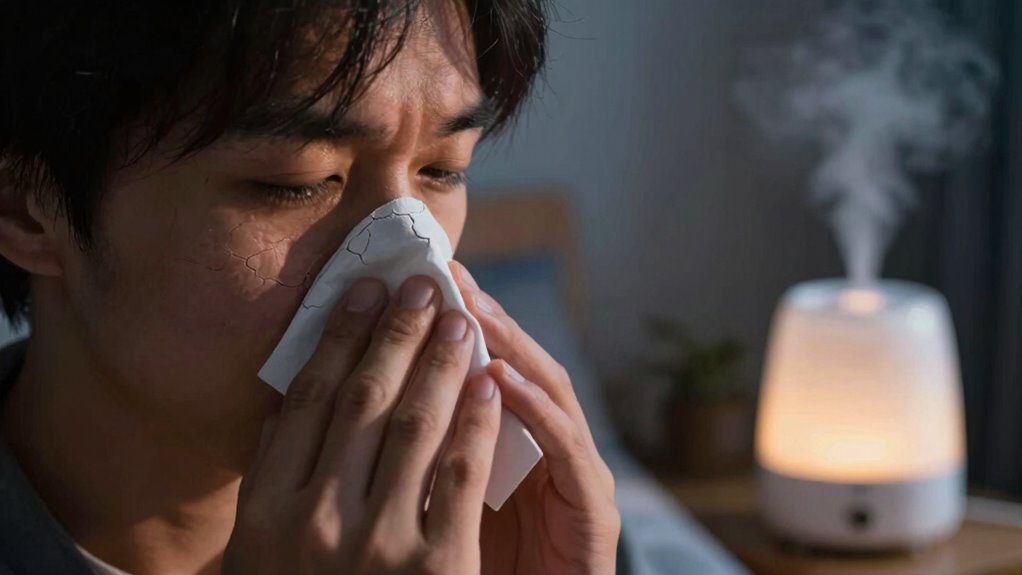
While maintaining proper humidity levels can alleviate dry sinuses, relying solely on increased moisture has its limits. Humidity regulation helps improve sinus hydration, but it doesn’t address all causes of dryness. For example, environmental factors like dust or pollution can still irritate your sinuses despite ideal humidity. Medical conditions such as allergies or sinus infections may need targeted treatments beyond humidity control. Over-humidifying can also cause mold growth or exacerbate respiratory issues. Additionally, humidity can’t replace other essential practices like staying well-hydrated or avoiding irritants. It’s a helpful tool, but not a cure-all. To truly relieve dry sinuses, you need a thorough approach that combines humidity regulation with other remedies.
How Do I Know When Humidity Isn’t Enough?
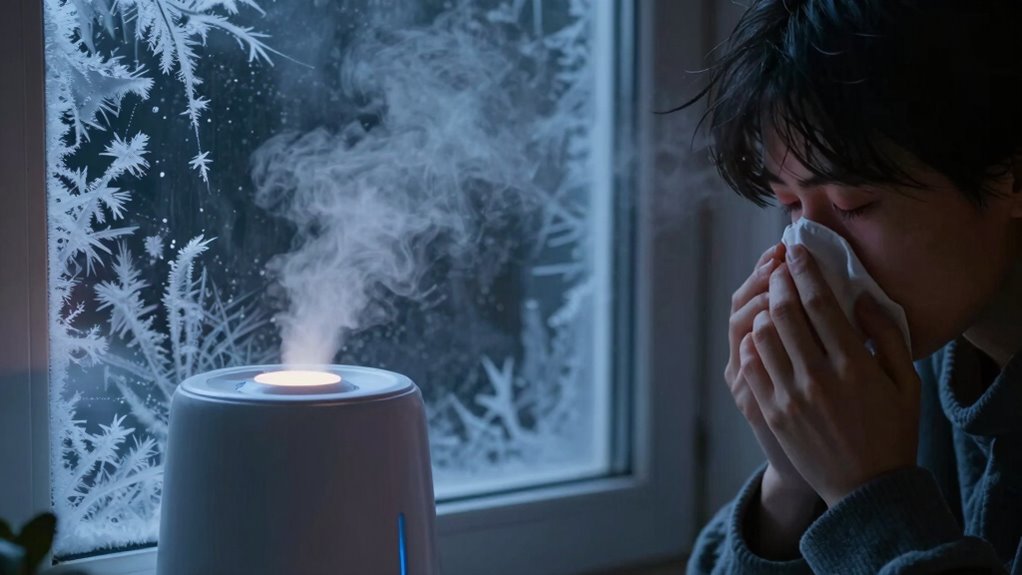
It’s important to recognize the signs that humidity alone isn’t enough to soothe your dry sinuses. If you notice persistent humidity symptoms like congestion, nasal irritation, or ongoing dryness despite maintaining indoor moisture, it’s a sign that other factors may be at play. You might also experience frequent nosebleeds or headaches that don’t improve with added humidity. If your symptoms worsen at night or remain unchanged despite using humidifiers, it indicates that increasing moisture isn’t enough. Sometimes, the environment isn’t the sole issue, or the humidity levels aren’t properly balanced. When these signs appear, it’s time to explore additional remedies or consult a healthcare professional to address underlying causes.
How Can I Set the Right Humidity Level in My Home?
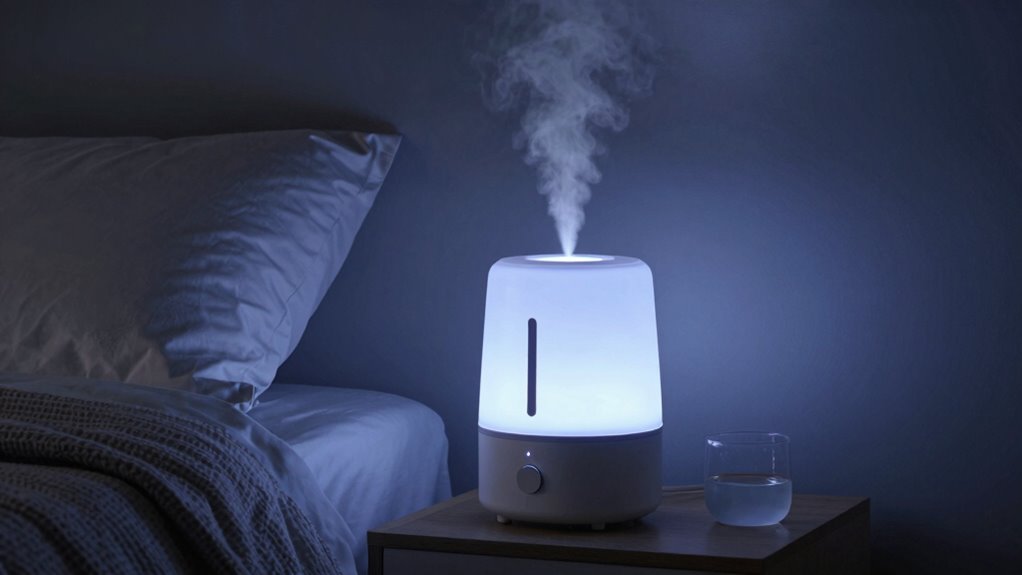
To guarantee your dry sinuses are properly comforted, setting the right humidity level in your home is key. Use a hygrometer to monitor humidity, aiming for 40-50%. Adjust your humidifier accordingly, ensuring proper humidifier maintenance to prevent mold and bacteria buildup. Keep an eye on temperature control, as heat can affect humidity levels. Regularly clean and replace filters. Place humidifiers in central locations for even distribution. Avoid over-humidifying, which can cause condensation and mold. Use fans or vents to improve air circulation. Maintaining ideal humidity helps soothe dry sinuses and improves sleep quality without excess moisture. Proper temperature control and humidifier maintenance are essential to create a comfortable, healthy environment for your sinuses.
What Other Tricks Can Help Soothe Dry Sinuses at Night?
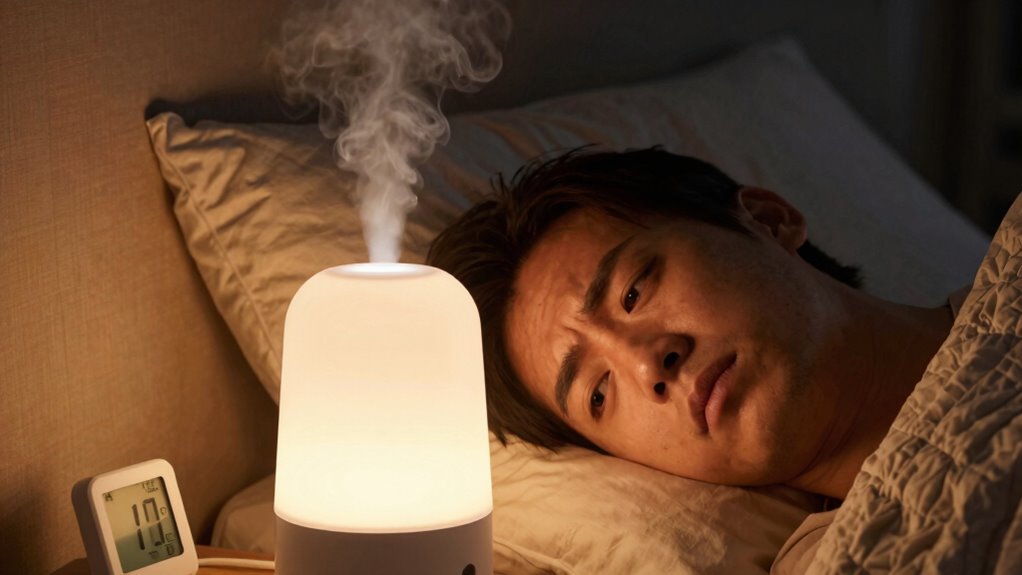
In addition to controlling humidity, there are simple tricks that can provide immediate relief for dry sinuses at night. First, stay well-hydrated by drinking plenty of water throughout the day to support nasal hydration. Using a saline nasal spray before bed can also help moisten your nasal passages. Keep your humidifier maintained—clean it regularly to prevent mold and bacteria, ensuring it works effectively. Elevating your head with an extra pillow encourages drainage and reduces sinus pressure.
| Tip | Benefit |
|---|---|
| Saline spray | Moistens nasal passages |
| Proper humidifier care | Prevents irritation and infection |
| Hydration | Supports nasal hydration |
| Head elevation | Reduces sinus congestion |
Frequently Asked Questions
Can Dehydration Cause Dry Sinuses During the Night?
Yes, dehydration can cause dry sinuses at night. When you’re dehydrated, you experience symptoms like dehydration symptoms, which include sinus discomfort and dry nasal passages. This occurs because your body isn’t getting enough hydration to keep mucus membranes moist. To help, drink plenty of water throughout the day, especially before bed, and consider using a humidifier. Staying well-hydrated can reduce nighttime sinus discomfort and improve overall comfort.
Are There Specific Humidifier Settings Recommended for Sinus Health?
Imagine a Victorian parlor where comfort reigns—set your humidifier to maintain ideal humidity levels, around 40-50%. Regular humidifier maintenance keeps it functioning well, preventing mold and bacteria. Use a hygrometer to monitor humidity and adjust settings as needed. Consistent, moderate humidity helps soothe dry sinuses without over-humidifying, which can cause other issues. Keep it clean and steady for the best sinus health during the night.
How Does Sleeping Position Influence Dry Sinus Issues?
Your sleeping posture greatly influences dry sinus issues. Sleeping on your back with your head elevated promotes better nasal airflow and prevents mucus buildup, reducing dryness. Avoid positions that cause you to breathe through your mouth, which can dry out your sinuses further. Proper alignment keeps nasal passages open, supporting natural moisture levels. Adjust your sleeping posture to improve nasal airflow, and consider using a humidifier to keep humidity levels consistent throughout the night.
Do Allergies Worsen With Low Indoor Humidity?
Yes, allergies can worsen with low indoor humidity. When humidity drops, your nasal passages dry out, trapping allergens like dust and mold, which trigger symptoms. To avoid this, regularly maintain your humidifier and use allergy medication as needed. Proper humidity levels help keep nasal tissues moist, reducing allergy symptoms and improving your comfort. Just make sure you clean your humidifier often to prevent mold growth.
What Are Signs That Dry Sinuses Require Medical Attention?
If your dry sinuses worsen, if you experience intense facial pain, persistent fever, or bleeding, you need medical attention. These signs may indicate a sinus infection or complications after nasal surgery. You should seek help if symptoms last beyond a week, worsen despite home remedies, or are accompanied by vision changes or severe headache. Prompt care can prevent complications and guarantee proper treatment for your sinus health.
Conclusion
To keep your sinuses comfortable, maintaining proper humidity is key—think of it as your modern-day potion for relief. While a humidifier can work wonders, it’s important to know its limits, just like the wise alchemists of old. Keep an eye on indoor air quality, and try additional tricks like nasal sprays or staying hydrated. With a little effort, you’ll sleep soundly and wake up refreshed, no more dry sinuses—hallelujah!
Flea & tick season Picks
flea and tick prevention
As an affiliate, we earn on qualifying purchases.