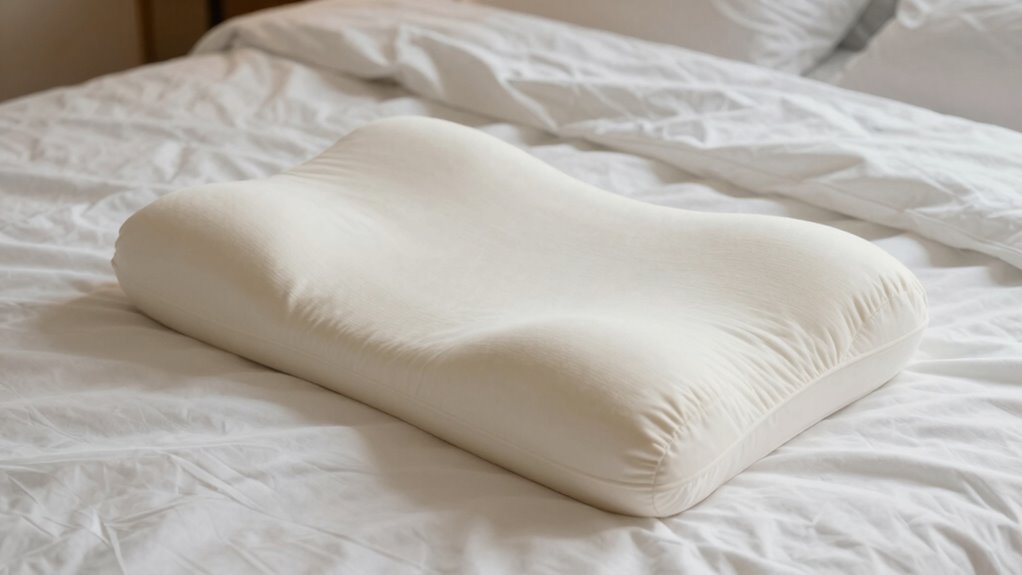

If you experience hip pain at night, your sleep position might be the missing piece. Sleeping on your side with a pillow between your knees helps keep your hips aligned and reduces pressure that causes discomfort. Avoid sleeping on your stomach or crossing your legs, as these positions can misalign your hips and worsen pain. Making these simple adjustments can markedly improve your sleep quality — and there’s more you can do to ease your pain.
Key Takeaways
- Proper sleep position, like sleeping on the side with a pillow between knees, maintains hip alignment and reduces pain.
- Adjusting pillow height and thickness helps keep hips aligned with the spine during sleep.
- Avoid crossing legs or sleeping on the stomach, as these positions misalign hips and increase discomfort.
- Using a supportive mattress balances support and comfort, promoting correct posture and minimizing hip strain.
- Small alignment adjustments during sleep can significantly decrease nighttime hip pain and prevent further joint issues.

Ultra Pain Relief Cooling Pillow for Neck Support, Adjustable Cervical Pillow Cozy Sleeping, Odorless Ergonomic Contour Memory Foam Pillows, Orthopedic Bed Pillow for Side Back Stomach Sleeper
REVOLUTIONIZE YOUR SLEEP WITH THE INNOVATIVE HOLLOW CONCAVE DESIGN – Tired of waking up with neck pain and…
As an affiliate, we earn on qualifying purchases.
As an affiliate, we earn on qualifying purchases.
What Causes Nighttime Hip Pain and How Can You Recognize It?

Nighttime hip pain can be caused by several underlying conditions, and recognizing the signs can help you seek appropriate treatment. Hip bursitis occurs when the bursae, small fluid-filled sacs cushioning your hip, become inflamed, leading to sharp, persistent pain that worsens at night. Nerve impingement happens when nearby nerves are compressed or pinched, causing radiating pain, numbness, or tingling down your leg. These issues often intensify during rest because movement may temporarily relieve pressure. If you notice consistent pain, swelling, or tingling sensations in your hip or thigh, it’s essential to identify these as potential signs of bursitis or nerve impingement. Early diagnosis and treatment can prevent further damage and help you restore comfortable sleep.

Contour Legacy Leg & Knee Foam Support Pillow for Side Sleepers Soothing Relief for Back, Hips, Knees, Joints, Nerves & Muscles
ORTHOPEDIC LEG PILLOW TO HELP REDUCE BACK, HIP, LEG, KNEE & SCIATICA NERVE DISCOMFORT- As a side sleeper,…
As an affiliate, we earn on qualifying purchases.
As an affiliate, we earn on qualifying purchases.
How Does Your Sleep Position Affect Hip Comfort?

Your sleep position plays a crucial role in either alleviating or worsening hip discomfort. The way you position your body affects how pressure is distributed across your hips and whether your joints stay in proper alignment. For example, sleeping on your side with a pillow between your knees can reduce strain and maintain better sleep posture. Conversely, sleeping on your stomach often twists the hips unnaturally, increasing pain. Mattress choice also matters—firm enough to support your hips without causing pressure points, yet comfortable enough to keep your spine aligned. The right combination of sleep posture and mattress can make a significant difference, helping to prevent nighttime hip pain or reduce its severity. Adjusting these factors may be the simple fix that improves your quality of sleep. Additionally, understanding how proper sleep ergonomics can influence joint health is essential for long-term relief.

BedStory Queen Mattress 14 Inch – Firm Hybrid Mattress with Orthopedic Spinal Support for Back Pain – 2.0mm Advanced Pocket Spring and Motion Isolation Technology, CertiPUR-US Certified
Firm Queen Mattress – Combining multiple foam layers with reinforced pocket springs, BedStory queen size mattresses offer optimal…
As an affiliate, we earn on qualifying purchases.
As an affiliate, we earn on qualifying purchases.
The Simple Alignment Fix That Could Ease Your Night Pain

Proper alignment during sleep can substantially reduce hip pain without the need for expensive treatments or complex adjustments. By focusing on your hip flexor and joint stability, you can make simple changes that make a big difference. Here’s what to try:
- Adjust your pillow height to keep your hips aligned with your spine, preventing strain on the hip flexor.
- Use a pillow between your knees if you sleep on your side; this supports hip joint stability and prevents twisting.
- Avoid crossing your legs or sleeping in positions that cause uneven tension on your hips, which can worsen pain at night.
- Maintaining proper sleep posture can also help distribute weight evenly and reduce pressure points that contribute to hip discomfort.
These small tweaks promote better alignment, reduce stress on the hip flexor, and help maintain joint stability, easing your night pain naturally.

BlissTrends Memory Foam Knee Pillow, Knee Pillow for Side Sleepers, Leg Pillows for Sleeping Blood Circulation, Elevation Pillow for Spine Aligning, Sciatica, Back, Hip, Knee, Ankle Pain, Grey
【High Quality Memory Foam】BlissTrends knee pillow is made of high-density memory foam material to provide strong support for…
As an affiliate, we earn on qualifying purchases.
As an affiliate, we earn on qualifying purchases.
Easy Tips to Keep Your Hips Aligned While You Sleep

Keeping your hips aligned while you sleep is key to reducing pain and preventing strain. Prioritize your mattress choice—firm enough to support your hip flexibility but comfortable enough to keep your spine neutral. To maintain proper alignment, try sleeping on your side with a pillow between your knees; this keeps your hips in a natural position. Imagine this setup:
| Head Support | Hip Support | Leg Alignment |
|---|---|---|
| Soft pillow | Firm pillow | Slight bend |
| No pillow | No pillow | Fully extended |
| Thick pillow | Thinner pillow | Crossed legs |
This simple adjustment helps your hips stay aligned, easing night pain. Small changes like these make a big difference in supporting your hips throughout the night. Ensuring proper indoor air quality can also contribute to better sleep and overall comfort during the night.
Signs It’s Time to See a Doctor for Hip Pain
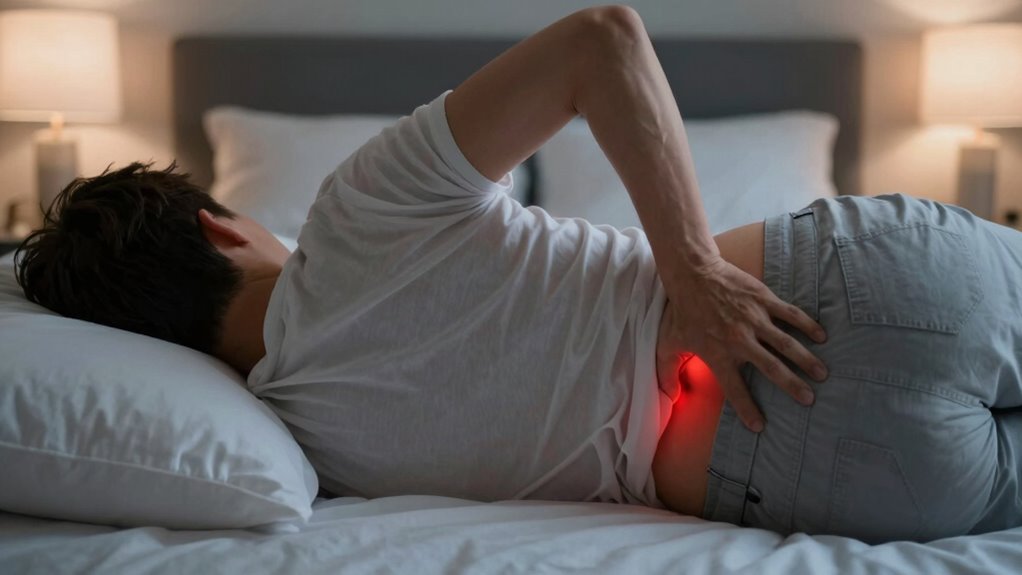
While mild hip discomfort can often be managed with home remedies, persistent or worsening pain signals that you should see a doctor. Pay attention to these signs:
- Increased joint stiffness, especially if it lasts longer than usual or worsens over time, indicating potential joint or cartilage issues.
- Severe or persistent pain that doesn’t improve with rest, suggesting injury or inflammation that needs medical evaluation.
- Signs of muscle imbalance, such as one hip feeling tighter or weaker, which can lead to further joint problems if left untreated.
- Additionally, proper spinal alignment can influence hip health and reduce night-time discomfort.
If you notice any of these symptoms, it’s essential to consult a healthcare professional to determine the underlying cause and prevent further damage.
Frequently Asked Questions
Can Specific Mattress Types Worsen Hip Pain at Night?
Yes, certain mattress types can worsen your hip pain at night. If your mattress is too firm, it may not provide enough support, causing pressure points and misalignment. Conversely, a mattress that’s too soft might lack support, leading to poor spinal alignment. Look for one with the right firmness and support systems designed to keep your hips properly aligned. This way, you’ll reduce pain and wake up feeling refreshed.
Are There Certain Sleep Positions That Universally Reduce Hip Discomfort?
You should try sleeping on your side with a pillow between your knees to keep your hips aligned and reduce discomfort. For back sleepers, placing a pillow under your knees helps maintain proper spinal and hip posture. Avoid sleeping on your stomach, which can strain your hips. Using the right pillow support and adjusting your sleep posture can make a significant difference in easing hip pain at night.
How Long Should I Try the Alignment Fix Before Seeking Medical Advice?
Coincidentally, if you haven’t seen improvement after a 2-week duration trial of the alignment fix, it’s time to think about a medical consultation. You should monitor your pain closely; if it worsens or persists beyond this period, seeking professional advice becomes essential. Trust your body’s signals and don’t hesitate to consult a healthcare provider to ensure proper diagnosis and treatment, avoiding unnecessary discomfort or complications.
Do Age or Gender Influence the Likelihood of Nighttime Hip Pain?
Age factors and gender differences do influence nighttime hip pain. As you get older, cartilage wear and joint degeneration become more common, increasing pain chances. Women, especially postmenopausal, may experience more hip discomfort due to hormonal changes affecting joint health. Recognizing these factors helps you understand why pain might differ based on age and gender, encouraging personalized approaches to treatment and prevention.
Are There Exercises I Can Do to Prevent Hip Pain During Sleep?
Think of your hips as a well-oiled door hinge—you want it moving smoothly. You can prevent nighttime hip pain by doing simple stretching routines that boost your hip mobility. Focus on gentle stretches like figure-four or hip flexor releases, holding each pose for 20-30 seconds. Regular practice keeps your hips limber, so you sleep soundly through the night, free from aches and stiffness.
Conclusion
To keep your hips happy through the night, don’t ignore those warning signs. Adjust your sleep position, try simple alignment tricks, and pay attention to how your hips feel in the morning. Remember, neglecting persistent pain is like trying to sail a ship without a compass — you’ll only drift further from relief. Take charge now, and your nights of tossing and turning could become a thing of the past, just like a knight’s armor at dawn.